The Day Has Come to Give Palestine Recognition Its Due
Will Spain be able to maintain its current stance on recognizing the Palestinian state and imposing sanctions on Israel after the 2027 general elections?
October 15, 2025
L
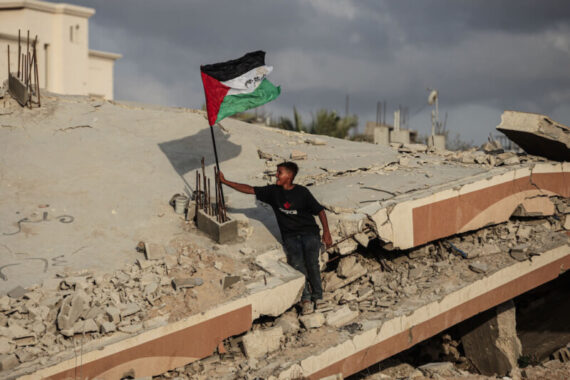
ast September, the 80th opening session of the United Nations General Assembly led nine more countries, all considered members of the Western world, to recognize the Palestinian state. However, it quickly became clear that the optimistic expectation that this group’s decision would dramatically change Israel’s genocide and massacre in the Gaza Strip was unfounded. It is now too late for a Palestinian state, whose integrity has been destroyed and whose administrative structure in the West Bank has been rendered ineffective, to be accepted in Europe.
The opportunity has long since passed. These recognition decisions were not taken seriously in Washington or Tel Aviv, especially since they were made without any deterrent sanctions against Netanyahu. Notably, two of the countries that signed the latest recognition decisions, France and the United Kingdom, are G7 member states that gave Israel the green light for its regional offensive following the Al-Aqsa Flood operation on October 7, 2023.
Germany, the now diminished leader of the European Union, and Italy, which is vying for its throne, still insist that the time is not right to recognize the Palestinian state. It’s important to note that these two countries are second and third, after the United States, in arming Israel. Europe’s lack of influence in resolving the Palestinian issue is related to the current global situation.
Meetings between government and state leaders in New York and Washington in September confirmed that Europe no longer carries weight in resolving the Palestinian issue following the war between Ukraine and Russia. Two parameters that will determine developments regarding Palestine have become clear. The first is the power struggle between Trump and Netanyahu. The second is Turkey’s sphere of influence, which extends from the Mediterranean Basin to Kazakhstan and from Donbas to the coast of Somalia.
Read: Gaza and Trump 2.0
To understand why Europe has been ineffective in addressing the Palestinian issue, it is important to consider its failure to establish a defense identity and its inability to resolve the energy crisis caused by the COVID19 pandemic and the war between Russia and Ukraine. In its current form, the European Union is being pushed into a legal structure. Moreover, most of the countries that comprise the European Union are also experiencing imbalances in their internal political dynamics. Whether and to what extent the European countries that have recognized the Palestinian state will stand by their decisions is another source of uncertainty.
For example, will Spain be able to maintain its current stance on recognizing the Palestinian state and imposing sanctions on Israel after the 2027 general elections? Could Spain’s policies toward Israel change if Pedro Sánchez loses his premiership? Similarly, upcoming presidential and general elections in France could bring about changes as well. In France, where the far-right is growing stronger by the day, opinion polls conducted after the Palestinian state was recognized showed that 71 percent of respondents opposed raising the Palestinian flag on municipal buildings.
The same can be said for the UK. It is difficult to predict how the Labour Party government’s decision to recognize Palestine will evolve under a possible Reform Party government, which currently leads in the polls. In short, if the Palestinian state is to have a future, developments on the Washington-Ankara axis, not in European capitals, will be decisive. Similarly, U.S. President Trump discussed his plan for Gaza not with European countries but at a special meeting with Gulf countries, including Turkey. Throughout the week of sessions at the UN General Assembly, Trump reiterated at every opportunity that he would not allow Israel to annex the West Bank.
However, it was Donald Trump who supported Israel’s decision to move its capital from Tel Aviv to Jerusalem during his first term and recognized Israel’s annexation of the Golan Heights. During the first nine months of his second term, he showed no resolve to curb Israel’s regional aggression. Despite Lebanon’s parliament accepting the U.S. plan to disarm Hezbollah, Israel has not ceased its attacks on Lebanon nor withdrawn from the occupied Lebanese territory.
There is also no indication that Israel’s aggression and occupation of Syria will end. The U.S.’s fluctuating rhetoric on cooperating with the PYD/YPG terrorist organization and CENTCOM’s relentless cooperation with the Israeli government do not provide convincing evidence that Trump has any authority over Netanyahu.
Regarding the Iran issue, Trump first said he would not allow Israel to attack Iran alone. Then, he ordered an attack on Iran’s nuclear facilities using U.S. capabilities to please Netanyahu and the Jewish lobby in his country.
Finally, there was the bombing of Doha, the capital of Qatar, which was ignored. Following the attack, the propaganda claiming that “this was an Israeli operation and Trump knew nothing about it” has convinced no one. Moreover, while Trump repeatedly said he would not allow the annexation of the West Bank, Mike Johnson—the Speaker of the U.S. House of Representatives who financed his election campaign with hundreds of thousands of dollars from Jewish lobbies—made the following statement to the Israeli media: “According to my research on Israeli history, the West Bank is Israeli territory.”
However, there are very different geopolitical dynamics in the region. Let’s see how events unfold. Pro-Israel U.S. Congressman Lindsey Graham expressed his vision for peace, saying, “I do not support stopping military operations until Hamas is completely destroyed. Israel must be allowed to finish the job.” Should we replace the term “Hamas” in this statement with “Palestinian resistance at all levels”?
Trump’s “verbal promises,” which directly violate the rules of the international order established after World War II, cannot find resonance in today’s Middle East. Furthermore, Trump’s ability to act is limited by U.S. domestic politics, where 90 percent of members of both houses of Congress are backed by the Jewish lobby.
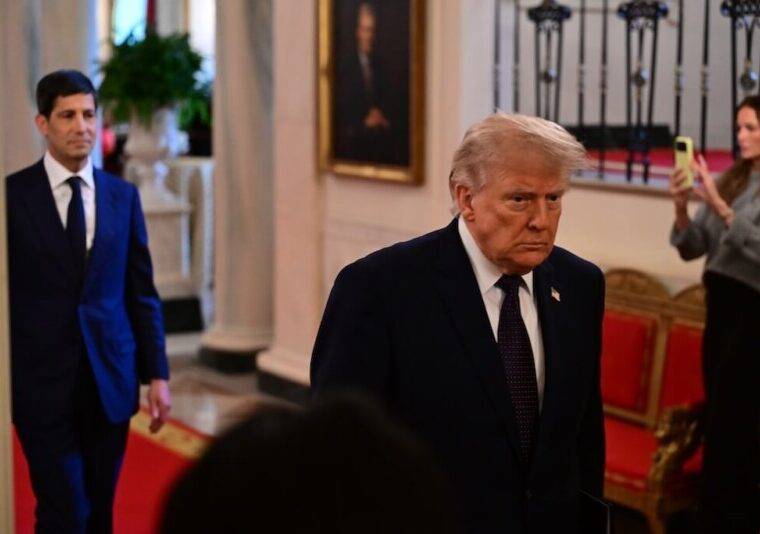
In fact, in the 24 hours before Trump’s meeting with Netanyahu at the White House on September 29, Israel launched 140 attacks on Gaza. At the press conference after the meeting, the U.S. president emphasized that he had shared his plan with Islamic countries. However, it became apparent that the conditions he set forth aimed to completely eliminate the prospect of a Palestinian state. They demanded the complete surrender of Hamas and the total abolition of all Palestinian resistance movements. These conditions coincided with Israel’s plan to attack Gaza.
Trump views the Gaza Strip solely as an economic commodity and marginalizes Palestinians from the region’s administration. His proposal aims to establish a multinational version of the “colonial administration” implemented after the invasion of Iraq in Gaza. Mahmoud Merdawi, a senior Hamas official, described the plan’s objective in his initial assessment as “an attempt to suppress the momentum towards the recognition of the Palestinian state.”
Recommended

Even if Hamas accepts the plan and surrenders its weapons, there is no guarantee that Israel will abandon its maximalist policies toward the region. Furthermore, as President Trump stated, the next objective after seizing control of the Gaza Strip is to force the region’s countries, including Iran, to accept the Abraham Accords, which have been on the agenda since 2020.
It’s clear that this “acceptance” won’t be achieved solely through diplomacy. In fact, open sources report that the U.S. and Israel are preparing a second attack to completely break Iran’s will. Prior to the Trump-Netanyahu meeting, reports emerged in the press that eight U.S. tanker aircraft had crossed the Atlantic Ocean and reached Europe.
If European countries are sincere about recognizing the State of Palestine, now is the time for them to take action against this plan imposed entirely from the Israeli perspective and put forward an alternative. As President Erdoğan pointed out in his statement following the cabinet meeting on September 29, “We are very pleased that the number of countries recognizing Palestine has reached 158 as a country leading this struggle. Recognition is the first step; the real issue is giving recognition its due.”
In a sense, Trump’s proposed plan for Gaza provides European leaders, whom he has long disparaged, with an opportunity to emerge from their complacency. The plan is a turning point for not only the Palestinians, but also the future of the Middle East and Europe in the 21st century.
(Originally published in Turkish by Krtier)

Turkish author and security expert who writes on Ukraine, Russia, NATO and African politics. Prigozhin Died for Wagner to Live On.
You can see how this popup was set up in our step-by-step guide: https://wppopupmaker.com/guides/auto-opening-announcement-popups/

Stay informed by subscribing to
our weekly newsletter.
You can see how this popup was set up in our step-by-step guide: https://wppopupmaker.com/guides/auto-opening-announcement-popups/
You can see how this popup was set up in our step-by-step guide: https://wppopupmaker.com/guides/auto-opening-announcement-popups/
You can see how this popup was set up in our step-by-step guide: https://wppopupmaker.com/guides/auto-opening-announcement-popups/
You can see how this popup was set up in our step-by-step guide: https://wppopupmaker.com/guides/auto-opening-announcement-popups/