T
welve countries, including the United Kingdom, France and Canada, have announced plans to introduce or support restrictions on trade with Israeli settlements in the occupied West Bank, marking a significant diplomatic challenge to Israel’s settlement policy.
The foreign ministers of Canada, Denmark, Finland, France, Iceland, Ireland, Norway, Poland, Portugal, Spain, Sweden and the UK said Tuesday that they intended to introduce national measures or support European restrictions on trade in goods from Israeli settlements, which they described as illegal under international law.
The countries said Israel’s actions in the West Bank were undermining the possibility of achieving a two-state solution to the Israeli-Palestinian conflict.
The announcement followed a decision by Britain to impose an import ban on goods originating from Israeli settlements in the occupied West Bank. UK Foreign Secretary Ed Miliband told Parliament that Canada and France would also introduce similar bans, while several other European countries pledged to support additional measures.
Miliband said Britain would also establish a comprehensive sanctions regime, arguing that London could no longer simply condemn what it considers injustice and suffering without taking concrete action.
“Today we refuse to be bystanders,” Miliband said, linking the measures to Britain’s long-standing support for a two-state solution.
The announcement represents a notable shift in Britain’s approach to Israel and the occupied Palestinian territories. Miliband said the UK considers Israel’s occupation of the West Bank unlawful and believes Palestinians are facing ethnic cleansing in parts of the territory.

Israel retaliates against Britain
Israel strongly rejected the measures and accused the British government of hostility toward Israel.
Israeli Foreign Minister Gideon Saar described Miliband’s accusations as “outrageous lies” and announced a series of retaliatory measures against Britain.
Saar said Israel would close the British consulate in occupied East Jerusalem, which is accredited to the Palestinian Authority in the West Bank. He also said Britain would no longer be permitted to participate in a US-led coordination mission for Gaza.
In addition, Israel said it would terminate British training for Palestinian Authority security forces in the West Bank and impose entry restrictions on some elected British officials and other nationals.
Saar blamed what he called a hostile Labour government for leaving Israel with no choice but to respond.
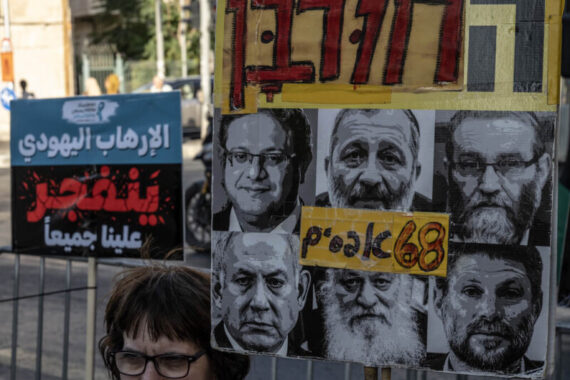
The diplomatic confrontation comes amid heightened international concern over the expansion of Israeli settlements and increasing violence by settlers against Palestinians in the West Bank.
French Foreign Minister Jean-Noel Barrot said France would end its trade with Israeli settlements in the occupied Palestinian territories, describing the decision as part of a coordinated effort involving the other countries.
Barrot cited what he called rapid settlement expansion, escalating violence against Palestinians by extremist settlers and attacks that he said had even been condemned by Israeli authorities.
The United States, however, rejected the British-led approach. US Secretary of State Marco Rubio said Washington would not join the sanctions and argued that the measures could destabilize the West Bank at a time of wider regional tensions.
Recommended
Settlement expansion raises two-state concerns
The economic impact of Britain’s decision could initially be limited. The UK and Israel conduct around £6 billion ($8.12 billion) in annual bilateral trade, but details remain unclear about how British authorities will distinguish products originating in Israeli settlements from goods produced in Israel.
Israeli settlements and outposts in the occupied West Bank are considered illegal under international law. According to figures cited by the Palestinian Colonization and Wall Resistance Commission, approximately 780,000 Israeli settlers live across the West Bank and occupied East Jerusalem, in 192 settlements and about 400 outposts.
The commission said settlements and outposts account for a large portion of Area C of the West Bank, which remains under full Israeli civil and military control, as well as much of the Jordan Valley.
The issue has also become increasingly connected to concerns over violence against Palestinian communities. Settlers have established unauthorized outposts near Palestinian villages and, according to Palestinian authorities, have carried out attacks and property damage, while cutting access to water, electricity and other supplies.
The source also points to recent cases in which Palestinian families have faced sieges around their homes, alongside attacks on villages and agricultural land.
UN Special Rapporteur on the occupied Palestinian territory Francesca Albanese described Miliband’s remarks as a major change in Britain’s position. She said his condemnation of settlement activity and references to the treatment of Palestinians represented an unusually strong statement from the British government.
The 12-country declaration places additional diplomatic pressure on Israel while exposing differences among Western allies over how to respond to settlement expansion.
The declaration is likely to add further strain to relations between Israel and several European governments as settlement expansion and violence in the West Bank against Palestinians continue to expand with encouragement from Israeli officials.
(Source: Aljazeera English)