UN Security Council Endorses Trump’s Gaza Plan
The Gaza UN resolution sparked controversy in Israel due to references to a possible “credible pathway” to Palestinian statehood.
November 18, 2025

T
he United Nations Security Council on Monday adopted a U.S.-drafted resolution backing President Donald Trump’s proposed roadmap to end the Gaza genocide, clearing the way for the deployment of an international stabilization force and the creation of a transitional authority to govern the enclave.
The resolution — passed with Russia and China abstaining — marks Washington’s most significant diplomatic gain at the UN since the genocide started two years ago. It formalizes the first steps of Trump’s 20-point Gaza plan, which Israel and Hamas agreed to in principle last month, including a ceasefire and a staged hostage exchange.
The vote is expected to pave the way for countries to contribute troops to the stabilization mission and participate in the “Board of Peace,” a U.S.-chaired transitional governance authority that would oversee Gaza’s reconstruction, security arrangements, and economic revival.
Mike Waltz, the U.S. ambassador to the UN, told the chamber that the resolution “charts a possible pathway for Palestinian self-determination,” adding that the plan aims to ensure Gaza “rises free from terror’s shadow, prosperous and secure.”
The resolution authorizes participating states to take part in establishing an international stabilization force, tasked with overseeing the demilitarization of Gaza, securing key infrastructure, and dismantling militant capabilities.
According to the text, the force is empowered to facilitate the identification and destruction of weapons caches, tunnel networks, and other military infrastructure, while coordinating with the transitional governance body to restore public services.
The move represents the first time the Security Council has supported a mandate for foreign forces inside Gaza, and it raises questions about future clashes with Hamas, which rejected the decision.
In a sharply worded statement, Hamas said it will not give up its weapons and denounced the resolution as “an international guardianship mechanism” imposed on Gaza. The group asserted that armed resistance remains “legitimate” and warned that any force attempting to confiscate weapons may face confrontation.
Hamas officials called the resolution “unacceptable,” insisting that the transitional authority endorsed by the UN does not represent Palestinian consensus.
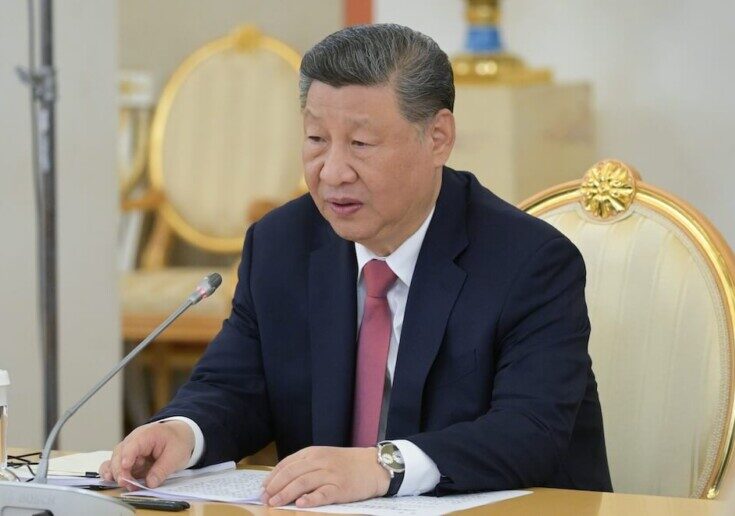
Although Russia and China declined to veto the measure, both abstained and criticized the resolution for granting too much authority to the United States.
Russian ambassador Vasily Nebenzya accused Washington of seeking “complete control over the Gaza Strip” through opaque mechanisms. “The council is giving its blessing to a U.S. initiative on the basis of Washington’s promises,” he said, pointing to a lack of clarity around the structure and rules governing the Board of Peace and the stabilization force.
China’s envoy also complained that the resolution leaves the UN sidelined, offering it no clear role in shaping Gaza’s political future.
The abstentions reflect continued geopolitical tensions between the major powers but also suggest a reluctance to obstruct what many countries see as the best available framework to end the genocide.
Recommended
The Palestinian Authority (PA), which has been under pressure to lead postwar governance efforts, welcomed the resolution and signaled its readiness to help implement it. Diplomats said the PA’s support helped prevent a Russian veto by assuring Moscow that Ramallah would play a central role in the transition.
The resolution sparked controversy in Israel due to references to a possible “credible pathway” to Palestinian statehood — language Israeli Prime Minister Benjamin Netanyahu has long opposed.
Under pressure from far-right members of his ruling coalition, Netanyahu reiterated Sunday that Israel remains firmly opposed to Palestinian statehood and vowed to demilitarize Gaza “the easy way or the hard way.”
Despite domestic political tensions, Israel is not expected to obstruct the early implementation of the ceasefire and hostage-release components, which are already underway.
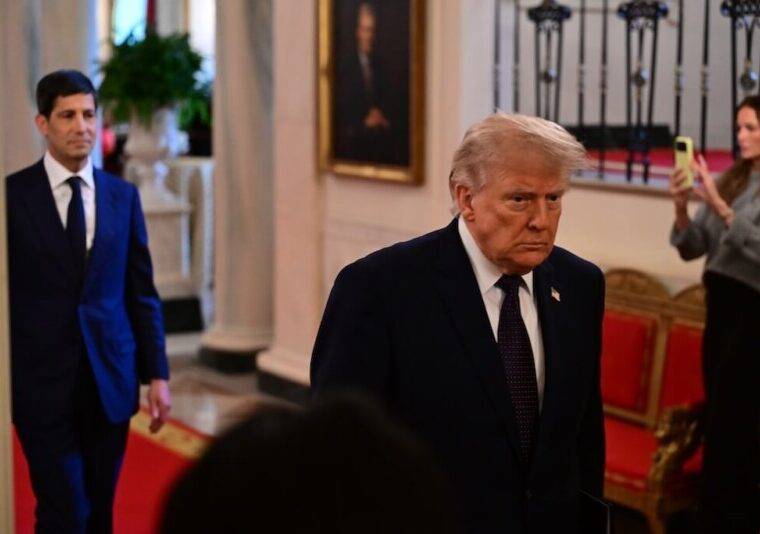
President Trump celebrated the vote in a social media post, calling it “a moment of true Historic proportion” and promising further announcements about the Board of Peace’s membership in the coming weeks.
With the Security Council’s endorsement secured, diplomatic efforts are now turning to assembling the multinational force and launching the transitional governance process — steps that will test international willingness to back a U.S.-led blueprint for Gaza’s future amid ongoing uncertainty on the ground.
(Source: Reuters)

Politics Today is dedicated to publishing insightful analyses in order to understand the changing nature of contemporary politics. It aims to contribute to the sound and constructive discussion of international affairs.
You can see how this popup was set up in our step-by-step guide: https://wppopupmaker.com/guides/auto-opening-announcement-popups/

Stay informed by subscribing to
our weekly newsletter.
You can see how this popup was set up in our step-by-step guide: https://wppopupmaker.com/guides/auto-opening-announcement-popups/
You can see how this popup was set up in our step-by-step guide: https://wppopupmaker.com/guides/auto-opening-announcement-popups/
You can see how this popup was set up in our step-by-step guide: https://wppopupmaker.com/guides/auto-opening-announcement-popups/
You can see how this popup was set up in our step-by-step guide: https://wppopupmaker.com/guides/auto-opening-announcement-popups/