US/Iran Showdown: Türkiye and Saudi Arabia Can Save The Day
Iran should be willing to discuss all proxies and address its neighbors' security concerns.
February 2, 2026
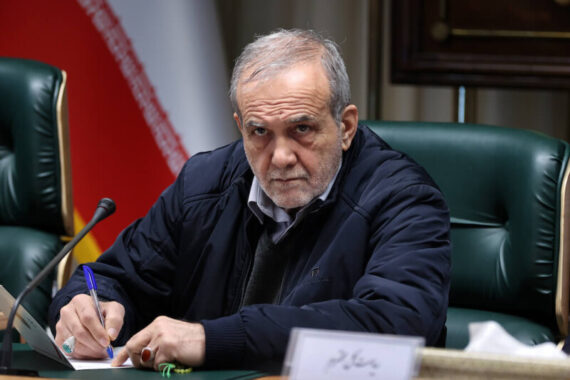
In the standoff between the United States and Iran, both sides have raised the stakes, making it difficult for either to back down. The question is, who will blink first? We don’t know. However, a disastrous scenario would unfold if the U.S. were to attack Iran, as Iran has vowed full retaliation. President Erdoğan has already offered to mediate between the two countries.
Türkiye, Saudi Arabia, Qatar, and Oman have strongly lobbied the U.S. not to attack Iran and are pushing to bring the two adversaries to the negotiation table. Saudi Arabia and Türkiye can do more. They can negotiate with Iran themselves and come up with a deal that can save Donald Trump’s face and allow him to claim a win.
For the Arab Gulf states and neighboring countries, including Türkiye, the main problem with Iran is its network of proxies. Some background is necessary here. Since 1979, Iran has been under embargo and had been unable to renew its arsenal. It relied on a network of proxies for deterrence and, of course, influence in the region. Today, however, those proxies are becoming more and more of a liability. They are unable to properly defend Iran, yet they still cost the Islamic Republic. Hezbollah no longer has the capability to threaten Israel as it once did. Nevertheless, these proxies continue to cause trouble in the region and prevent stability.
Neither nuclear weapons nor ballistic missiles pose a real threat to the neighborhood. As for nuclear weapons, they are not a threat because no one uses them. Using nuclear weapons would ultimately lead to the destruction of the country that launched them first. As for ballistic missiles, every country has them to defend itself from aggression. Every country has the right to deterrence. It is unrealistic to ask Iran to remove its stockpile of missiles, especially since Iran witnessed the consequences Saddam faced after destroying his stockpile of Sumud missiles. The key is to focus on the most important issue: proxies.
This presents an opportunity to make a deal with Iran. Türkiye and Saudi Arabia, who are trying to prevent the U.S. from bombing Iran, should engage with Iran. Iran should be offered a fair deal. The terms must be clear: no more proxies disturbing the stability of neighboring countries in exchange for ironclad security guarantees and economic incentives from neighboring countries. Türkiye and Saudi Arabia should sign a security pact with Iran to ensure that they will not allow their mainland or airspace to be used to launch any aggression against Iran. Additionally, they should provide economic incentives to help stabilize Iran and prevent the state from falling apart.
In return, Iran should give up its proxies. This is easier said than done. All of Iran’s proxies have at least a partial domestic agenda. They will not suddenly disappear if Iran pulls the plug. Furthermore, Iran, which positions itself at the heart of Shiism, cannot suddenly turn its back on Shia groups.
Recommended
However, Iran could stop financing and arming them. Iran could encourage them to integrate into their societies and become part of political structures. This becomes more complicated when it comes to sleeping cells. There is no single solution to all proxies. Nevertheless, Iran should be willing to discuss all proxies and address its neighbors’ security concerns. This is a long process involving a lot of negotiations and discussions. Nevertheless, Iran must demonstrate goodwill and, of course, hand Trump a victory, or at least the appearance of one.
Iran must pressure the Houthis to end the war and agree to direct negotiations with the Ulaimi government. Now that the legitimate Yemeni government controls every area outside of Houthi control, the time is right for negotiations. These negotiations should be conclusive and conducted within a defined time frame, with the aim of integrating the Houthis into the Yemeni state within a federal structure.
An important question is whether Trump will allow the Mullah regime to survive. If he can claim a victory and if an agreement is reached in Yemen, Trump can claim that he ended a war, and in return, he will spare Iran an attack. He could also claim that he compelled Iran to give up its proxies through pressure. Türkiye and Saudi Arabia should graciously give him credit for saving the day.
Nevertheless, this might not be as easy as it seems. The Israel lobby is working around the clock to push the U.S. to take aggressive action against Iran, or at least maintain the pressure. If Saudi Arabia and Türkiye want to offer Iran economic incentives, they must ensure that they are not subject to American sanctions. Therefore, the issue will be complicated. However, these hurdles are not insurmountable. The idea is worth a try.
Ultimately, Iran’s neighbors need to work out their differences with the maverick state, and now is the time to do so.

Dr. Dania Koleilat Khatib is a specialist in U.S.-Arab relations with a focus on lobbying. She is co-founder of the Research Center for Cooperation and Peace Building, a Lebanese nongovernmental organization focused on Track II diplomacy. She is a weekly columnist for Arab News.
You can see how this popup was set up in our step-by-step guide: https://wppopupmaker.com/guides/auto-opening-announcement-popups/

Stay informed by subscribing to
our weekly newsletter.
You can see how this popup was set up in our step-by-step guide: https://wppopupmaker.com/guides/auto-opening-announcement-popups/
You can see how this popup was set up in our step-by-step guide: https://wppopupmaker.com/guides/auto-opening-announcement-popups/
You can see how this popup was set up in our step-by-step guide: https://wppopupmaker.com/guides/auto-opening-announcement-popups/
You can see how this popup was set up in our step-by-step guide: https://wppopupmaker.com/guides/auto-opening-announcement-popups/