Who is Mojtaba Khamenei, Iran’s Leader Possible Successor?
Mojtaba Khamenei has emerged as a possible successor to Iran’s top leadership after the reported death of his father, Ali Khamenei: Who is he?
March 5, 2026
M
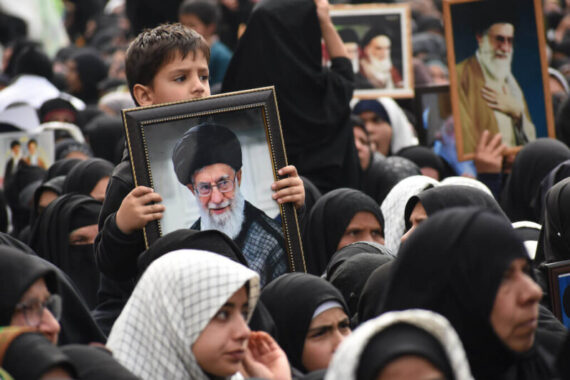
ojtaba Khamenei has emerged as a possible successor to Iran’s top leadership after the reported death of his father, Ali Khamenei, during attacks by the United States and Israel. Although no official announcement has been made, Western and Israeli media have suggested that he is among the leading figures who could assume power in the Islamic Republic.
Mojtaba Khamenei was born in 1969 and is the second son of Ali Khamenei, who ruled Iran as supreme leader for more than three decades. Unlike many political figures in Iran, Mojtaba has largely avoided public visibility. He rarely gives speeches, sermons or interviews, and many Iranians know little about his public voice despite his long-standing influence behind the scenes.
He is a cleric with the rank of hojatoleslam, a mid-level position in Iran’s religious hierarchy. While this rank is lower than that of an ayatollah, it would not necessarily prevent him from becoming supreme leader. His father also did not hold the rank of ayatollah when he was chosen as leader in 1989, and Iran’s laws were adjusted to allow his appointment.
Despite his low public profile, Mojtaba Khamenei is believed to wield considerable influence within Iran’s political and security establishment, particularly within the powerful Islamic Revolutionary Guard Corps (IRGC).
During the 1980–1988 Iran–Iraq War, he reportedly served in an IRGC battalion, forming relationships with figures who later rose to senior positions in Iran’s military and intelligence institutions.
Over the years he is believed to have become a key intermediary between his father and the IRGC, giving him influence in strategic decisions and elite networks within the state.
Opponents of the Iranian government have long accused Mojtaba Khamenei of involvement in the suppression of political dissent, particularly during the
2009 Iranian Green Movement.
Reformists claimed he helped coordinate security forces and the Basij militia during the crackdown that followed the disputed re-election of former president
Mahmoud Ahmadinejad.
Mojtaba has also been sanctioned by the United States, and Western reports have alleged that networks connected to him control large financial assets and businesses, though these claims are disputed and often difficult to verify.
Recommended
If Mojtaba Khamenei were chosen as Iran’s next supreme leader, it would be historically significant. His rise would effectively create a hereditary transfer of power, something critics say resembles the monarchy overthrown in the Iranian Revolution.
Supporters inside the conservative establishment, however, view him as someone who could preserve ideological continuity and maintain strong ties with the security apparatus during a period of war and political uncertainty.
The decision does not belong to the government alone. Iran’s constitution assigns that authority to the Assembly of Experts, an 88-member council of clerics tasked with appointing and supervising the supreme leader.
Until a permanent decision is made, reports indicate that Iran is being temporarily overseen by a leadership arrangement that includes President Masoud Pezeshkian and senior judicial and clerical officials.
(Source: Aljazeera English)

Politics Today is dedicated to publishing insightful analyses in order to understand the changing nature of contemporary politics. It aims to contribute to the sound and constructive discussion of international affairs.
You can see how this popup was set up in our step-by-step guide: https://wppopupmaker.com/guides/auto-opening-announcement-popups/

Stay informed by subscribing to
our weekly newsletter.
You can see how this popup was set up in our step-by-step guide: https://wppopupmaker.com/guides/auto-opening-announcement-popups/
You can see how this popup was set up in our step-by-step guide: https://wppopupmaker.com/guides/auto-opening-announcement-popups/
You can see how this popup was set up in our step-by-step guide: https://wppopupmaker.com/guides/auto-opening-announcement-popups/
You can see how this popup was set up in our step-by-step guide: https://wppopupmaker.com/guides/auto-opening-announcement-popups/