Xi Jinping Projects Power and Unity at Beijing Military Parade
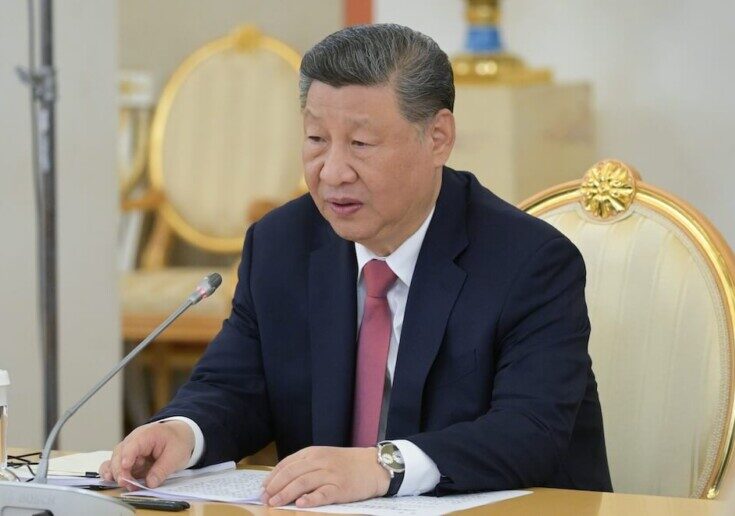
Xi warned that the world was at a crossroads between “peace or war,” and pledged that China would continue to stand “on the right side of history.”
September 3, 2025
I
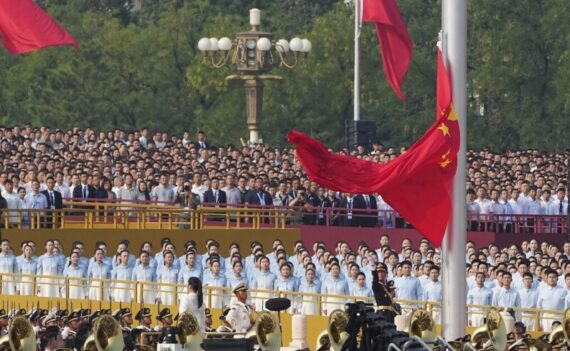
n a dramatic show of military strength and geopolitical alignment, Chinese President Xi Jinping hosted Russian President Vladimir Putin and North Korean leader Kim Jong Un at a grand military parade in Beijing on Wednesday, marking the 80th anniversary of Japan’s surrender in World War Two. The unprecedented public appearance of the three leaders comes amid rising global tensions and growing strategic convergence between their nations.
Addressing a crowd of more than 50,000 people at Tiananmen Square, Xi warned that the world was at a crossroads between “peace or war,” and pledged that China would continue to stand “on the right side of history.” His remarks were accompanied by a highly choreographed 70-minute parade featuring some of China’s most advanced military technology, including hypersonic missiles, underwater drones, and a robotic quadruped dubbed the “robot wolf.”
“This event is more than a commemoration,” said Wen-Ti Sung, a fellow at the Atlantic Council’s Global China Hub. “It’s a clear message: China sees itself as a central player in shaping a new world order—militarily, economically, and ideologically.”
The ceremony, boycotted by most Western leaders, was strategically designed to showcase China’s deepening ties with two of the West’s most ostracized leaders. Putin, under sanctions and political isolation due to the ongoing war in Ukraine, and Kim, condemned for his country’s nuclear weapons program, were prominently seated beside Xi throughout the event. The three leaders were seen engaged in conversation repeatedly, underscoring a growing sense of solidarity.
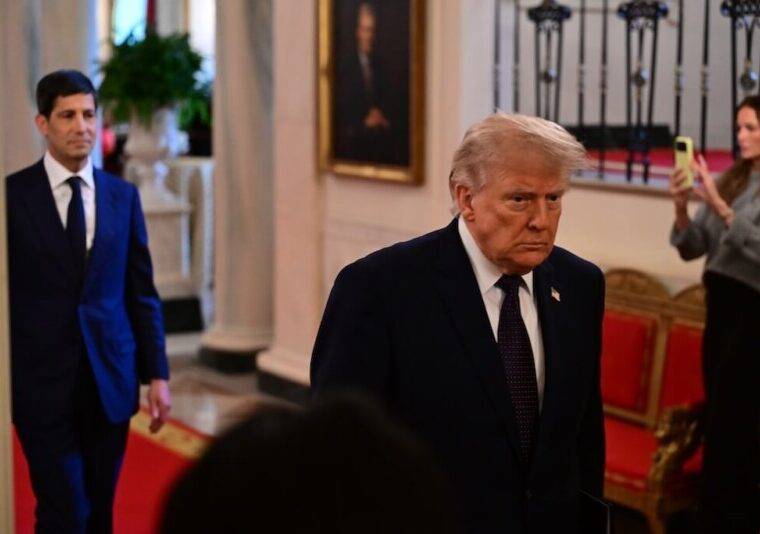
“Please give my warmest regards to Vladimir Putin, and Kim Jong Un, as you conspire against the United States of America,” former U.S. President Donald Trump posted on Truth Social as the parade began—a comment the Kremlin dismissed as sarcasm.
It was the first time the trio has appeared in public together and the first time in 66 years that a North Korean leader has attended a Chinese military parade.
Though heavily symbolic, the gathering could signal deeper military and diplomatic cooperation among the three nations. Analysts point to the mutual defense pact signed between Russia and North Korea in June 2024, as well as growing energy and trade ties between Moscow and Beijing. A similar arrangement between China and North Korea would significantly shift the security landscape of East Asia.
At a bilateral meeting later in the day, Putin reportedly thanked Kim for North Korea’s “courageous fighting” in Ukraine, a statement that drew immediate concern from Western security analysts. Kim, in turn, expressed his willingness to “do everything he can” to support Russia, according to state media.
“Beyond the pageantry, this could be the moment where a loose axis begins to solidify,” said Jon Czin, a foreign policy expert at the Brookings Institution. “It may not be a formal alliance, but the shared symbolism here is unmistakable.”
In his keynote address, Xi framed the end of World War Two as the beginning of China’s “great rejuvenation”—a narrative central to his ideological vision. He called on the world to reject “hegemonism and power politics,” widely interpreted as a critique of U.S. global leadership.
Earlier this week, Xi had outlined a similar theme at a regional security summit, calling for a new, multipolar world order. At the post-parade reception in the Great Hall of the People, he reiterated that humanity must avoid returning to the “law of the jungle.”
His rhetoric aims to galvanize not just national pride at home, but also build international support among countries disillusioned with Western dominance.
While the parade projected unity and strength, it also served to distract from internal troubles. Over the past two years, Xi has overseen a sweeping anti-corruption campaign within the People’s Liberation Army (PLA), leading to the removal of over a dozen top generals, many of them considered his close allies.
“The parade allows Xi to focus attention on China’s military modernization, while diverting scrutiny from the persistent institutional problems within the PLA,” Czin said.
Recommended
South Korean officials confirmed that Kim shook hands with National Assembly Speaker Woo Won-shik before the parade—an unexpected diplomatic gesture amid deteriorating inter-Korean relations. However, North Korea has since rejected Seoul’s recent offers to resume dialogue, maintaining a hardline stance.
Kim’s daughter, Ju Ae—believed by South Korean intelligence to be his likely successor—reportedly accompanied him to Beijing but did not appear publicly during the parade.
As fighter jets roared overhead and thousands of troops marched in unison, the Beijing parade was a theatrical reminder of shifting power dynamics in the 21st century. With Xi, Putin, and Kim presenting a united front, the event marks not just a commemoration of the past, but a bold—and potentially confrontational—vision for the future.
(Source: Reuters)

Politics Today is dedicated to publishing insightful analyses in order to understand the changing nature of contemporary politics. It aims to contribute to the sound and constructive discussion of international affairs.
You can see how this popup was set up in our step-by-step guide: https://wppopupmaker.com/guides/auto-opening-announcement-popups/

Stay informed by subscribing to
our weekly newsletter.
You can see how this popup was set up in our step-by-step guide: https://wppopupmaker.com/guides/auto-opening-announcement-popups/
You can see how this popup was set up in our step-by-step guide: https://wppopupmaker.com/guides/auto-opening-announcement-popups/
You can see how this popup was set up in our step-by-step guide: https://wppopupmaker.com/guides/auto-opening-announcement-popups/
You can see how this popup was set up in our step-by-step guide: https://wppopupmaker.com/guides/auto-opening-announcement-popups/