Xi to Host Putin and Modi as China Showcases Global South Solidarity
Putin, shunned by many Western leaders, will share the stage with Xi and Modi in a highly symbolic demonstration of his remaining partnerships.
August 27, 2025
C
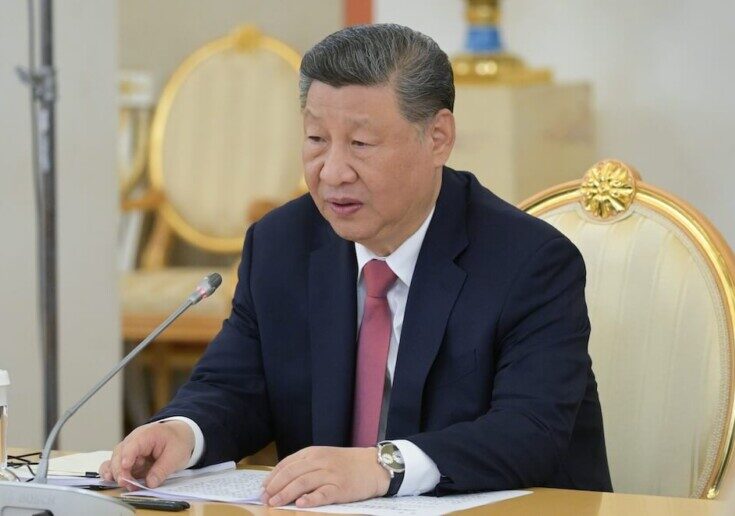
hinese President Xi Jinping is set to host more than 20 world leaders at a high-profile regional security forum in Tianjin from August 31 to September 1, aiming to project unity among Global South nations and strengthen ties with sanctions-hit Russia amid mounting tensions with the United States.
The Shanghai Cooperation Organisation (SCO) summit will mark the largest gathering since the bloc’s founding in 2001. Leaders from Central Asia, the Middle East, South Asia, and Southeast Asia have been invited, with Russian President Vladimir Putin and Indian Prime Minister Narendra Modi among the most prominent attendees.
The event comes at a time of deep geopolitical flux and shifting alliances, as countries seek to navigate between U.S.-led pressure and Beijing’s expanding influence.
One of the key moments of the summit will be Modi’s first visit to China in more than seven years. The Indian leader is expected to meet Xi on the sidelines to advance a fragile détente following deadly border clashes between the two countries in 2020.
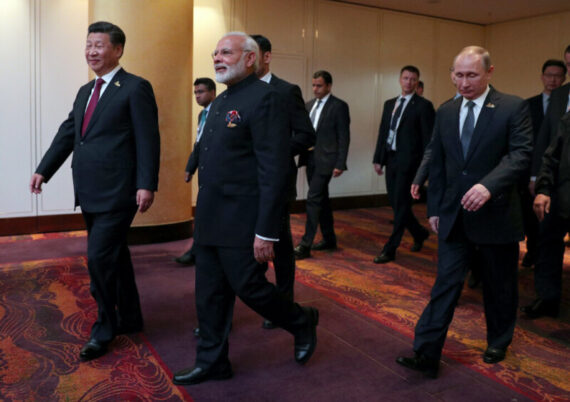
Modi last appeared on the same stage as Xi and Putin during the 2024 BRICS summit in Kazan, Russia. Since then, India has faced renewed tariff pressure from the U.S. administration of Donald Trump, while seeking to stabilize ties with Beijing in the face of broader regional competition.
“It’s likely that New Delhi will swallow their pride and put this year’s SCO problems behind them in a bid to maintain momentum in the détente with China, which is a key Modi priority right now,” said Eric Olander, editor-in-chief of The China-Global South Project.
While the summit is being framed as a major step toward building a “new type of international relations,” analysts caution that the SCO has historically struggled to translate its convening power into concrete policy action.
“What is the precise vision that the SCO represents and its practical implementation are rather fuzzy. It is a platform that has increasing convening power, which helps in narrative projection,” said Manoj Kewalramani, chairperson of the Indo-Pacific Research Programme at the Takshashila Institution in Bangalore.
The bloc, which started as a security-focused group of six Eurasian nations, has expanded to 10 permanent members and 16 dialogue and observer countries. Its agenda now includes economic and military cooperation, though its impact on substantive security challenges remains limited.
Frictions within the organization persist, particularly between India and Pakistan. A June SCO defense ministers’ meeting failed to adopt a joint statement after India objected to omissions regarding an April 22 attack on Hindu tourists in Indian Kashmir, which sparked the worst cross-border fighting in decades.
New Delhi also refused to join an earlier SCO condemnation of Israeli attacks on Iran, another member state, reflecting the bloc’s internal divisions.
For Russia, the summit offers another chance to break its diplomatic isolation following the war in Ukraine. Putin, shunned by many Western leaders, will share the stage with Xi and Modi in a highly symbolic demonstration of his remaining partnerships.
“Xi will want to use the summit as an opportunity to showcase what a post-American-led international order begins to look like and that all White House efforts since January to counter China, Iran, Russia, and now India have not had the intended effect,” said Olander.
Putin will remain in China after the summit to attend a World War Two military parade in Beijing, marking an unusually extended stay outside of Russia.
India’s priorities at the SCO include trade, connectivity, respect for sovereignty, and territorial integrity, according to Indian foreign ministry official Tanmaya Lal. Analysts expect incremental announcements on troop withdrawals from disputed border regions, easing of trade and visa restrictions, and new cooperation initiatives in areas such as climate policy.
“Despite the lack of substantive policy announcements expected at the summit, experts warn that the bloc’s appeal to Global South countries should not be underestimated,” said Kewalramani.
Recommended
The summit comes amid what Chinese officials describe as erratic U.S. policymaking. The Trump administration has intensified efforts to counter China, Iran, Russia, and now India, but Beijing sees the growing SCO as proof that alternative alliances are gaining traction.
“Just look at how much BRICS has rattled U.S. President Donald Trump, which is precisely what these groups are designed to do,” Olander noted.
For Xi, the meeting is as much about symbolism as strategy: a carefully staged photo opportunity showing that Beijing can still command the attention of major regional players despite ongoing tensions with Washington.
“This summit is about optics, really powerful optics,” Olander said.
(Source: Reuters)

Politics Today is dedicated to publishing insightful analyses in order to understand the changing nature of contemporary politics. It aims to contribute to the sound and constructive discussion of international affairs.
You can see how this popup was set up in our step-by-step guide: https://wppopupmaker.com/guides/auto-opening-announcement-popups/

Stay informed by subscribing to
our weekly newsletter.
You can see how this popup was set up in our step-by-step guide: https://wppopupmaker.com/guides/auto-opening-announcement-popups/
You can see how this popup was set up in our step-by-step guide: https://wppopupmaker.com/guides/auto-opening-announcement-popups/
You can see how this popup was set up in our step-by-step guide: https://wppopupmaker.com/guides/auto-opening-announcement-popups/
You can see how this popup was set up in our step-by-step guide: https://wppopupmaker.com/guides/auto-opening-announcement-popups/