Syria’s President Addresses UN for First Time in Six Decades
Al-Sharaa’s speech at the UN was met with celebration in Damascus, where large crowds filled Umayyad Square to cheer his appearance
September 25, 2025

F
or the first time in nearly 60 years, a Syrian president addressed the U.N. General Assembly on Wednesday, marking a dramatic turn in the country’s international standing after the collapse of the Assad family’s decades-long rule.
President Ahmad al-Sharaa told world leaders that “Syria is reclaiming its rightful place among the nations of the world,” as thousands of Syrians watched his speech on big screens in Damascus and other cities, waving national flags. His appearance was the first by a Syrian head of state at the U.N. since Noureddine Attasi spoke in 1967, months after Syria lost the Golan Heights to Israel during the Arab-Israeli war.
The speech comes just nine months after Bashar Assad’s sudden ouster in a lightning insurgent offensive that ended the Assad dynasty’s 54-year rule, a period marked by repression, mass killings and torture. Al-Sharaa, who rose to power after the fall of the Assad, framed his address as the beginning of a new chapter, promising accountability, reconciliation, and a break from Syria’s past.
Al-Sharaa used the U.N. platform to accuse Israel of continuing threats against Syria since Assad’s fall, warning that its policies “contradict with the international community’s support to Syria and its people” and risk destabilizing the region. Negotiations are underway over a potential security deal that could revive the 1974 disengagement agreement between the two countries, though Israeli Prime Minister Benjamin Netanyahu has downplayed the prospects of a breakthrough.
Netanyahu’s office later confirmed that talks are in progress, stressing that Israel’s interests must be guaranteed, including demilitarization of southwestern Syria and security protections for the Druze minority.
Since coming to power, al-Sharaa has emphasized coexistence and pledged to protect Syria’s diverse communities. Al-Sharaa told the General Assembly that Damascus had formed fact-finding missions and granted U.N. investigators access to probe the killings. “I promise to bring anyone whose hands are tainted with the blood of Syrian people to justice,” he said.
Recommended
The president also touted his government’s campaign against the illicit Captagon trade, a multi-billion-dollar narcotics industry that flourished under Assad and helped finance his war effort amid Western sanctions. Authorities have closed dozens of production facilities in recent months, al-Sharaa said, while urging the international community to lift sanctions he argued now “shackle the Syrian people.”
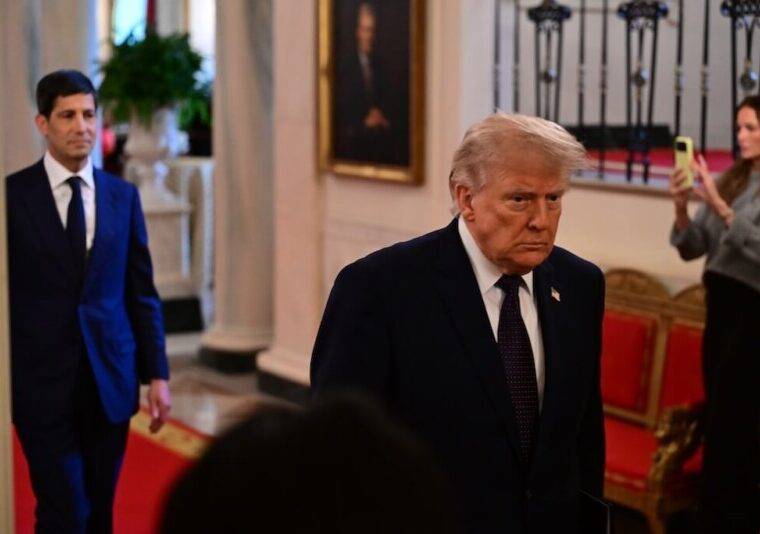
U.S. President Donald Trump, who met al-Sharaa in May in Saudi Arabia, has already lifted or waived some sanctions. But the toughest measures, imposed by the U.S. Congress in 2019, remain in place and can only be removed through legislative approval.
Al-Sharaa’s speech was met with celebration in Damascus, where large crowds filled Umayyad Square to cheer his appearance. But in New York, members of the Syrian diaspora staged rival demonstrations outside the U.N.
Supporters waved Syria’s three-starred revolution flag, now recognized as the country’s official emblem, and praised al-Sharaa as the leader who ended decades of dictatorship.
Al-Sharaa’s international debut highlights Syria’s uncertain transition after decades of authoritarian rule and 14 years of devastating civil war that killed more than a million people and displaced millions more. His pledges of justice, coexistence, and economic revival face daunting obstacles: fragile security, lingering sectarian distrust, and the difficult task of rebuilding a shattered state.
“Syria does not wish the pain it passed through for anyone,” al-Sharaa said, closing his speech with an appeal for global solidarity and a statement of support for Palestinians amid the ongoing genocide in Gaza.
(Source: The Associated Press)

Politics Today is dedicated to publishing insightful analyses in order to understand the changing nature of contemporary politics. It aims to contribute to the sound and constructive discussion of international affairs.
You can see how this popup was set up in our step-by-step guide: https://wppopupmaker.com/guides/auto-opening-announcement-popups/

Stay informed by subscribing to
our weekly newsletter.
You can see how this popup was set up in our step-by-step guide: https://wppopupmaker.com/guides/auto-opening-announcement-popups/
You can see how this popup was set up in our step-by-step guide: https://wppopupmaker.com/guides/auto-opening-announcement-popups/
You can see how this popup was set up in our step-by-step guide: https://wppopupmaker.com/guides/auto-opening-announcement-popups/
You can see how this popup was set up in our step-by-step guide: https://wppopupmaker.com/guides/auto-opening-announcement-popups/