Landmine Casualties Hit 4-Year High as Funding Declines
As for mine explosions victims, civilians made up 90% of all casualties, nearly half of them children.
December 3, 2025
G
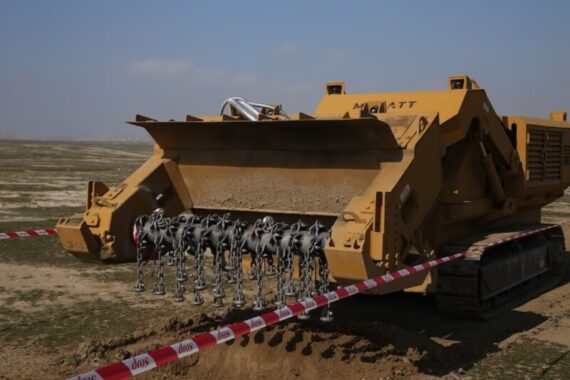
lobal landmine casualties rose to a four-year high in 2024 amid declining international funding and renewed use of banned weapons in several conflict zones, according to the Landmine Monitor 2025 report released Monday by the International Campaign to Ban Landmines (ICBL).
The report recorded 6,279 people killed or injured by landmines and explosive remnants of war last year — the highest annual toll since 2020. The surge was driven largely by escalating conflicts in Myanmar, where “massive use continues,” and in Syria, where civilians returning to contaminated areas face increasing danger.
Civilians made up 90% of all casualties, nearly half of them children. For the second consecutive year, Myanmar registered the highest casualty count worldwide.
“These findings make clear both the scale of new challenges and the need to stay united in upholding commitments and maintaining vital compliance efforts,” said Mark Hiznay, the report’s ban policy editor.
Despite the rise in casualties, the 163-page report noted some progress. More than half of the affected states parties reduced contamination in 2024, and 31 countries have completed clearance since the Mine Ban Treaty came into force in 1999. Oman joined that list in 2025.
Two new accessions — the Marshall Islands and Tonga — brought the number of states parties to 166, covering 85% of the world’s countries.
However, the report warned that the goal of a mine-free world is slipping further away. Total area cleared declined in 2024 due to reduced funding and growing insecurity, while support for victim assistance — just 5% of all mine action financing — fell by nearly 25%.
A freeze on US foreign assistance earlier in 2025 “further deepened the crisis,” it added.
“Behind each statistic is a family and a community still living with the consequences of landmines,” said funding editor Ruth Bottomley. “The decline in funding for victim assistance is alarming and must be urgently reversed.”
Recommended
The report cited continued or possible new use of landmines by Russia, Myanmar, Ukraine, and others, alongside withdrawals or attempted withdrawals from the Mine Ban Treaty — trends the ICBL said signal a “dangerous erosion of the global norm.”
ICBL Director Tamar Gabelnick emphasized that the treaty remains a crucial tool in reducing human suffering.
“The Mine Ban Treaty remains a powerful instrument, and its obligations and principles must be actively defended,” she said. “Turning back is not an option; we have come too far, and the human cost is simply too high.”
(Source: Anadolu Agency)

Politics Today is dedicated to publishing insightful analyses in order to understand the changing nature of contemporary politics. It aims to contribute to the sound and constructive discussion of international affairs.
You can see how this popup was set up in our step-by-step guide: https://wppopupmaker.com/guides/auto-opening-announcement-popups/

Stay informed by subscribing to
our weekly newsletter.
You can see how this popup was set up in our step-by-step guide: https://wppopupmaker.com/guides/auto-opening-announcement-popups/
You can see how this popup was set up in our step-by-step guide: https://wppopupmaker.com/guides/auto-opening-announcement-popups/
You can see how this popup was set up in our step-by-step guide: https://wppopupmaker.com/guides/auto-opening-announcement-popups/
You can see how this popup was set up in our step-by-step guide: https://wppopupmaker.com/guides/auto-opening-announcement-popups/