Has Turkey’s Security Culture Changed?
So, what has changed in Turkey’s security culture? First and foremost, Turkey has become a country that understands very clearly that it must ensure its own security.
June 25, 2026
R
ecent legislative amendments have brought about changes to the structure of the National Security Council in Turkey, which has played a decisive role in domestic politics throughout the history of the Republic. With the establishment of the Directorates of Internal Security Research and Assessment, External Security Research and Assessment, and Defense Planning Coordination, the expanding nature of security in the global arena has been taken into account. Furthermore, such an expansion should also be viewed as a consequence of Turkey’s changing foreign policy and geopolitical perceptions.
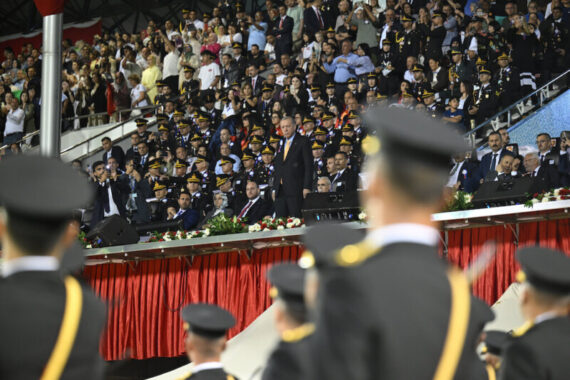
President Erdoğan delivered a speech highlighting key points at the opening of the National Security Conferences, a series planned to articulate Turkey’s approach to security. Alongside an emphasis on historical state tradition, the speech drew attention to the harmonious coordination between Turkey’s institutions in the face of the region’s ongoing and seemingly endless ‘ring of fire’, whilst also heralding the National Security Council’s return to its core remit. In light of the reforms implemented and this announcement, it is worth asking whether there has been a shift in Turkey’s security culture alongside its evolving foreign policy approach.
Security culture is a concept frequently used in the study of International Relations (IR). In this context, it is defined as the totality of norms that shape how a state or society perceives security, defines threats and formulates responses to the security challenges it faces. Security culture, centered on the perception of threats, helps us understand what a state regards as a threat, or which policies it views as such, and, in parallel, the values by which it defines itself and the historical memory through which it does so. At the same time, the behavioral framework that develops through these elements forms a state’s established code of conduct in the international arena.
Consequently, the perception of security becomes a concept directly linked to foreign policy as a natural outcome of these definitions and perceptions. For when a state’s strategic mindset and self-definition change as a product of an internal process, foreign policy is naturally updated, which in turn implies a shift in the reference points of the security narrative. Just as a definition of interests, resulting from a protectionist mindset and a narrow geopolitical narrative, reflects a limited context, such a narrative also leads to the perception of security threats being viewed from a considerably broader perspective.
The most fundamental element shaping Turkey’s security culture has been the identity redefined alongside the establishment of the state. With the acceptance of a Western identity as the cornerstone of the state, foreign policy was entirely shaped by a Western geopolitical narrative, and security culture was naturally shaped by the perception of areas outside the West as sources of threat. Paradoxically, despite waging war against the West, Turkey has constructed its security culture on a plane identical to that of the West, defined its perception of threat as originating from outside the West, and sought to meet its security needs through Western organizations or alliances.
Historical experiences inherited from the Ottoman Empire led to the new state being security-focused; the new Republic, through discourses on national sovereignty, territorial integrity and the unity of the state, necessitated a strong state structure. This, in turn, led to Turkey’s security culture becoming state-centered, and institutions have largely defined their roles as significant power factors in domestic politics by relying on this discourse.
The Middle East and the Caucasus represented the core regions perceived as threats by this security culture; the attempt to demonize Islam, the Kurdish issue and the identities defined through these factors were framed as problems for Turkey. As a result of the geopolitical narrative reflecting a narrow hinterland, distant regions did not even fall within the scope of this security culture. Consequently, Turkey’s security culture has reflected a framework synonymous with the West and its interests; adherence to the NATO concept, both during and after the Cold War, has been Ankara’s foremost priority.
Since 2002, the changes in Turkish foreign policy have naturally led to a shift in the security paradigm, as they also signified a significant transformation of identity. Firstly, the norms guiding foreign policy have diverged, and Turkey has begun to perceive its historical ties not as a threat but as a source of strength. A foreign policy approach has begun to prevail in which Turkey defines itself through an identity that, without disregarding Western values, places greater emphasis on its own identity elements, an identity that, in the simplest terms, can be expressed by the concept of our ‘heartland’. In parallel with this shift in self-definition, the definitions of interests and threats have changed, and the geopolitical perspective has expanded from a framework confined to the West to encompass a much broader geography stretching as far as Africa, Asia and the Americas.
So, what has changed in Turkey’s security culture? First and foremost, Turkey has become a country that understands very clearly that it must ensure its own security. In particular, the situation into which European states have fallen following the war in Ukraine continues to be discussed as an example illustrating just how accurately Ankara has assessed the situation. In this respect, from its very inception, Turkey has moved away from relying on international coalitions and policies dictated by them, and has begun to define its own security framework. In the words of Erdoğan, Turkey has shattered the glass ceiling over it and has transformed into an actor capable of redefining concepts at a regional level, writing its own narrative and shaping its own future. This situation has been interpreted as a reflection of self-confidence; by enhancing its own capabilities, Turkey has been able to devise solutions through its own policies whenever it perceives a threat to its security.
Regions where the traditional security culture held a perception of security threats have largely come to be viewed as areas for cooperation; security has been perceived not merely as a need secured by closing oneself off within borders, but rather as synonymous with taking proactive action. Security has been linked to the deepening of relations and increased mutual interdependence; where security vulnerabilities have arisen as a result of this approach, necessary measures have been taken to expand security boundaries. In this context, cross-border operations have constituted one of the most significant indicators of the shift in Turkey’s security paradigm. Consequently, security boundaries have been expanded, and Turkey has risen to the status of a state capable of implementing its own policies, demonstrating that security can also be ensured through new points established beyond its borders. Furthermore, it is a fact that, in line with Turkey’s evolving and expanding geopolitical understanding, the country now maintains military bases in many countries.
Recommended
Whilst developing the national defense industry and possessing its own weapons is seen as a security necessity, Turkey has also been able to pursue a policy of opposition to the alliance when Western alliances have been compromised, in order to secure arms supplies from other countries. Indeed, whilst the question of whether the S-400s have been deployed or not remains a matter of debate, the purchase of the S-400s serves as a significant example in demonstrating the shift in perception regarding foreign policy and the fulfilment of security needs, setting aside the political repercussions. It is also difficult to understand the ‘Turkey Free of Terrorism’ without linking it to the changing security paradigm. For, thanks to the capabilities at its disposal, Turkey has demonstrated through its achievements that military force cannot be a solution, and by crushing terrorism, it has ensured that a solution can be discussed at the political level. Furthermore, the concept of a ‘Turkey free from terrorism’ is an indicator of a regional vision for peace, encompassing a broad network of cooperation stretching from the Middle East to Africa.
Consequently, Turkey’s security culture now reflects a structure that takes care of its own affairs, shaped largely by its own capabilities and definition of interests. Rather than a vicious cycle in which foreign policy changes feed into domestic politics, or a failure to recognize areas beyond the West in foreign policy, this has transformed into an element that Turkey can provide for itself, one that places the responsibility it bears upon its own values. The scope of security has been adapted to the requirements of international politics, corresponding to a structure characterised by diversity in line with the reality of a growing state. Turkey has transformed from a seeker of security into a producer of security.
So, has this change altered Turkey’s perspective on NATO, or what impact might it have on the NATO summit to be held in Ankara next month? It appears that the shift in Turkey’s security approach has not directly altered its perspective on NATO. It is well known that Ankara is not hesitant regarding its alliance with NATO; on the contrary, it has emphasised its importance even during periods when NATO’s authority and influence were being debated. However, Turkey’s influence within NATO is now positioned differently, not merely due to its numerical superiority but also because of the policies it pursues that form a security shield. Consequently, it is likely that the July summit will serve as a platform for Turkey both to reaffirm its own position and to chart a course that will generate new momentum based on this understanding.

Burak ÇAKIRCA holds a BA, an MA and a Phd from Bolu Abant İzzet Baysal University, Department of International Relations. His research interests include political science, Turkish foreign policy, Middle Eastern politics, foreign policy analysis, international relations theories and international politics. Çakırca works as a lecturer in the Department of International Relations at Bursa Technical University.
You can see how this popup was set up in our step-by-step guide: https://wppopupmaker.com/guides/auto-opening-announcement-popups/

Stay informed by subscribing to
our weekly newsletter.
You can see how this popup was set up in our step-by-step guide: https://wppopupmaker.com/guides/auto-opening-announcement-popups/
You can see how this popup was set up in our step-by-step guide: https://wppopupmaker.com/guides/auto-opening-announcement-popups/
You can see how this popup was set up in our step-by-step guide: https://wppopupmaker.com/guides/auto-opening-announcement-popups/
You can see how this popup was set up in our step-by-step guide: https://wppopupmaker.com/guides/auto-opening-announcement-popups/