Civil War and Chronic Instability in Sudan
In Sudan, the warring parties' search for military and diplomatic support has led to intense external intervention.
December 16, 2025
S
ince gaining independence in 1956, Sudan has been the scene of long and destructive internal conflicts. The conflict between the wealthier northern region, predominantly Arab and Muslim, and the less developed southern region has been the fundamental cause of chronic civil war and instability affecting millions of people for nearly half a century. It is possible to say that the foundations of this conflict, which has been decisive for Sudan’s future, were laid during the British colonial period.
As a result of the Closed District Policy (Southern Policy) implemented by Britain, particularly between 1930 and 1946, ethnic and religious divisions between the north and south deepened. These deepening divisions became apparent during London’s preparations to withdraw from Sudan as part of the disintegration of the British colonial empire after the Second World War. As a reaction to the transition to independence being managed by the Arabs and the systematic exclusion of the south from this process, demonstrations that began in August 1955, a few months before independence, quickly turned into a civil war.
Although Sudan’s first civil war ended with the Addis Ababa Agreement signed in 1972, which granted limited regional autonomy to the southern region, the failure to reach a resolution between the parties on issues such as resource sharing, political power and cultural recognition led to a new environment of conflict. President Gaafar Nimeiri’s decision in 1983 to revoke the agreement and return the south to its former status triggered Sudan’s second civil war. The establishment of the Sudan People’s Liberation Movement (SPLM) in 1983, which would become an important actor for South Sudan, and its central role in the civil war process, was an important step in the south’s organisation and institutionalisation process.
Sudan’s second civil war, which lasted for more than twenty years, ended in January 2005 with the Comprehensive Peace Agreement signed between the Sudanese government and the SPLM, and the process of the south seceding from Sudan and becoming independent became clear. The agreement granted the south a six-year period of autonomy, paving the way for a referendum at the end of this period to determine the region’s future status. As a result of the referendum held in January 2011, South Sudan gained its independence.
Sudan has witnessed yet another new and devastating internal conflict in recent years amid the ongoing conflict in the south. Tensions between Arab and non-Arab communities in the Darfur region in the west of the country, which had existed for decades, gave way to conflict in 2002 when non-Arab ethnic groups such as the Fur, Zaghawa and Masalit responded to their continuous and systematic exclusion by the Khartoum government in Darfur by attacking the government’s military and security institutions. With the Sudanese army focused on the ongoing civil war in the south, President Omar al-Bashir turned to Arab tribes in the region to establish control in Darfur.
Accordingly, the Khartoum government began supporting militia forces known as the Janjaweed, formed by approximately thirty Arab tribes in the region. With the aim of ending the conflict and influenced by international mediation efforts, the Abuja Agreement was signed in 2006, the Doha Agreement in 2011, and the Juba Agreement in 2020 between the Sudanese government and rebel groups. Hundreds of thousands of people have died in this civil war in Darfur, while millions have been displaced.
In addition to the devastating effects of the civil war in Darfur, another significant impact on Sudan was that it initiated the process leading to the establishment of the Rapid Support Forces (RSF), which would become an important actor in the ensuing period. The RSF was established in 2013 as a result of the Khartoum administration’s aim to give this force an institutional structure in order to make greater use of the Janjaweed militias, fighters mostly of a common ethnic origin who helped bring Darfur under control. Mohammed Hamdan Dagalo (Hemedti), one of the leading figures of the Cancavid militia and someone who had developed good relations with the al-Bashir regime, was appointed commander of the RSF.
Viewing the RSF as strategically important for the security of his regime, al-Bashir mobilised political and financial resources, enabling the RSF to rapidly grow in strength. Despite efforts to integrate it into the Sudanese army, the RSF managed to maintain its independent structure. The rapid growth of its members, whom it employs as mercenaries, and the rapid expansion of its economic power through revenues from the gold mines it controls have also contributed to the rise of the RSF.
Al-Bashir’s removal from office in April 2019 following months of protests, carried out by the Sudanese army in a coup, has plunged the country into an unstable environment that could lead to a new civil war. The main actors in this civil war, which continues with full force today, are the Armed Forces and the RSF. During Al-Bashir’s overthrow, the two actors collaborated, with Armed Forces Commander Abdulfettah Al-Burhan chairing the Transitional Sovereignty Council and Hemedti serving as vice-chairman.
This collaboration was short-lived, however, as disagreements over the future of the RSF became the main source of tension between Al-Burhan and Hemedti. Al-Burhan sought to integrate the RSF into the army in order to control Hemedti’s rapidly growing power, while Hemedti sought to legitimise the RSF presence within Sudan’s political structure. The increasing tension and power struggle between the parties turned into open conflict on 15 April 2023, plunging the country back into civil war.
The first year of the conflict, which quickly spread across the country, saw the RSF gain military superiority, but 2024 brought changes in the course of the civil war. The Sudanese army’s offensive to retake the capital, Khartoum, launched in September, signalled this shift, and the capture of the city in March 2025, after a hiatus of nearly two years, marked a significant turning point. Meanwhile, as the civil war raged on, another significant turning point occurred when El Fasher, one of the major cities in the Darfur region, was captured by the RSF in October 2025 after an eighteen-month siege.
In February 2025 , the signing of a political charter by the RSF and its twenty-three allied groups to establish a parallel government, and the subsequent declaration of the Government of Peace and Unity on 15 April, the anniversary of the civil war, raised concerns that the country would experience renewed division as a result of the civil war, which began as a result of the disagreement and power struggle between the Armed Forces and the RSF.
Recommended
The ongoing civil war in Sudan has also been the scene of interventions by many regional and non-regional actors. The United Arab Emirates (UAE) is the RSF’s biggest supporter. The rapprochement between Hemedti and the UAE, which began during the Yemen intervention, has continued and intensified during the civil war. Egypt, Turkey, Iran and Russia are also important supporters of the Sovereignty Council.
As a result of the search for international support in the early months of the civil war, Sudan and Iran reached an agreement in October 2023 to resume diplomatic relations, which had been severed in 2016. Russia, although it was a significant supporter of the RSF in the first year of the civil war, particularly through Wagner, changed its policy towards Sudan from 2024 onwards and began to support the Sovereignty Council.
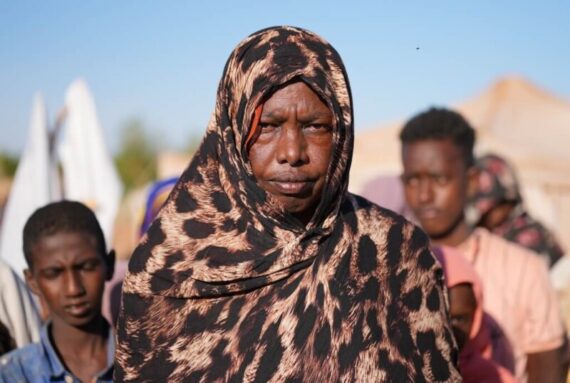
The ongoing civil war in the country shares similarities with past civil wars, but there are also differences. The most fundamental similarity is its social destructiveness. As in previous wars, the ongoing civil war is marked by severe human rights violations, with tens of thousands of people killed and millions displaced. One important difference lies in the causes of the conflict. The main cause of previous civil wars was largely the discontent of different ethnic groups with the policies of the dominant group. The current civil war, however, has emerged as a result of a power struggle within the dominant group.
Another difference relates to the scope of the conflict. While previous conflicts were largely regional in nature, confined to the southern region or Darfur, the current conflict has had a devastating impact on most of the country, including the centre. Consequently, it poses a much greater risk than previous conflicts in terms of the collapse of state mechanisms. Although this risk has been relatively reduced by the Sovereign Council’s capture of Khartoum and the RSF’s retreat to the west, the RSF remains a powerful threat. Finally, the warring parties’ search for military and diplomatic support has led to intense external intervention.
(Originally published in Turkish by Kriter)

Melih Yıldız
He graduated from the Department of International Relations at the Faculty of Political Sciences, Sakarya University in 2019. In 2023, he became a research assistant at the Middle East Institute, Sakarya University, where he is pursuing his doctoral studies. His areas of expertise include Egyptian and Sudanese politics, the Eastern Mediterranean, and arms and security.
You can see how this popup was set up in our step-by-step guide: https://wppopupmaker.com/guides/auto-opening-announcement-popups/

Stay informed by subscribing to
our weekly newsletter.
You can see how this popup was set up in our step-by-step guide: https://wppopupmaker.com/guides/auto-opening-announcement-popups/
You can see how this popup was set up in our step-by-step guide: https://wppopupmaker.com/guides/auto-opening-announcement-popups/
You can see how this popup was set up in our step-by-step guide: https://wppopupmaker.com/guides/auto-opening-announcement-popups/
You can see how this popup was set up in our step-by-step guide: https://wppopupmaker.com/guides/auto-opening-announcement-popups/