A New Threshold in the Vicious Cycle: A Pause for ‘Southern Cyprus’ in the EU's Scope?
The Israel-centered tripartite alliance appears likely to create a disruptive point of resistance for Turkey-TRNC relations, even if it fails to yield results.
January 20, 2026
F
or decades, the Ninth Symphony by the world-renowned Austrian composer Ludwig van Beethoven (1770–1827) has been a source of inspiration for European artists and art movements. Over the years, the piece gained political significance and was performed across continental Europe as a symbol of freedom after the fall of the Berlin Wall. The symphony became the anthem of the European Union (EU), an umbrella organization representing European values after centuries of war and power struggles. The anthem was inspired by the words of the German poet Friedrich Schiller (1759–1805), who was influenced by the French Revolution.
With its rhythm and the feelings it evokes, the anthem reflected the sentiments of the 1980s and ’90s, when it was officially declared, symbolizing the EU’s creed, which is built on democracy and European values. However, the optimistic picture created by new members joining in waves of enlargement over the years has given way to a more pessimistic climate due to recent regional developments. Perhaps Beethoven’s Fifth Symphony, familiar for its “tat-tat-tat-tam” sound often used as a suspenseful backdrop in films, better reflects the union’s current mood.
The irony in the union’s relations with Turkey begins at this point. Developments that strain the political atmosphere in Europe can also bring about rapprochement in the dialogue established with Turkey. Currently, the negative attitude toward Turkey seems to have given way to a more pragmatic framework and vital priorities.
After years of war and attrition, the EU project emerged as a stabilizing umbrella within European borders. Since the 1960s, Turkey has officially expressed its desire to be part of the project. As the expansion processes gained momentum, particularly following the collapse of the Soviet Union, European countries gained moral superiority in line with the liberal free market creed. From the 1990s onward, peripheral countries, including Turkey, also steered toward this democratic standard. The opening of new channels and the reforms implemented have raised Turkey’s democratic standards and facilitated the activation of channels that could not be opened through internal dynamics. In particular, the influence of the concept of “guardianship,” which gained political significance over the years and impacted various areas, has been eroded by reforms carried out under EU guidance.
Difficult years began in 2007, despite positive progress on the EU roadmap. As Foreign Minister Hakan Fidan emphasized in recent interviews, this positive momentum gradually reversed after Nicolas Sarkozy came to power in France. The Sarkozy administration blocked five of the 35 chapters that needed to be opened within the framework of the EU acquis. Encouraged by this, the Greek Cypriot Administration (GCA) blocked the opening of six more chapters. Currently, only 16 of the 35 chapters have been opened, and the remaining chapters remain politically deadlocked. Fourteen chapters cannot be opened for negotiation at present due to the Cyprus issue, even if the technical requirements are met. (Note: Technically, negotiations are being conducted on 33 chapters. Chapters 34 and 35 will be introduced after all other items have been closed.)
The developments in Turkey’s EU accession process are taking on new forms and shifting axes. This is due not only to factors between the two parties, but also to regional developments. One of the most significant developments was the EU’s decision to collaborate with Turkey to reduce the influx of migrants, which was a direct result of the war in Syria. The visa liberalization agreement that followed the Turkey-EU Summit in March 2016 was an important step in this context. The agreement not only addressed irregular migration management but also established parameters that could revitalize relations. However, following the attempted coup on July 15, the parties’ priorities changed, resulting in different positions. The real deterioration in relations began during this period.
In 2019, tensions in the Eastern Mediterranean dragged Turkey-EU relations to their lowest point, despite a positive start to the year. The Eastern Mediterranean crisis and the EU’s categorical opposition to the Maritime Jurisdiction Agreement signed by Turkey and Libya caused relations to reach a new low. The decisions made on July 15, 2019, led to the suspension of high-level dialogue channels, including the “Partnership Council,” and the withdrawal of the European Investment Bank’s credit support. Ultimately, the mechanisms for monitoring the process were disabled.
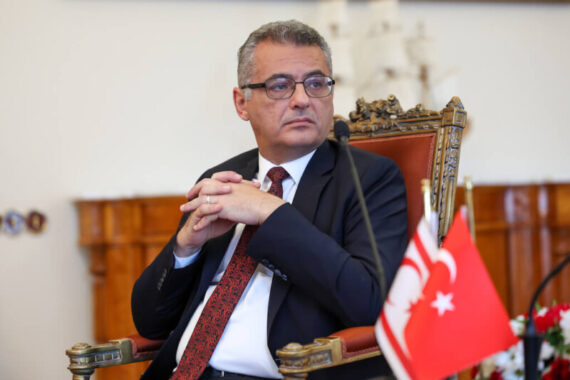
As is customary, one of the 27 EU countries holds the rotating presidency for six months at a time. As of January 1, that country is Cyprus. Interestingly, Cyprus has assumed this role at a time when relations with Turkey, the country that has caused the most headaches during the candidacy process, are positive. Although rotating presidencies do not play a particularly decisive institutional role, they can set the agenda for the Council. Progress can be made in micro-scale policies where members share a common view. In practice, it seems unlikely that the Turkish Republic of Northern Cyprus will facilitate or complicate matters regarding Turkey.
However, the GKRY will make some moves with the aim of cornering Turkey. According to reports, the GKRY’s foreign minister plans to invite Hakan Fidan to the informal European Union Foreign Affairs Council (Gymnich) meeting to be held in southern Cyprus in spring 2026. Turkey was invited to the 2024 meeting after a five-year hiatus (another aftershock of the 2019 incident). It seems unlikely that Turkey will respond positively to this invitation. The Leaders’ Summit usually takes place in Brussels every term, but it is also common practice for the term presidents to organize an additional summit in their own countries.
It has been suggested that the Turkish Republic of Northern Cyprus could organize an additional Leaders’ Summit within this framework and invite President Erdoğan to attend. It would be nearly impossible to expect Turkish officials to participate in summits that take place in a territory Turkey does not recognize. Conversely, it is reasonable to assume that the GKRY would exploit these invitations for political gain, concealing its maximalist objectives regarding the TRNC and the Eastern Mediterranean. Within the union, it is accepted as established practice that the rotating presidencies traditionally take a neutral position. It is also important to note that no significant crisis occurred during the GKRY’s last presidency in 2012.
The recent rapprochement between Israel, Greece, and the GKRY is also being closely monitored. At the tripartite summit in Jerusalem on December 22, Turkey was the hidden subject, and future plans centered on a strategy that would sideline Turkey. Although Israel is not a member, its Eastern Mediterranean agenda resonates at both ends of the Aegean.
As we enter the new year, we expect the EU to take steps on issues that will impact social life. Chief among these is the “Visa Liberalization Dialogue,” which could solve the visa issues Turkish citizens face when traveling to Schengen countries. There are challenging issues in this regard; 66 of the 72 criteria have been met. Recently, it was reported that the EU delegation informed Turkey that the European Commission intends to restart the dialogue process. However, revising the chapter on counterterrorism without addressing Turkey’s concerns does not seem feasible. Progress towards a terrorism-free Turkey could be pivotal in this regard.
Another current issue on the table is Turkey’s potential inclusion in the “Security Action for Europe” (SAFE) mechanism. Approved by the EU, the program is a €150 billion financing mechanism that will strengthen the defense resilience of member states and Ukraine. Although the deadline to apply to SAFE expired on November 30, many actors, including Germany and the UK, favor Turkey’s participation. The EU has also made statements indicating approval of Turkey’s participation. It seems likely that the expiration of the deadline will be considered a minor detail and the formulas will be implemented.
Another important issue that Turkey is awaiting is an update to the Customs Union. It is anticipated that the regulation will correct the trade imbalance, which has caused a loss of value due to excessive discussion. The current situation aligns with the perspective of full membership. However, the negative repercussions of its implementation currently outweigh the positives. One of the most negative aspects for Turkey is that it does not allow Turkey to conclude Free Trade Agreements with third countries under conditions similar to those applied by the EU. It is essential that these conditions, which put Turkish exporters at a disadvantage, be regulated. Resolving the millions of dollars in losses in trade relations, the asymmetry in competitive conditions, customs gate quotas in terms of logistics, and high EU customs duties in the agricultural sector would represent significant progress for the Turkish economy.
Recommended
Although our main theme has been the dynamics of bilateral relations, the EU’s vital agenda items are entirely centered on the Russia-Ukraine war. Turkey’s role as a mediator in this crisis has also altered the EU administration’s perception of Ankara.
EU-Turkey relations continue to fluctuate in sync with Europe’s shifting values. Given this decades-long dynamic, it seems unlikely that Europe’s perspective on Cyprus will change significantly. The constructive stance of the renewed administration following the October elections in the TRNC offers hope. However, the Israel-centered tripartite alliance appears likely to create a disruptive point of resistance for Turkey-TRNC relations, even if it fails to yield results. A structural shift in the balance of power may only occur after a new conflict initiated by influential powers such as the US and Russia.
(Originally published in Turkish by Kriter)

Emre Karaca worked for Haber Global TV Channel. Previously, he worked at Anadolu Agency as a diplomatic correspondent. Karaca graduated from Exeter University with an MA in Middle East Politics and International Relations.
You can see how this popup was set up in our step-by-step guide: https://wppopupmaker.com/guides/auto-opening-announcement-popups/

Stay informed by subscribing to
our weekly newsletter.
You can see how this popup was set up in our step-by-step guide: https://wppopupmaker.com/guides/auto-opening-announcement-popups/
You can see how this popup was set up in our step-by-step guide: https://wppopupmaker.com/guides/auto-opening-announcement-popups/
You can see how this popup was set up in our step-by-step guide: https://wppopupmaker.com/guides/auto-opening-announcement-popups/
You can see how this popup was set up in our step-by-step guide: https://wppopupmaker.com/guides/auto-opening-announcement-popups/