Top U.S. Catholic Cardinals Question Morality of American Foreign Policy

January 20, 2026

Cardinals Blase Cupich of Chicago, Robert McElroy of Washington, and Joseph Tobin of Newark said the United States had entered “the most profound and searing debate about the moral foundation for America’s actions in the world since the end of the Cold War.”
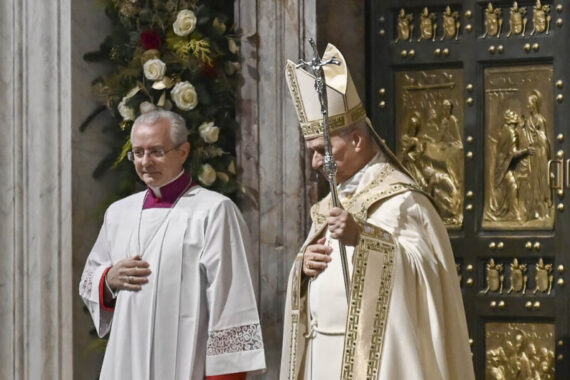
Pope Leo XIV closes the Holy Door before celebrating Mass for the Epiphany at St. Peter's Basilica in Vatican City, Vatican on January 06, 2026. Photo by Anadolu Images.

I

n a rare and sharply worded public intervention, three of the United States’ highest-ranking Catholic cardinals on Monday issued a joint statement questioning the moral basis of American foreign policy, signaling deep concerns within parts of the Catholic hierarchy about Washington’s global conduct.

Cardinals Blase Cupich of Chicago, Robert McElroy of Washington, and Joseph Tobin of Newark said the United States had entered “the most profound and searing debate about the moral foundation for America’s actions in the world since the end of the Cold War.” The rare unified statement from senior church leaders rejected the notion that military force should be treated as a routine instrument of U.S. policy and stressed that war must be used only as a last resort and in truly extreme circumstances.

The statement criticized the increasing reliance on military action and questioned whether America still fulfills its moral role in advocating peace, human dignity and the protection of sovereign rights. Although the cardinals did not directly name President Donald Trump in their remarks, the timing and context of their critique reflected broad unease with recent U.S. foreign policy decisions.

Moral concerns over global actions

In their statement, the cardinals cited several international developments as examples that have raised fundamental questions about the use of force and the meaning of peace:

Venezuela: U.S. involvement and recent military actions in the country that culminated in the capture of President Nicolás Maduro were highlighted as situations where the justification and consequences of military force should be scrutinized.

Russia’s War in Ukraine: The prolonged conflict and Washington’s role in supporting Kyiv’s defense against Russian forces were referenced as part of the broader debate over military engagement.

Threats to Greenland’s Autonomy: Comments and threats by the Trump administration regarding Greenland’s future also prompted concern, as they highlighted the fragility of national self-determination.

The cardinals echoed recent statements by Pope Leo XIV, who, in a fiery speech earlier this month to Vatican diplomats, criticized the “zeal for war” that he said was spreading globally. The Pope’s remarks warned against replacing diplomacy and consensus-building with force and coercion.

Call for a ‘genuinely moral’ approach

The cardinals called for a renewed focus on a “genuinely moral foreign policy,” one that respects human life and dignity, supports religious freedom, and promotes peace through nonviolent means and economic assistance. They emphasized that U.S. actions should prioritize these principles over “narrow national interests.”

“Our country’s moral role in confronting evil around the world, sustaining the right to life and human dignity, and supporting religious liberty are all under examination,” the statement read, reflecting the church leaders’ concern that moral discourse in foreign policy is being overshadowed by strategic, political and economic priorities.

The cardinals’ intervention is notable not only for its content but also for the unity of three prominent figures speaking in concert, a relatively rare occurrence in U.S. Catholic leadership. Their message comes amid growing debates within the Church about how religious teachings should inform responses to war, peace, and international engagement.

U.S. response and broader reaction

The White House did not immediately respond to requests for comment on the cardinals’ statement, and the broader U.S. political reaction was still unfolding at the time of publication.

The emerging discourse among American Catholics mirrors a broader international conversation about ethics, power, and global leadership. Observers note that the cardinals’ statement could influence both religious and public opinion on foreign policy, especially as debates intensify over military engagement, national sovereignty, and moral leadership on the world stage.

The intervention by Cardinals Cupich, McElroy and Tobin adds a significant moral voice to ongoing national discussions about the direction of U.S. foreign policy. By emphasizing peace, human dignity and the responsible use of power, the statement challenges policymakers to weigh ethical considerations more heavily in decisions that affect millions of lives globally.

As the United States navigates complex geopolitical challenges — from conflicts abroad to diplomatic relations with allies and rivals — the church’s call for a moral compass underscores the enduring influence of religious leaders in shaping public discourse on issues of war, peace, and human welfare.

(Source: Reuters)

Politics Today is dedicated to publishing insightful analyses in order to understand the changing nature of contemporary politics. It aims to contribute to the sound and constructive discussion of international affairs.