Bangladesh Nationalist Party Secures Landslide in Parliamentary Vote
In Bangladesh's elections, local broadcasters said the BNP-led alliance captured 209 of 300 seats, enough for a two-thirds majority in parliament.
February 13, 2026
T
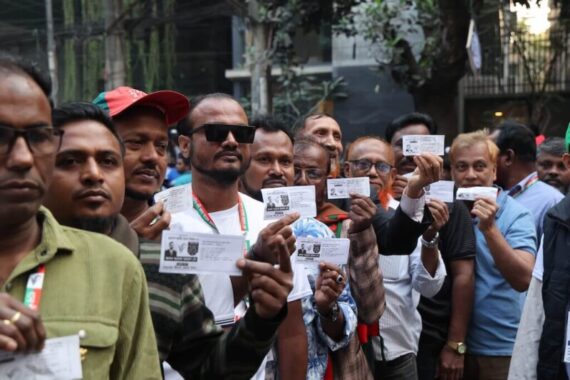
he Bangladesh Nationalist Party (BNP) swept to a commanding victory in Bangladesh’s parliamentary election, television projections showed, in a pivotal contest expected to shape the country’s political direction after months of unrest.
The vote was the first national election since the 2024 youth-led uprising that forced former prime minister Sheikh Hasina from office.
Local broadcasters said the BNP-led alliance captured 209 of 300 seats, enough for a two-thirds majority in parliament.
After the scale of the win became apparent, the party thanked voters and urged supporters not to hold celebratory marches, instead calling for prayers across the Muslim-majority nation for peace and prosperity.
The BNP is led by Tarique Rahman, widely seen as the leading candidate for prime minister. He is the son of former premier Khaleda Zia and former president Ziaur Rahman.
During the campaign, the party pledged support for poorer families, measures to attract foreign investment, limits on time in office for a prime minister, and steps to tackle corruption.
The main challenger, Jamaat-e-Islami, acknowledged defeat after its alliance secured 68 seats.
Party leader Shafiqur Rahman said the group would not oppose simply for political theater.
“We will do positive politics,” he told reporters.
The youth-led National Citizen Party, which played a visible role in last year’s protests, won only five of the 30 constituencies it contested.
Observers described the election as the most competitive in years. Hasina’s Awami League, which ruled for more than 15 years, was barred from taking part.
Media estimates suggested turnout surpassed 60%, well above the level reported in the previous ballot.
More than 2,000 candidates from at least 50 political parties were on the ballot, a record number. Voting in one constituency was delayed following the death of a candidate.
Recommended
A parallel referendum asked citizens to weigh proposals that include establishing a neutral interim government during elections, forming a bicameral legislature, increasing women’s representation, strengthening judicial independence, and introducing term limits for prime ministers.
While authorities had yet to publish official figures, local reports indicated strong backing for the reforms.
Speaking from exile in India, Hasina dismissed the vote as a “carefully planned farce,” arguing it excluded her party and failed to ensure genuine participation.
She called for the results to be annulled, restrictions on the Awami League to be lifted, and a new election to be conducted under a neutral caretaker government.
Opponents of the former premier say that elections held during her rule were frequently overshadowed by boycotts and accusations of intimidation.
(Source: Reuters)

Politics Today is dedicated to publishing insightful analyses in order to understand the changing nature of contemporary politics. It aims to contribute to the sound and constructive discussion of international affairs.
You can see how this popup was set up in our step-by-step guide: https://wppopupmaker.com/guides/auto-opening-announcement-popups/

Stay informed by subscribing to
our weekly newsletter.
You can see how this popup was set up in our step-by-step guide: https://wppopupmaker.com/guides/auto-opening-announcement-popups/
You can see how this popup was set up in our step-by-step guide: https://wppopupmaker.com/guides/auto-opening-announcement-popups/
You can see how this popup was set up in our step-by-step guide: https://wppopupmaker.com/guides/auto-opening-announcement-popups/
You can see how this popup was set up in our step-by-step guide: https://wppopupmaker.com/guides/auto-opening-announcement-popups/