China Deploys Jet-Converted Drones Near Taiwan Strait
China may have converted more than 500 J-6 aircrafts into drones, with at least 200 already deployed near the Taiwan Strait.
March 27, 2026
C
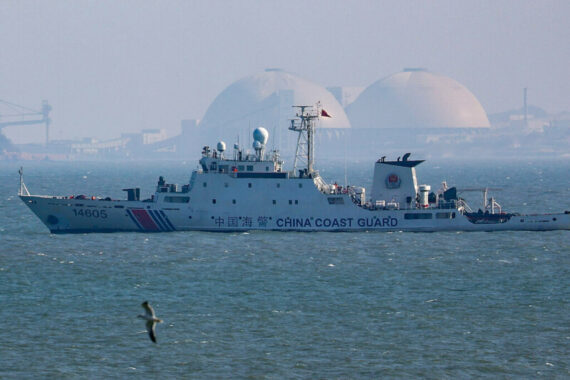
hina has deployed large numbers of obsolete fighter jets converted into attack drones at air bases near the Taiwan Strait, according to a new report that highlights Beijing’s evolving military strategy toward Taiwan. The study, published by the Mitchell Institute for Aerospace Studies, draws on satellite imagery and open-source intelligence to show rows of modified J-6 aircraft positioned at six bases across Fujian and Guangdong provinces, both located close to the strategically sensitive waterway separating mainland China from Taiwan.
The J-6, a Chinese-built version of a 1950s Soviet fighter, was once a core part of China’s air force but has long since been retired from frontline service. Analysts now say that hundreds of these aging jets have been repurposed into unmanned aerial vehicles (UAVs), designated as J-6W drones. By removing onboard weapon systems and installing automated flight controls and navigation technology, the Chinese military has transformed these legacy aircraft into expendable strike platforms capable of carrying out high-risk missions without endangering pilots.
According to the report’s author, former U.S. naval intelligence officer J. Michael Dahm, China may have converted more than 500 of these aircraft into drones, with at least 200 already deployed near the Taiwan Strait. He told Reuters that these drones are likely to play a key role in the opening phase of any potential military operation against Taiwan. Rather than functioning like conventional remotely piloted drones, they are expected to operate more like cruise missiles—launched in large waves toward predetermined targets.
Military experts believe the primary purpose of these converted drones would be to overwhelm Taiwan’s air defense systems through sheer volume. By sending large numbers of relatively inexpensive drones toward high-value targets, China could force Taiwan and its allies to expend costly interceptor missiles. This tactic, often described as a form of asymmetric warfare, seeks to exploit the imbalance between the low cost of offensive systems and the high cost of defensive countermeasures.
A senior Taiwanese security official, speaking to Reuters, said the threat posed by these drones is significant precisely because of this cost imbalance. “To prevent strikes on critical infrastructure, we will inevitably face the challenge of using expensive missiles to intercept them,” the official said. In response, Taiwan is accelerating plans to acquire new counter-drone technologies designed to neutralize such threats more efficiently.
The development comes amid rising tensions between China and Taiwan, which Beijing considers part of its territory despite strong opposition from the island’s government. China has not ruled out the use of force to achieve reunification, while Taiwan maintains that its future should be decided solely by its people. Although recent assessments by the U.S. intelligence community suggest that China is not currently planning an invasion by 2027, other defense analyses indicate that Beijing is rapidly building the capabilities needed to carry out such an operation if it chooses to do so.
Experts say the deployment of J-6 drones is only one component of a broader Chinese military strategy that emphasizes a diverse mix of airpower. In a potential conflict scenario, waves of drones could be launched alongside ballistic missiles, cruise missiles, advanced fighter jets, and long-range bombers, all arriving at different speeds and altitudes. This multi-layered assault would complicate defensive efforts and create what one analyst described as an “air defense nightmare.”
Peter Layton, a former Australian air force officer and visiting fellow at Griffith University, said such an approach would aim to saturate defenses and create confusion. “There would be a lot of diverse threats all coming at once,” he said. “The goal is to overwhelm the system so that some weapons inevitably get through.” He added that the J-6 drones, despite being based on outdated technology, would still require advanced and expensive missile systems to intercept due to their speed and size.
The increasing reliance on drones reflects broader changes in modern warfare, where unmanned systems have become central to military operations. Conflicts such as the Russia-Ukraine War have demonstrated the effectiveness of deploying drones in large numbers for reconnaissance, targeting, and direct attacks. These systems can often be produced quickly and at relatively low cost, making them well-suited for sustained, high-intensity conflicts.
Recommended
China has also been investing heavily in more advanced drone technologies, including stealth UAVs and carrier-based unmanned systems. Analysts believe these newer platforms could be used in conjunction with converted legacy aircraft like the J-6, creating a layered drone force capable of both high-end precision strikes and mass saturation attacks. In addition, there are indications that China is experimenting with using drones in deception operations, potentially to confuse adversaries and test defensive responses.
Despite their potential effectiveness, the deployment of J-6 drones is not without risks. The air bases where they are stationed are located relatively close to Taiwan and could be vulnerable to preemptive strikes in the event of a conflict. Nevertheless, analysts suggest that their role as expendable assets means they would likely be launched early in any military campaign, reducing their exposure to counterattacks on the ground.
The report underscores the growing complexity of the military balance in the Taiwan Strait and the increasing importance of drone warfare in shaping future conflicts. As both China and Taiwan continue to adapt to these evolving threats, the risk of miscalculation remains a concern for regional stability. For now, the presence of these converted drones serves as a stark reminder of how even outdated technology can be repurposed into a significant strategic tool in modern warfare.
(Source: Reuters)

Politics Today is dedicated to publishing insightful analyses in order to understand the changing nature of contemporary politics. It aims to contribute to the sound and constructive discussion of international affairs.
You can see how this popup was set up in our step-by-step guide: https://wppopupmaker.com/guides/auto-opening-announcement-popups/

Stay informed by subscribing to
our weekly newsletter.
You can see how this popup was set up in our step-by-step guide: https://wppopupmaker.com/guides/auto-opening-announcement-popups/
You can see how this popup was set up in our step-by-step guide: https://wppopupmaker.com/guides/auto-opening-announcement-popups/
You can see how this popup was set up in our step-by-step guide: https://wppopupmaker.com/guides/auto-opening-announcement-popups/
You can see how this popup was set up in our step-by-step guide: https://wppopupmaker.com/guides/auto-opening-announcement-popups/