Bab al-Mandeb: How the Closure Would Affect World Trade?
With instability affecting Hormuz, Gulf states have increasingly relied on Red Sea export routes, making Bab al-Mandeb an essential corridor for energy flows.
April 7, 2026
T
ensions in the Middle East have intensified after senior Iranian adviser Ali Akbar Velayati warned that Tehran and its allies could move to shut the strategic Bab al-Mandeb, a vital maritime chokepoint linking the Red Sea to the Gulf of Aden. The threat comes amid an already fragile situation following disruptions in the Strait of Hormuz, raising fears of a severe shock to global trade and energy supplies.
Velayati’s remarks signal a potential escalation in the standoff between Iran and the United States, particularly after U.S. President Donald Trump warned of possible military action if Tehran does not ease restrictions on Hormuz. Analysts say that if both waterways were simultaneously disrupted, the consequences for the global economy could be unprecedented.
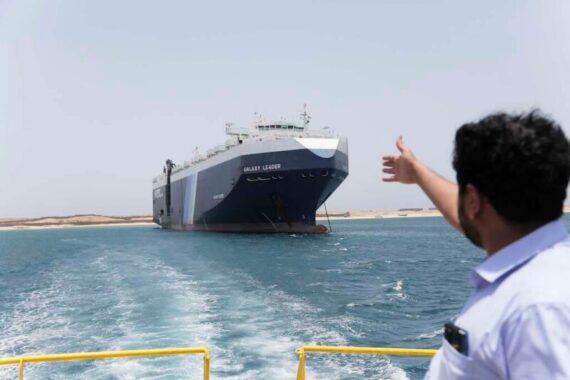
The Bab al-Mandeb is one of the world’s most critical shipping routes. At just 29 kilometers wide at its narrowest point, it funnels maritime traffic between Europe, Asia and the Middle East. Around 10 percent of global trade passes through the strait, including vast quantities of oil, gas and consumer goods.
The waterway is bordered by Yemen to the northeast and Djibouti and Eritrea to the southwest. Control of the area has increasingly fallen under the influence of the Iran-aligned Houthi movement, which has demonstrated its capacity to disrupt shipping in recent years.
The strait’s importance has grown even further as alternative routes have come under strain. With instability affecting Hormuz, Gulf states have increasingly relied on Red Sea export routes, making Bab al-Mandeb an essential corridor for energy flows.
Energy analysts warn that the closure of Bab al-Mandeb, especially in conjunction with restrictions in Hormuz, could block up to a quarter of the world’s oil and gas supply. Such a scenario would likely trigger a sharp spike in global energy prices, exacerbating inflation and straining economies already dealing with supply chain disruptions.
In 2024 alone, more than 4 billion barrels of crude oil and refined products transited through Bab al-Mandeb. Major producers such as Saudi Arabia depend on the route to export energy to Europe via the Red Sea and the Suez Canal.
Riyadh has sought to mitigate risks by expanding use of its East-West Pipeline, which transports oil from the Gulf to the Red Sea port of Yanbu. However, experts note that pipeline capacity cannot fully replace maritime routes if both chokepoints are compromised.
“The global energy system is not designed to absorb simultaneous disruptions at Hormuz and Bab al-Mandeb,” said one energy market analyst. “Even a temporary closure could send shockwaves through oil markets.”
Beyond energy, a closure would severely disrupt global trade flows. Goods shipped from Asia to Europe—ranging from electronics to clothing—typically pass through the Red Sea en route to the Mediterranean. If the Bab al-Mandeb becomes inaccessible, vessels would be forced to reroute around the southern tip of Africa via the Cape of Good Hope.
Such detours could add weeks to shipping times and significantly increase fuel costs. The result would likely be higher prices for consumers worldwide and delays in the delivery of essential goods.
Shipping companies have already shown sensitivity to security risks in the region. During previous Houthi attacks, insurers raised premiums or withdrew coverage altogether, forcing many firms to suspend operations in the Red Sea.
Recommended
The potential closure of the strait is closely tied to regional military dynamics. The Houthis have previously targeted vessels they associate with Israel or the United States, and analysts say it would take only a handful of attacks to halt commercial traffic entirely.
Former U.S. diplomat Nabeel Khoury noted that even limited strikes could have an outsized impact. “All it would take is a few successful attacks on ships to effectively shut down the corridor,” he said in recent commentary.
However, such a move could provoke a swift military response. The United States and its allies have repeatedly emphasized the importance of maintaining freedom of navigation in international waters. Any sustained disruption could trigger retaliatory strikes, particularly against Houthi positions in Yemen.
Experts describe the simultaneous disruption of Hormuz and Bab al-Mandeb as a worst-case scenario for the global economy. Elisabeth Kendall, a Middle East specialist, warned that such a development could “cripple” trade routes between Asia and Europe.
“It’s a knife-edge situation,” she said, noting that escalation could rapidly spiral beyond control. “The consequences would be felt far beyond the region, affecting everything from fuel prices to food supply chains.”
Despite the rhetoric, some analysts believe that a full closure remains unlikely, as it would risk drawing regional and global powers into a broader conflict. The Houthis, while capable of disruption, may seek to avoid provoking a large-scale military response from Saudi Arabia or Western forces.
For now, global markets remain on edge as diplomatic and military developments unfold. The threat to Bab al-Mandeb underscores the vulnerability of key maritime chokepoints and the outsized role they play in sustaining the global economy.
Whether the warnings translate into action remains unclear. But with tensions rising and strategic waterways under pressure, the world faces the prospect of a major disruption to trade not seen in decades.
(Source: Aljazeera English)

Politics Today is dedicated to publishing insightful analyses in order to understand the changing nature of contemporary politics. It aims to contribute to the sound and constructive discussion of international affairs.
You can see how this popup was set up in our step-by-step guide: https://wppopupmaker.com/guides/auto-opening-announcement-popups/

Stay informed by subscribing to
our weekly newsletter.
You can see how this popup was set up in our step-by-step guide: https://wppopupmaker.com/guides/auto-opening-announcement-popups/
You can see how this popup was set up in our step-by-step guide: https://wppopupmaker.com/guides/auto-opening-announcement-popups/
You can see how this popup was set up in our step-by-step guide: https://wppopupmaker.com/guides/auto-opening-announcement-popups/
You can see how this popup was set up in our step-by-step guide: https://wppopupmaker.com/guides/auto-opening-announcement-popups/