The US-Israel-Iran War and Türkiye’s Defense Industry
From Türkiye’s perspective, it is fair to say that alternatives to almost all the systems used by the US and Israel in air-to-ground attacks are produced domestically and nationally.
April 28, 2026
F
rom the past to the present, the sustainability of the parties has been a decisive factor in conflicts and wars. In situations where defensive or offensive capabilities prove insufficient, there is a greater reliance on diplomacy. The systems deployed by the parties in the Ukraine-Russia War and the difficulties encountered in replenishing losses have had a ‘wake-up call’ effect on the world’s armed forces.
In conventional warfare, it became apparent that capabilities were being rapidly depleted from stockpiles, that meeting the demand for these systems domestically during wartime was difficult, and that procurement from abroad was challenging. Indeed, third parties faced stock and inventory issues as a result of “aid”. Consequently, an unprecedented “mass production” initiative was launched worldwide. As countries strive to secure mass production capabilities, the international standing of those with such capabilities is strengthening. It is evident that Türkiye’s relations with various countries have significantly strengthened in this context, and dismissive attitudes—which were entirely unfounded—have given way to realistic discourse.
A war with global implications and repercussions has begun following the US-Israel coordinated and sudden attack targeting Iran. Whilst the war has many dimensions, this study seeks to highlight defence industry applications within the scope of a “situation assessment” from Türkiye’s perspective, focusing on specific systems.
In the joint US-Israel attack, strategic and air defence assets in Iran were primarily destroyed. By dismantling the command-and-control structure, attempts were also made to establish secure corridors. Concurrently, early warning and command-and-control aircraft, along with electronic warfare assets, were deployed in the region. Iran’s air defence, electronic warfare and command-and-control assets were placed under pressure.
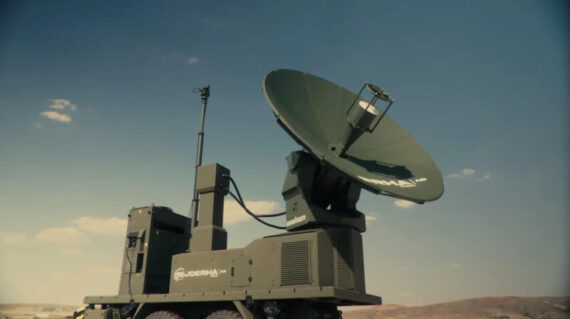
It is known that Türkiye has carried out similar operations within its limited geographical area and possesses these capabilities. Türkiye currently maintains a comprehensive inventory of sea- and land-based electronic warfare assets. In the air, the upcoming HAVASOJ systems will provide significant capabilities. Whilst fighter aircraft and UAV systems are currently operated with electronic warfare assets of varying capabilities, Türkiye’s introduction of HAVASOJ and İHASOJ systems will enhance the overall capability. Similarly, in the future, manned and unmanned early warning and command-and-control aircraft equipped with national systems will complement Türkiye’s Iron Dome.
Combat aircraft taking off from US aircraft carriers and bases in the region are striking targets in Iran with various GBU series air-to-ground munitions. In this bombardment, where it has been announced that over 10,000 targets have been struck, bombs enhanced with guidance kits (to increase strike accuracy) and various missile systems are prominent. These include bombs from the JDAM family and missiles such as the Hellfire, used on platforms like helicopters and UAVs. Whilst fighter jets struck identified targets, MQ-9 Reaper UAVs—capable of remaining airborne for extended periods—targeted ‘opportunistic targets’ and launch vehicles detected in real-time. The UAVs conducted long-term intelligence, surveillance and reconnaissance operations, whilst their munitions delivered devastating effects. Furthermore, long-range air-launched cruise missiles (AGM-158, Rampage, and other ALCMs) were extensively used by the US and Israel. Thanks to their high strike accuracy and long ranges, successful engagements against strategic targets deep within Iranian territory were made possible.
From Türkiye’s perspective, it is fair to say that alternatives to almost all the systems used by the US and Israel in air-to-ground attacks are produced domestically and nationally. Key organisations producing guidance kits and smart bombs in Türkiye include MKE, ROKETSAN, ASELSAN, TÜBİTAK SAGE, ASFAT and others. The key here is the ability to procure high-consumption munitions and kits in large quantities for the inventory. Furthermore, it is essential to have a structure capable of maintaining production capabilities in the event of hostilities.
Compared to the munitions used by the US in UAVs, Türkiye possesses broader capabilities. Türkiye ranks among the leading countries with the widest range of lethal products in UAV systems. ROKETSAN’s MAM family of smart munitions (MAM-C, MAM-L, MAM-T), the TRLG family of missiles (UAV-TRLG-122/230/300), TÜBİTAK SAGE’s KUZGUN series (KUZGUN-KY/SS/TJ) and BOZOK smart munitions, among others, are customized solutions for UAVs. The munitions mentioned in the previous paragraph can be used on UAVs.
There are various solutions of a similar nature or purpose to the ALCM missiles used by the US and Israel against strategic targets. In addition to the SOM series of cruise missiles, the ÇAKIR series of cruise missiles are currently in the Turkish Armed Forces’ inventory. Key takeaways include: the need for a robust inventory in the event of a prolonged conflict, the implementation of cost-effective product customizations, and the calculation of storage, sustainment and logistics processes in line with potential threats. Türkiye’s stockpiles must be robust, and its serial production capabilities must continue to be developed. The position within the inventory of cruise missiles and munitions that are modular and adaptable to different threats, such as the ÇAKIR cruise missile, must be strengthened. Necessary actions must be taken by reviewing the current structure in light of the facilities struck in Iran and the resulting outcomes.
Furthermore, the US Navy has engaged strategic targets deep within Iran using ship-launched Tomahawk cruise missiles. Türkiye, meanwhile, is conducting activities on its warships involving similar capabilities and purpose-built cruise missiles via the MIDLAS system. These efforts, like other projects, are continuing under strict secrecy.
It was observed that the US deployed its LUCAS systems for the first time, which are similar in nature to Iran’s one-way Shahid kamikaze UAVs. Described as a cost-effective solution (80,000 US dollars), these kamikaze UAVs were launched from US naval assets towards targets on the Iranian mainland. Türkiye possesses similar, multi-purpose solutions. Baykar’s K2, introduced by the company, is a significant force multiplier in the upper segment, featuring multi-role capabilities and a range of 2,000 kilometers.
In the region, the US is observed to be using HIMARS artillery rockets and PrSM missiles, which possess precision strike capabilities. Türkiye’s equivalent artillery rocket systems are the KAPLAN and KASIRGA systems produced by ROKETSAN. Long-range cruise missile solutions such as the KARA-ATMACA, alongside TRLG artillery rocket systems capable of laser-guided guidance, are in service (combat-proven). A qualified and sufficient inventory of artillery systems capable of engaging precision and long-range ground and fixed targets is essential.
The US announced that the Iranian Navy had been almost completely destroyed, citing this as a cause for ‘pride’. Torpedoes and anti-ship missiles were deployed in the destruction of the fleet, which included corvettes, frigates and submarine platforms. Türkiye currently possesses domestically developed anti-ship missiles such as the ATMACA, as well as various torpedo solutions including the AKYA and ORKA. Furthermore, capsule-launched ATMACA missiles can be fired from submarines. Whilst Türkiye is strengthening the position of these two offensive assets within its inventory, domestically produced REİS-class submarines and MİLGEM corvettes and frigates are operating with national weapon systems.
Türkiye’s land-based BARBAROS coastal defense system can also be operated from the coast using long-range anti-ship missiles. The state of the Iranian Navy makes Türkiye’s countermeasure solutions crucial. Whilst the platforms are equipped with advanced sonar systems, they also possess anti-submarine warfare (ASW) rockets and countermeasure torpedo solutions such as ASELSAN’s ZOKA. Ships are also fitted with advanced point and close-in air defense systems to counter potential anti-ship threats. It is essential that all elements are operated in a network-centered and effective manner (via a unified picture). The common picture established by Türkiye for ‘Gök Vatan’ (Sky Homeland), similar to the ‘Iron Dome’, is being established for the platforms in ‘Mavi Vatan’ (Blue Homeland).
At US bases in the Gulf, key radar, sensor and launch components of the air defense umbrella are deployed alongside combat aircraft, early warning and command-and-control aircraft, tanker aircraft, etc. Early warning and interceptor systems in the region play a crucial role in countering missile and UAV attacks from Iran. It was observed that, from day one, Iran prioritized and targeted these assets. Notable examples include the destruction of the AN/FPS 132 early warning radar and the THAAD radar (AN/TPY-2) at Al Udeid Air Base in Qatar, as well as the satellite systems (AN/GSC-52B) within the command-and-control infrastructure.
By targeting tanker aircraft whilst they were in the air and in the base area, Iran compromised the operational range and endurance capabilities of the region’s fighter aircraft. In doing so, it weakened their defensive and offensive capabilities beyond mere material damage. Within the broader context, it is evident that regional forces, particularly those of the Gulf states, are seriously vulnerable to kamikaze UAV attacks. In this regard, it is understood that Iran targeted both energy infrastructure and critical components such as radar systems through saturation attacks. Whilst a layered air defence structure exists in the region, operational difficulties in its implementation are apparent.
Türkiye’s Iron Dome air defense architecture is being constructed as a layered system. In a combat environment, land-based ballistic missile defence systems such as the Patriot PAC-3 and THAAD have proven successful. Türkiye currently possesses a domestically developed and national solution with ballistic missile defence capabilities that has entered service. In the Siper project, Siper Block 1 missiles, which possess medium-range regional air defence capabilities, have recently been incorporated into the inventory in battery form.
The aim is for Siper Block 2 missiles to possess ballistic missile interception capabilities at longer ranges and altitudes. It is expected that Türkiye will continue to increase procurement numbers for systems such as Hisar A, Hisar O and Siper Block 0/1, whilst accelerating work on Siper Block 2 and Block 3. The pre-emptive systems developed against ballistic missile threats will not only meet Türkiye’s own needs but also strengthen its global position as a supplier to other countries. Furthermore, in counter-UAV systems, integrated solutions must be designed and procured based on the principle of point defense for strategic locations in high volumes.
Recommended
The national systems developed by Türkiye meet global technological standards. The fundamental prerequisite for sustaining operations in a potential protracted war is the customization of these systems to address potential threats, the scaling up of cost-effective solutions, and the establishment of a massive mass-production capacity with flawlessly functioning logistics and storage processes. It is clear that the outcome of current and potential wars and conflicts is determined by the parties’ sustainability, depth of stock, and mass production capacity. The ‘wake-up call’ effect of the Ukraine-Russia War and the coordinated US-Israeli strikes against Iran under examination present a critical situation assessment for Türkiye’s defense strategies.
Electronic warfare (EW) elements used to blind enemy air defenses confirm just how strategic Türkiye’s land-based EW systems and projects such as HAVASOJ and İHASOJ are. Domestic equivalents of foreign-made smart munitions used in air-to-ground attacks (the MAM family, KUZGUN, SOM, ÇAKIR) are being successfully produced. The primary objective is to ensure an uninterrupted production line capable of meeting the high consumption rates of modern combat fleets and to expand the inventory quantitatively.
It has once again been demonstrated that long-range artillery rockets, cost-effective kamikaze UAVs and anti-ship missiles are key components of attrition warfare. Türkiye possesses a robust arsenal in this field, including the KAPLAN/KASIRGA/TRLG artillery systems; cruise missiles such as KARA/ATMACA/ÇAKIR; ballistic missiles such as BORA/TAYFUN/CENK; AKYA/ORKA torpedoes; and multi-purpose UAV solutions. The integration of all maritime and coastal defense platforms (BARBAROS) in the Blue Homeland via a single network maximizes deterrence.
The protection of critical infrastructure, early warning radars and bases against saturation (swarm) attacks is of vital importance. Türkiye’s Iron Dome architecture is a sound vision; however, the procurement volumes of HİSAR and Siper batteries must be rapidly increased, anti-UAV solutions must be integrated into strategic facilities, and, in particular, the Siper Block-2 and Block-3 projects must be accelerated to urgently acquire the missing ballistic missile defense capability.
(Originally published in Turkish by Kriter)

Researcher and follower of defense technologies, strategies and policies, specifically TDI.
You can see how this popup was set up in our step-by-step guide: https://wppopupmaker.com/guides/auto-opening-announcement-popups/

Stay informed by subscribing to
our weekly newsletter.
You can see how this popup was set up in our step-by-step guide: https://wppopupmaker.com/guides/auto-opening-announcement-popups/
You can see how this popup was set up in our step-by-step guide: https://wppopupmaker.com/guides/auto-opening-announcement-popups/
You can see how this popup was set up in our step-by-step guide: https://wppopupmaker.com/guides/auto-opening-announcement-popups/
You can see how this popup was set up in our step-by-step guide: https://wppopupmaker.com/guides/auto-opening-announcement-popups/