KAAN and Turkey’s Domestic-National Aviation Adventure
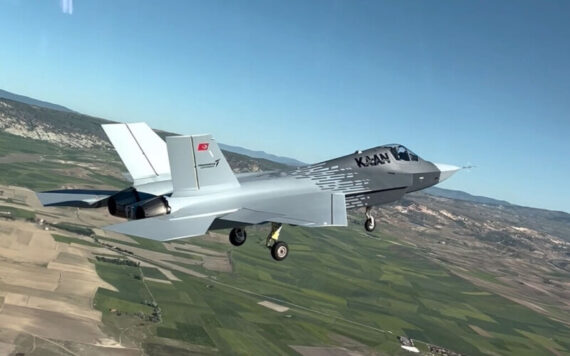
Following the U.S., Russia, China, and South Korea, Turkey has joined a limited number of countries capable of producing 5th-generation fighter jets with the KAAN.
August 29, 2025
F
ollowing the July 15 coup attempt, Turkey accelerated its nationalization efforts and launched the KAAN development project, with TAI as the prime contractor, to replace the F-16 fighter jets currently in its air force. The 5th-generation manned fighter jet project, which will be the most advanced stage of the Turkish Military Aviation Industry, will not only be a milestone in aircraft production but also a key milestone in Turkey’s strategic independence. The KAAN project, which will strengthen Turkey’s regional and international standing, will also enable the Turkish Air Force to operate with domestically produced weapons and mission systems.
Turkey’s national fighter jet, KAAN, ushering in a new generation of the Turkish defense industry, broke the record for the largest single export in Turkish defense history, reaching a contract value of $15 billion just one year after its first contact with the sky. Under the defense agreement signed between Turkey and Indonesia at the INDO Defense 2025 Fair in Jakarta, 48 5th-generation KAAN fighter jets will be produced and exported to Indonesia within 120 months.
The KAAN fighter jets to be produced under the agreement will also utilize engines developed domestically and nationally by Turkey. Additionally, technologies transferred from Indonesia will be incorporated into the 48 KAANs.
Following the U.S., Russia, China, and South Korea, Turkey has joined a limited number of countries capable of producing 5th-generation fighter jets with the KAAN. The National Combat Aircraft KAAN, a quintessence of Turkish defense engineering and one of the most crucial production capabilities for Turkey’s strategic goal of independence, is poised to shift the balance not only in our homeland but also on the global aviation scene. Following the agreement with Indonesia, Turkish Aerospace Industries (TAI) General Manager Mehmet Demiroğlu announced that they are in contact with several other countries regarding the KAAN.
Indonesia is negotiating with several countries to procure fighter jets to strengthen its air force. In this context, 42 aircraft have been ordered from France, with initial deliveries scheduled to begin in 2026. An agreement has been reached with the US for 24 F-15EX fighter jets, but the final contract has not yet been signed. Indonesia is also evaluating an offer from China for 42 second-hand J-10Cs, particularly in light of the Pakistani Air Force’s operational experience.
Meanwhile, the agreement reached with Russia for 11 SU-35 fighter jets has been suspended due to US CAATSA sanctions. Finally, in addition to the KAAN agreement signed with Turkey at the INDO Defense 2025 Fair, the Indonesian government resolved issues with the KF-21 fighter jet program with South Korea. The government has also decided to restructure its financial contribution to the project, reducing it from approximately $1.168 billion to $438 million. Under the agreement, 48 KF-21 aircraft will be delivered to the Indonesian Air Force.
The Ottoman Empire was one of the first states to establish military aviation. Starting in 1909, several initiatives were undertaken in the field of air warfare, and exploration was carried out to establish aircraft factories in Kayseri and Sivas. Furthermore, the world’s first use of fighter aircraft in combat was by the Italians against the Ottoman Empire during the Tripoli War, and the first fighter aircraft used in combat was shot down by Turkish soldiers 113 years ago.
Following this dream inherited from the Ottomans in the early years of the Republic, Turkish pilot Vecihi Hürkuş designed and built the first Turkish aircraft, the “Vecihi K-VI,” in 1924, using aircraft parts left over from the Greeks after the war. However, the flight of the Vecihi K-VI was delayed, and after a member of the committee responsible for permitting the flight said, “Vecihi, we can’t give you this license. If you trust your plane, jump in, fly, and save us too,” HÜRKUŞ made his maiden flight with the Vecihi K-VI on January 28, 1925. However, Vecihi’s flight was penalized for being unauthorized.
The “Turkish Aircraft Society” was founded in 1925, and Vecihi Hürkuş was declared “Turkey’s Chief Aircraft Pilot” and entered the society as a pilot. That same year, the Turkish Aircraft and Engine Corporation (TOMTAŞ) was established in partnership with Junkers, a pioneer in German aviation. A year later, the Kayseri Aircraft Factory was commissioned, and maintenance and repair activities for two types of aircraft were carried out at the factory. However, shortly thereafter, due to various pressures and political reasons, TOMTAŞ was closed, and the factory was transferred to the Ministry of National Defense.
Meanwhile, Nuri Demirağ, one of the wealthiest businessmen of the early Republic, spent a significant portion of his fortune establishing a national aircraft factory. As part of this effort, Demirağ established an aircraft factory in Beşiktaş in 1936. The factory produced the Nu.D-36 model training aircraft that same year. The Turkish Aeronautical Association (TAA) requested the training aircraft produced by Demirağ, and a certain number of aircraft were ordered.
In 1938, the aircraft produced were ordered to undergo final testing before delivery and brought to Eskişehir. The aircraft, piloted by engineer pilot Selahattin Reşit Alan, who had also drawn the plans for various aircraft, including the Nu.D-36 trainer aircraft, crashed into a ditch dug to prevent animals from entering the runway during landing. Tragically, Selahattin Reşit Alan, one of Turkey’s first aircraft engineers, lost his life in the accident.
Following this tragic loss, the Turkish Aeronautical Association canceled its orders for the Nu.D-36 model training aircraft, claiming they were unfit for flight and did not meet the desired requirements. Demirağ took the Turkish Aeronautical Association’s order cancellation to court, but despite expert reports stating that the aircraft were airworthy and had not suffered any accidents, the court ruled in favor of the Turkish Aeronautical Association.
Following this process, Nuri Demirağ continued his aviation studies with renewed vigor and began work on the Nu.D-38 aircraft, using domestic and national resources except for the engines. Designed for civilian passenger transport, the aircraft was also designed to be convertible into a bomber with various modifications applicable in the event of war.
By 1944, the Nu.D-38, which had completed its flight tests, had attracted interest from Spain in Europe, and from our neighbors, Iran and Iraq. However, the government of the time enacted a law preventing the export of aircraft manufactured in Turkey. Consequently, Demirağ, unable to secure domestic orders, closed his aircraft factory.
Recommended

Following Mustafa Kemal Atatürk’s instigation in 1937 to establish a national aircraft and engine industry, the Turkish Aeronautical Association Etimesgut Aircraft Factory began operations in 1941, the Turkish Aeronautical Association Gazi Aircraft Engine Factory in 1947, and the Ankara Wind Tunnel (ART) in 1950.
A total of 15 different types of aircraft were manufactured at the Turkish Aeronautical Association Etimesgut Aircraft Factory between 1941 and 1950, but one jet-powered aircraft remained in the project phase. It is said that the drawings for the THK-16 aircraft, which remained in the project phase, were smuggled to Germany.
In addition to aircraft manufacturing, the factory also carried out maintenance and modernization work on 63 aircraft for the Ministry of National Defense and 48 for the Turkish Aeronautical Association. The Etimesgut Aircraft Factory and the Gazi Aircraft Engine Factory, which were in their tenth year of operation and continuing their successful activities, were transferred to the MKE Institution by a law enacted in 1951.
The Gazi Aircraft Engine Factory was converted into a tractor factory in 1954, and the Ankara Wind Tunnel was abandoned until its reopening by TÜBİTAK in 1998. The Etimesgut Aircraft Factory now lies idle. The Etimesgut Aircraft Factory was destined to share the same fate as Nuri Demirağ’s aircraft factory.
On June 22, the U.S. struck three nuclear facilities in Iran with radar-stealthy B-2 bombers. Following the incident, numerous comments were made on social media about the design similarities between the THK-13 Aircraft Wing Glider, produced at the Etimesgut Aircraft Factory, and the B-2 Bomber. The THK-13 was manufactured in 1948 as a single-seat national flying wing glider, but the project was terminated following a flight test accident.
During the years when aircraft factories in Turkey were bankrupted and closed down, the US Northrop Corporation’s project to develop a powered bomber aircraft based on the YB-49 flying wing design, although it failed to reach mass production, utilized the design and engineering expertise gained from this project to create a war machine that began production in 1988 and is now capable of taking off from American soil, striking Iran, and returning.
(Originally published in Turkish by Kriter)

Hamza Kızılkaya has graduated from Marmara University's Journalism Department in 2023. He is a research assistant at the SETA Foundation in Istanbul.
You can see how this popup was set up in our step-by-step guide: https://wppopupmaker.com/guides/auto-opening-announcement-popups/

Stay informed by subscribing to
our weekly newsletter.
You can see how this popup was set up in our step-by-step guide: https://wppopupmaker.com/guides/auto-opening-announcement-popups/
You can see how this popup was set up in our step-by-step guide: https://wppopupmaker.com/guides/auto-opening-announcement-popups/
You can see how this popup was set up in our step-by-step guide: https://wppopupmaker.com/guides/auto-opening-announcement-popups/
You can see how this popup was set up in our step-by-step guide: https://wppopupmaker.com/guides/auto-opening-announcement-popups/