I
n the context of the effects of the war launched by the U.S. and Israel against Iran on February 28 on the Gulf region, the saying “Geography is destiny” is a particularly apt description. The Gulf states, which were not direct parties to the war, have been affected almost as negatively as the warring parties by this process. From the war’s very first days, the Gulf states, known as the “oasis of prosperity” in the Middle East, began to emerge as the biggest losers of this process, following Iran’s retaliations. While not all have been affected equally, the myth of the “Gulf’s inviolability” has ended, opening the door to a bleak future for the region’s monarchies.
In this context, the United Arab Emirates and Saudi Arabia, which could be considered the actors closest to the US politically, have borne the brunt of the blow. Their cautious statements in the early days of the war gave the impression that they were avoiding taking sides. However, the use of US military bases on their territory during the conflict was viewed by Iran as an unacceptable pretext.
They attempted to maintain security ties with Washington while keeping tensions with Tehran under control, but the rapidly rising tension and chaos soon made it impossible for these countries to avoid becoming targets. Bahrain and Kuwait, which pursue low-intensity foreign policies, were similarly affected. In both countries, critical infrastructure, including US military bases, ports, and water treatment facilities, was targeted by Iran at various times.
Position towards Iran
The differing reactions of the Gulf countries during the war resulted in varying impacts of the conflict. From this perspective, Oman and Qatar’s positions during the war set them apart from other Gulf states. Although Qatar sustained heavy damage and expelled Iranian diplomats, the Doha administration’s decision to maintain dialogue with Tehran was notable. Oman, on the other hand, stood apart from all other Gulf states. It became one of the few Gulf countries not targeted by ballistic missiles from Tehran and emerged as one of the most important mediators between Iran and the US.
Throughout this process, both countries adopted a measured approach. However, Oman engaged in intensive mediation efforts to prevent the outbreak of war in the pre-conflict period. It can be argued that the common ground underpinning these countries’ approaches lies in their distanced stance toward the U.S. and Israel, coupled with a relatively closer position regarding their relations with Iran.
A common factor among the Gulf states, which have been affected by the war to varying degrees, is growing security concerns. The deployment of air defense systems in the Gulf following drone and missile attacks on critical infrastructure, particularly energy facilities, marked a turning point in terms of defense for the Gulf states. Iran’s unexpectedly aggressive stance, coupled with the Gulf states’ realization that they were facing this aggression alone, constituted a significant turning point.
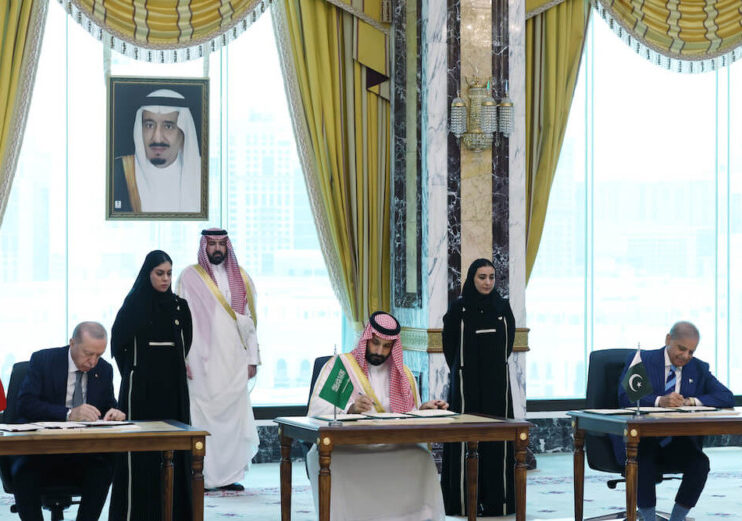
The Gulf states were disappointed by the failure of the security architecture, which had been based on the assumption that the US would protect them, to withstand this severe test. This disappointment has driven the Gulf states to develop alternative security mechanisms. Consequently, while the Gulf states realized during this war that the U.S. would not directly protect them, they also recognized the need to form alliances with other actors to ensure their security and prepare for a potential Iranian threat after the war. It has become evident that countries such as Saudi Arabia and Qatar are trying to strengthen security cooperation by working with important regional actors, including Türkiye, Pakistan, and Egypt.
Economic impact
The economy is another area where the concrete effects of the war have been particularly felt in the region. The Gulf region, one of the most important hubs for the global energy supply, found itself in the midst of the conflict. The initial impact was felt in the form of rising oil prices. While some shipments were diverted to alternative routes due to the war, this has increased costs and extended delivery times.
Although rising oil prices above $100 per barrel might appear favorable for the Gulf states, which are exporters, the Strait of Hormuz, a critical chokepoint for hydrocarbon products reaching global markets, remained at the center of military activity. Coupled with rising insurance costs and the complete halt of transit, the Gulf states were deprived of one of their main sources of income.
In this context, Oman is the only country that stands apart from the other Gulf states. Due to its geographical location, Oman is not dependent on the Strait of Hormuz. Consequently, its oil revenues have risen in line with the increase in prices during this period. Oman continued to export oil, particularly to Asian countries, from its LNG facility in Kalhat, even during the war. Shipments also continued from Mina al Fahal, the country’s most important oil export hub. Omani crude oil traded at $120 per barrel when global oil prices were at $100. This played a critical role in the country’s economy.
Beyond hydrocarbon trade, the economic impacts of the war on Gulf countries have also been highly destructive. In the United Arab Emirates, a key tourism hub in the region, tourist activities came to a complete standstill. Hundreds of hotels in Dubai were left entirely empty within a short period, and thousands of future bookings were canceled. Following the damage to the region’s “safe haven” image, there was a capital outflow amounting to billions of dollars, particularly from Dubai, a recognized global financial center. While the Abu Dhabi and Dubai stock exchanges suffered significant losses, the property market declined by up to 30 percent.
Another sector severely affected by the war is the aviation industry. Major Gulf airports, such as those in Dubai, Doha, and Abu Dhabi, which serve as key hubs for global air transport, became completely non-operational in the early days of the war. They were subsequently forced to operate at minimum capacity. As a result, tens of thousands of foreign workers, who form the backbone of the Gulf labor market, have left the region, negatively impacting consumption and the labor market. Due to these factors, many Gulf countries, including the UAE, are expected to experience severe economic contraction by 2026.

Recommended
Social impact and expectations of peace
On the other hand, the war has undoubtedly impacted societies in the Gulf. While the effects were limited to daily life and the food supply chain during the war, the erosion of the region’s sense of security has had a traumatic effect on Gulf societies accustomed to nothing but prosperity and development for decades. Consequently, some Gulf citizens have reportedly temporarily relocated with their families to safe havens such as London, Zurich, Singapore, and Istanbul. Uncertainty has also rapidly increased for the millions of foreign workers who play a key role in daily life and the labor market across the Gulf states. The fact that some of the migrant workforce, particularly in the energy and construction sectors, is considering returning to their home countries risks disrupting the already fragile labor market balance. Meanwhile, rising energy and logistics costs are reflected in daily living expenses, and price increases have been observed in food and essential consumer goods.
Although the effects of the war are gradually subsiding following a temporary ceasefire, the Gulf states are prioritizing lasting peace. The Gulf states’ key priorities in the post-war period include the cessation of cross-border threats, particularly from Iran; the guarantee of regime security; and the permanent removal of barriers to energy exports. The Gulf states also expect Iran to struggle for regional influence through proxy forces and to limit Tehran’s nuclear capabilities. Finally, establishing a new security architecture and implementing defense mechanisms to ensure regional security are of critical importance to the Gulf states.
Conversely, one could argue that the collapse of the Iranian regime or the country’s descent into deep instability in the post-war era would also pose a risk to the Gulf states. A resulting power vacuum could lead to uncontrollable consequences that go beyond the current threats. The emergence of a more radical Iranian regime would also pose risks to the Gulf states. A Tehran administration capable of holding the Gulf regimes accountable for events during the war could threaten the Gulf states for decades to come. From this perspective, the Gulf states would prefer Iran to remain an actor whose capacity to generate security concerns is limited and with whom limited dialogue can be maintained rather than being perceived as a threat. Consequently, the Gulf states greatly value entering the post-war period in an environment free of threats from Iran.
The war initiated on February 28 by the U.S. and Israel targeting Iran has had its most intense regional impact on the Gulf states at this stage. The Persian Gulf’s role as the logistical hub and economic heart of the war is the primary reason for this. Consequently, although a temporary ceasefire has been established, the Gulf states now face a vortex of uncertainty within their own borders, as this war has transformed from a crisis unfolding elsewhere. This serves as a reminder that crises seemingly far removed from the Gulf states are much closer than they appear. As the most vulnerable actors in the climate of uncertainty created by the war, the Gulf states are calling for an immediate end to the conflict while attempting to prepare for the new political, military, and economic order set to emerge.
(Originally published in Turkish by Kriter)