Is Oman Neutral? A Policy of Balance in the Shadow of War
Oman views its status as the country least affected by the conflict in the Gulf in security terms as a result of the neutral policy it has pursued from the past to the present.
April 27, 2026
O
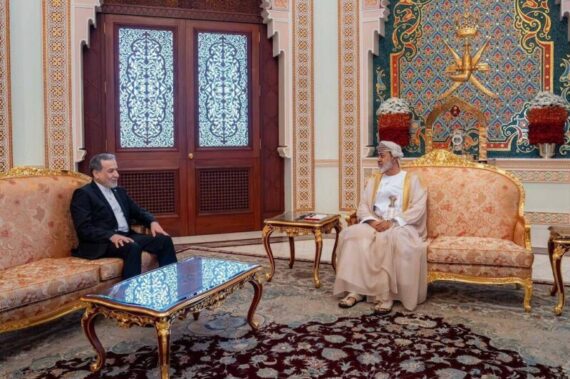
man has been one of the most notable countries in the war waged by the US and Israel against Iran, both in terms of the stance it has adopted and the policies it has pursued. As the country in the Gulf region with the closest historical and cultural ties to Iran, Oman made intensive efforts in the pre-conflict period to prevent a potential war. In this context, the negotiations led by Oman’s foreign minister between the US and Iran were largely successful; however, Washington’s unilateral decision to go to war could not be prevented. Whilst many attribute this decision to the influence of pro-Israeli actors within US decision-making mechanisms, the Trump administration’s miscalculations in this regard were evident in its statements during the war.
Indeed, it was Oman that attempted to dissuade the Trump administration from this decision right up to the last minute. Oman’s Minister of Foreign Affairs, Badr bin Hamad al-Busaidi, in a statement to the CBS channel just a few hours before the US attacks began, said, “We are very close to peace between the US and Iran,” thereby making a final attempt to ensure that all the efforts they had undertaken as a neutral mediator in this process were not in vain. Despite this, the Trump administration decided to go to war, launching attacks against Iran and thereby initiating a process that has disrupted all political fault lines in the Middle East and the Gulf region, paving the way for a redesign of the region’s security architecture.
In an interview with the CBC, Badr bin Hamad al-Busaidi’s warning that “no option other than diplomacy will bring peace” is noteworthy; indeed, it could also be interpreted as a veiled warning against the US entering this war, the motivations for which remain unclear. Oman, as an actor representing reconciliation, diplomacy and neutrality in the region, had argued that regardless of its own reasons, a potential war would benefit no regional country, including the US.
As seen a month after the war began, Oman’s predictions have largely come to pass. The US and Israeli attacks on Iran have brought serious destruction, primarily to these three countries directly involved in the conflict, whilst regional nations have also been heavily affected by the process. The Gulf states, which failed to provide sufficient support for Oman’s pre-war mediation efforts and did not exert pressure on the US regarding the potential negative consequences of an attack on Iran, have emerged as the actors most severely affected by the process. Iran, having issued warnings on numerous previous occasions, has struck military bases in the Gulf states, the US targets closest to it, in response to the attacks.
During this process, Tehran has begun to pursue a strategy of spreading the conflict to the region by targeting certain locations in Gulf states that have close ties with the US and have been under Washington’s security protection for years. Whilst this may have been one of the unexpected developments of the process, the fact that countries such as the United Arab Emirates, Qatar and Saudi Arabia, which had long been the centre of peace and stability in the region, suddenly found themselves in the midst of the conflict has been a major source of concern for them. As the perception of a ‘safe haven’ built up over many years was suddenly shattered, the resulting severe crisis of confidence, coupled with a massive capital outflow, has exposed economic vulnerabilities. Furthermore, the fact that these countries’ economies, which rely heavily on food security and energy exports, have been affected by the war has highlighted that the Gulf states could face far more severe structural crises.
When assessed as of the first month of the war, it became apparent that Oman was the exception to this pattern. Whilst Gulf countries such as Bahrain, Qatar and the UAE, which host US bases and military units, became targets of Iran during the conflict, Oman remained largely outside this equation. The attacks carried out by Iran against Oman did not target Oman’s oil and gas companies, OQ or PDO; rather, they were directed at the Port of Duqm, where the US maintains a military presence under agreements concluded with Oman in previous years. In a statement, the Iranian Ministry of Defense announced that the attack on the port of Salalah had not been carried out by Iran and suggested that a third country might be behind it.
Oman views its status as the country least affected by the conflict in the Gulf in security terms as a result of the neutral policy it has pursued from the past to the present. Indeed, Oman, which acted as a mediator in Iran’s negotiations with the West during its most difficult periods, is not being targeted by this country with which it has historically maintained strong ties. Oman, once one of the region’s most significant empires, has relations with Iran rooted in ties dating back centuries. In the modern era, it is known that Iran provided substantial military aid to the Sultanate of Oman during the Dhofar uprising. Throughout this conflict, which lasted from 1960 to 1976, the support provided by Iran, then under the Shah’s rule, played a critical role in Oman’s suppression of the uprising and its return to stability.
The positive relations between the two countries continued even after the 1979 revolution in Iran and have persisted to the present day. Indeed, in October 2024, the Iranian and Omani Armed Forces conducted their first-ever joint military exercise in Oman’s Jebel Akhdar region. Even during years when Iran was embroiled in intense crises with the US and Israel, senior military officials from Oman and Iran have exchanged visits, whilst there remains significant political and economic interaction between Tehran and Muscat. In this context, whilst there is a significant Iranian diaspora in Oman, particularly in the capital Muscat, a new ferry route was launched in 2024 connecting Oman’s Shinas port with Iran’s Bandar Abbas port as a result of these interactions.
Recommended
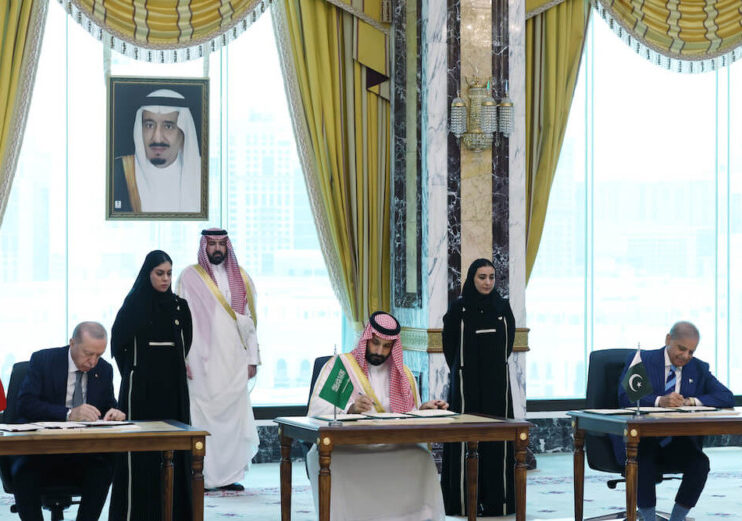
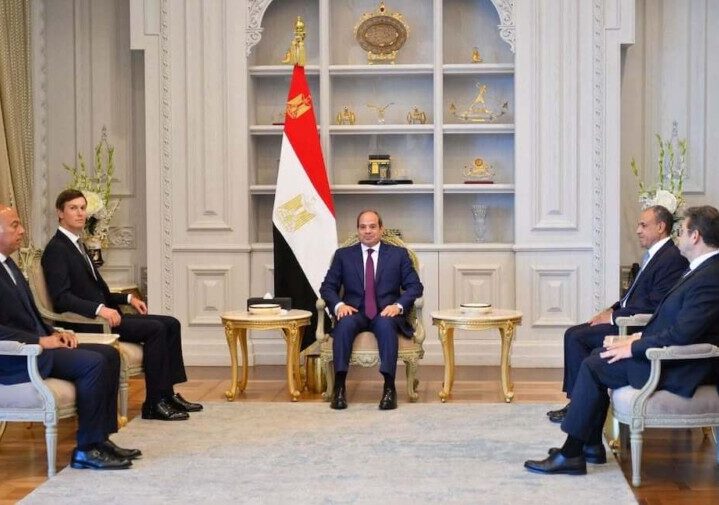
From Iran’s perspective, there is no rational justification for posing any security threat to Oman. The primary reason for this is the long-standing relationship of trust between the two countries. Another factor is that Iran still views Oman as a key channel of communication, particularly in its dealings with the West. Although various actors such as Pakistan, Türkiye and Egypt have become involved in the mediation process, Oman’s potential role in this regard may once again come to the fore. Consequently, Iran’s positioning of Oman in a different stance from the Gulf states during this process could be viewed as a rational policy choice.
In conclusion, Oman’s stance in this process constitutes a continuation of its traditional policy. Through its strategy of neutrality, Oman seeks to minimize potential risks arising from regional crises, whilst simultaneously aiming to ensure that its development programs—which are progressing at a relatively slower pace compared to those of its neighbours—are not derailed. Furthermore, Oman aims to utilize its geostrategic position to mitigate the effects of a prolonged crisis in the Strait of Hormuz on the region and to ensure the continuity of global and regional trade activities.
The investments made in the port of Duqm over many years, along with the enhanced functionality of the port of Sohar, one of the Gulf region’s gateways to the Indian Ocean, will significantly strengthen Oman’s geopolitical position. As the second-most populous country in the Gulf in terms of its native population, Oman continues to act as the region’s ‘wise man’ through policies shaped by its imperial heritage.
(Originally published in Turkish by Kriter)

Ismail Numan Telci is the Vice President of Center for Middle Eastern Studies (ORSAM). He is also an Associate Professor at the Middle East Institute (ORMER) and at the Department of International Relations at Sakarya University. He is the author/editor of many books including 'Dictionary of the Egyptian Revolution', 'Eastern Mediterranean in International Politics' and 'Gulf Foreign Policy'. His comments appeared on international outlets including Al Jazeera, BBC, Le Monde, TRT World and Deutsche Welle.
You can see how this popup was set up in our step-by-step guide: https://wppopupmaker.com/guides/auto-opening-announcement-popups/

Stay informed by subscribing to
our weekly newsletter.
You can see how this popup was set up in our step-by-step guide: https://wppopupmaker.com/guides/auto-opening-announcement-popups/
You can see how this popup was set up in our step-by-step guide: https://wppopupmaker.com/guides/auto-opening-announcement-popups/
You can see how this popup was set up in our step-by-step guide: https://wppopupmaker.com/guides/auto-opening-announcement-popups/
You can see how this popup was set up in our step-by-step guide: https://wppopupmaker.com/guides/auto-opening-announcement-popups/