Investment Fund Emerges as Key Incentive in US-Iran Peace Framework

June 17, 2026

Projects under consideration reportedly include repairs and modernization of refineries, airports, transportation networks, industrial facilities, and major manufacturing centers damaged during the Iran-Israel-US war.
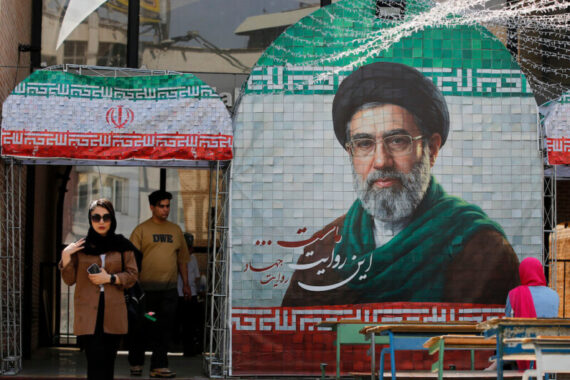
A view of streets as daily life continues amid fragile ceasefire in Tehran, Iran on May 12, 2026, as geopolitical tensions rise following recent statements from the United States. US President Donald Trump recently characterized the current ceasefire agreement with Iran as being in a 'very weak' state, casting a shadow over diplomatic efforts to maintain regional stability. Photo by Anadolu Images.

A

proposed $300 billion private investment fund aimed at revitalizing Iran’s economy has emerged as a central component of the framework agreement reached between the United States and Iran to end months of conflict, according to a source with direct knowledge of the negotiations.

The fund, which would be known as the Reconstruction and Development Fund, is designed to encourage both sides to finalize a comprehensive peace agreement by offering a powerful economic incentive for post-war recovery and long-term investment.

According to the source, more than half of the proposed funding—over $150 billion—has already been pledged by companies and financial institutions across multiple regions, including North America, Asia, the Gulf, Africa, and South America.

The initiative remains contingent on the successful completion of a final agreement between Washington and Tehran. Negotiators are expected to spend the next 60 days working on unresolved issues, including Iran’s nuclear program, sanctions relief, and regional security arrangements.

Economic dimension of peace deal

The investment proposal represents one of the most ambitious economic initiatives linked to a Middle Eastern peace agreement in recent decades.

Unlike traditional reconstruction packages financed by governments or international organizations, the proposed fund would be entirely privately financed.

The source familiar with the negotiations said no government money, grants, or direct public financing would be involved.

Instead, private companies and financial institutions have committed investment capital intended for projects in key sectors of Iran’s economy, including energy, transportation, logistics, manufacturing, and industrial development.

The fund is separate from ongoing discussions regarding the release of Iranian assets frozen abroad and the lifting of U.S. sanctions.

Negotiators have reportedly established distinct tracks for those issues, with separate timelines and objectives.

“This is not compensation, reparations, or a government aid package,” the source said. “It is an investment vehicle intended to unlock economic opportunities once a final settlement is achieved.”

From compensation demand to investment plan

The idea reportedly emerged after Iran initially sought substantial compensation for damage caused during the conflict.

A senior Iranian source told Reuters that Tehran had requested approximately $400 billion in compensation from the United States for wartime losses.

Washington rejected that proposal, leading negotiators to explore alternative mechanisms capable of supporting economic recovery while remaining politically acceptable to all parties.

The resulting concept focuses on investment rather than compensation.

Under the proposed structure, regional countries and international investors would contribute through various mechanisms, including financing projects directly, establishing credit facilities, guaranteeing loans, and supporting reconstruction efforts at damaged industrial and infrastructure sites.

Projects under consideration reportedly include repairs and modernization of refineries, airports, transportation networks, industrial facilities, and major manufacturing centers damaged during the conflict.

Among the sites expected to benefit is the Mobarakeh Steel complex, one of Iran’s largest industrial enterprises.

Untapped economic potential

Supporters of the initiative argue that Iran presents significant long-term opportunities for investors if geopolitical risks and sanctions barriers can be reduced.

Despite decades of economic isolation, Iran remains one of the largest economies in the Middle East.

The country possesses the world’s second-largest proven natural gas reserves and the fourth-largest oil reserves, making it a major potential energy producer.

In addition, Iran has a population exceeding 92 million people, a relatively educated workforce, extensive industrial infrastructure, and significant potential in sectors ranging from petrochemicals and mining to tourism and agriculture.

However, successive rounds of international sanctions and political tensions have largely excluded Iran from global capital markets for more than four decades.

As a result, foreign direct investment has remained limited despite the country’s economic potential.

Analysts say that if sanctions are eased and political stability improves, Iran could attract substantial foreign investment in the coming years.

While the investment initiative has generated considerable attention, its implementation depends entirely on the success of broader negotiations.

The framework agreement announced earlier this week established a 60-day period during which U.S. and Iranian negotiators will seek to reach a comprehensive settlement.

One of the most difficult issues remains Iran’s nuclear program.

According to U.S. Vice President JD Vance, access to the reconstruction fund would depend on Iran meeting strict conditions, including dismantling key elements of its nuclear program, eliminating stockpiles of highly enriched uranium, and accepting extensive international inspections.

Iran has consistently maintained that its nuclear activities are intended for peaceful purposes and has rejected accusations that it seeks nuclear weapons.

The issue remains one of the most contentious points in negotiations.

Investors already lining up

According to the source, companies from several countries have already expressed interest in participating.

Among those identified were firms based in the United States, South Korea, Japan, Singapore, and Malaysia, though no comprehensive list of participants has yet been released.

Officials involved in the negotiations are still working out key questions regarding governance, oversight, project selection, and fund administration.

“It’ll only be created once the final deal is signed,” the source said.

During the current 60-day framework period, planners are expected to work with Iranian authorities and prospective investors to identify priority projects and establish operational structures.

The announcement comes shortly after the United States and Iran agreed to halt hostilities and reopen the Strait of Hormuz, a vital maritime route through which a significant share of global energy supplies pass.

The peace framework has already contributed to a decline in oil prices and improved market sentiment.

Economists note that a successful agreement could have far-reaching implications beyond Iran, potentially reducing geopolitical risk across the Middle East and opening one of the region’s largest economies to international investment.

Nevertheless, substantial obstacles remain.

The current memorandum of understanding is only a framework, and negotiations over nuclear issues, sanctions, regional security arrangements, and implementation mechanisms are expected to be complex.

Whether the proposed $300 billion fund becomes reality will depend on the ability of Washington and Tehran to transform a fragile ceasefire into a comprehensive and durable political settlement.

For now, however, the investment initiative offers a glimpse of the economic opportunities that both sides hope could emerge from one of the most significant diplomatic openings between the United States and Iran in decades.

(Source: Reuters)

Politics Today is dedicated to publishing insightful analyses in order to understand the changing nature of contemporary politics. It aims to contribute to the sound and constructive discussion of international affairs.