Hegseth Plans 20% Cut in US General and Admiral Positions Amid Pentagon Tensions
Hegseth intends to double a 10 percent reduction in top-ranking personnel ordered last year, bringing the overall reduction to 20 percent by January 1, 2027.
October 1, 2026
P
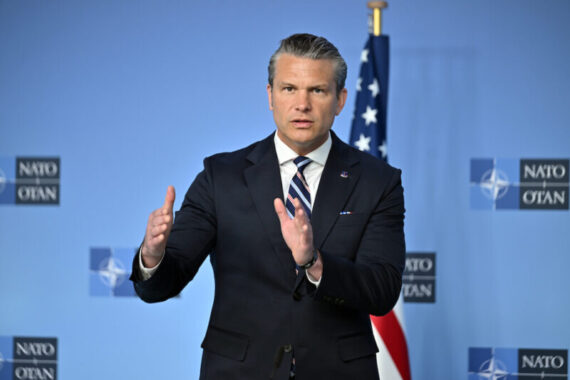
ete Hegseth, U.S. Defense Secretary, has announced plans to cut by 20 percent the number of military positions reserved for generals and admirals, a move that could significantly reshape the Pentagon’s senior leadership and has raised questions about political influence over the US armed forces.
Hegseth announced the planned reduction on Wednesday at the US Marine Corps base in Quantico, Virginia, describing it as a long-overdue effort to change the culture of the military. He said reducing senior positions was necessary to remove what he described as “woke” elements from the armed forces.
“You can’t change a culture with the same people who enabled it,” Hegseth said, arguing that personnel decisions were central to changing military culture. He also said the armed forces should focus on training, readiness, accountability, discipline and lethality.
The Pentagon has previously presented reductions in senior positions as part of efforts to streamline bureaucracy and reduce layers of command. However, analysts cited by Al Jazeera said the latest plans could also have implications for how senior military officers are selected and how willing they are to challenge political leaders.
According to the Associated Press, citing Pentagon officials, Hegseth intends to double a 10 percent reduction in top-ranking personnel ordered last year, bringing the overall reduction to 20 percent by January 1, 2027. The plan would affect roughly 800 general and admiral positions across the one- to four-star ranks.
Congress sets statutory limits on the number of generals and admirals. A Congressional Research Service report recorded 848 active-duty generals and admirals in September 2025, compared with an authorized maximum of 857.
The planned cuts do not necessarily mean that every officer currently occupying an affected position will immediately leave the military. Reuters reported that some positions would be eliminated, while others would be reassigned to lower-ranking offices.
The argument for reducing the number of senior military positions predates Hegseth’s tenure. Supporters of reform have argued that the US military has too many layers of command and headquarters, and that reducing senior ranks could give officers closer to military operations greater authority.
Walter Ladwig, a political scientist specializing in US foreign policy at King’s College London, said there was a credible case for reducing the number of senior officers. He noted that the overall size of the US military had declined significantly since the end of the Cold War, while the number of flag officers had not fallen correspondingly.
At the same time, however, Hegseth’s proposed cuts come after a series of high-profile dismissals and leadership changes at the Pentagon.
President Donald Trump and Hegseth have fired or pushed into retirement more than two dozen military leaders since Trump took office in January 2025, according to the article. Those removed include Army Chief of Staff General Randy George and Navy Chief of Naval Operations Admiral Lisa Franchetti. Trump also dismissed Air Force General CQ Brown as chairman of the Joint Chiefs of Staff in February 2025.
The administration has also dismissed the only two women serving as four-star officers, along with other senior female officers. Army Secretary Dan Driscoll resigned in August following reported disagreements over Hegseth’s handling of senior military personnel.
The dismissals and blocked promotions have prompted questions about how commanders are selected and whether professional disagreements with the administration could affect military careers.
Recommended

Robert Ralston, a lecturer in political science and international studies at the University of Birmingham, said the proposed reductions should be viewed alongside the earlier personnel changes. He argued that the measures appeared to form part of a broader effort to select military leaders according to political considerations.
Hegseth’s tenure has also been marked by controversy over his relationship with senior Pentagon officials. In March 2025, he shared details of planned strikes on Yemen in a Signal chat that inadvertently included the editor-in-chief of The Atlantic magazine. Later reports about weapons supplies in the Middle East prompted a Pentagon investigation into leaks and tighter restrictions on journalists.
The administration has also introduced changes aimed at ending what Hegseth calls “woke” culture, including new physical fitness requirements and the abolition of diversity policies.
Critics say the combination of dismissals, blocked promotions and personnel reductions could affect morale and the development of future military leadership. Ralston said the changes could have long-term consequences for leadership pipelines within the Department of Defense.
Ladwig, while describing Hegseth’s relationship with senior Pentagon leaders as unusually confrontational, cautioned against interpreting every reduction as a political power struggle. He noted that civilian control of the military gives an elected government authority to determine defense priorities and reorganize the armed forces.
At the same time, he warned that officers could become less willing to offer candid professional advice if they believe political alignment is important for career advancement.
The proposed 20 percent reduction therefore comes at a sensitive point for the US military, with Hegseth facing scrutiny over his management of senior commanders and the broader direction of the Pentagon. The changes could reduce layers of command and bureaucracy, while also prompting continuing debate over military professionalism, leadership selection and the relationship between civilian political authority and senior military advice.
(Source: Aljazeera English)

Politics Today is dedicated to publishing insightful analyses in order to understand the changing nature of contemporary politics. It aims to contribute to the sound and constructive discussion of international affairs.
You can see how this popup was set up in our step-by-step guide: https://wppopupmaker.com/guides/auto-opening-announcement-popups/

Stay informed by subscribing to
our weekly newsletter.
You can see how this popup was set up in our step-by-step guide: https://wppopupmaker.com/guides/auto-opening-announcement-popups/
You can see how this popup was set up in our step-by-step guide: https://wppopupmaker.com/guides/auto-opening-announcement-popups/
You can see how this popup was set up in our step-by-step guide: https://wppopupmaker.com/guides/auto-opening-announcement-popups/
You can see how this popup was set up in our step-by-step guide: https://wppopupmaker.com/guides/auto-opening-announcement-popups/