Army Secretary Dan Driscoll Resigns Amid Rift With Pentagon Chief

September 1, 2026

Reporting from Axios indicates that while Hegseth and Driscoll never developed a close working relationship, Driscoll's personal friendship with Vice President JD Vance had shielded him to some degree.
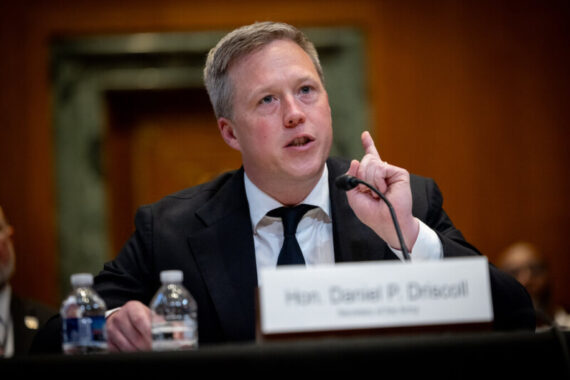
U.S. Army Secretary Dan Driscoll testified at a budget hearing of the Senate Appropriations Committee’s Subcommittee on the Department of Defense, held at the Dirksen Senate Office Building in Washington, D.C. Photo by Anadolu Images.

T

he US Army’s civilian leader, Secretary Dan Driscoll, has submitted his resignation to President Donald Trump following an extended period of tension with Defense Secretary Pete Hegseth over disagreements about the service’s direction and a series of senior officer removals, according to a Wall Street Journal report. Driscoll is expected to leave the Pentagon within days.

The White House framed his tenure positively, with spokeswoman Anna Kelly crediting him with strengthening military readiness, supporting Russia-Ukraine negotiations, and advancing the administration’s broader defense agenda alongside Trump and Hegseth.

A leadership vacuum at the top

Driscoll’s departure leaves the Army without any Senate-confirmed leader, civilian or military. Gen. Christopher LaNeve has been filling in as acting service chief since Hegseth removed his predecessor, Gen. Randy George. The gap has drawn concern from some members of Congress, particularly given the growing number of vacancies across senior military posts as the US conflict with Iran passes its six-month mark.

Driscoll, known within defense circles as “drone guy” for his focus on modernizing the force through drone technology, had climbed quickly through the administration’s ranks after his nomination. In his role, he was responsible for the Army’s annual budget and oversight of more than a million active-duty, National Guard and reserve troops, along with over 330,000 civilian personnel.


Roots of the rift with Hegseth

Reporting from Axios indicates that while Hegseth and Driscoll never developed a close working relationship, Driscoll’s personal friendship with Vice President JD Vance had shielded him to some degree. Part of the friction reportedly stemmed from Hegseth’s push to strike four officers — two Black men and two women — from a promotions list, a move Driscoll declined to support, according to the New York Times.

Earlier in the year, multiple outlets reported that Hegseth pushed out Col. David Butler, one of Driscoll’s senior advisers and a former spokesperson for Gen. Mark Milley, with whom Trump has had a public falling out. Fox News reported that Driscoll had pushed back against efforts to have Butler removed.

(Source: Anadolu Agency)

Politics Today is dedicated to publishing insightful analyses in order to understand the changing nature of contemporary politics. It aims to contribute to the sound and constructive discussion of international affairs.