State Parliamentary Elections in Germany: Uncertainties Facing Chancellor Merz and the Federal Government
Looking at the state parliament election results in Mecklenburg-Western Pomerania in Germany, two critical points stand out.
October 2, 2026
O
n September 6, 2026, a significant state parliament election took place in the eastern German state of Saxony-Anhalt, and the results signaled a serious crisis for the incumbent federal government. Just two weeks after this historic defeat against the AfD, on September 20, state parliament elections were also held in Berlin and Mecklenburg-Western Pomerania. The elections in these two states also ended in failure, particularly for the Chancellor’s party, the CDU, and have opened the door to the political crisis becoming, in a sense, chronic at the federal level.
For the first time in the history of the Federal Republic of Germany, the CDU failed to enter a state parliament, securing only 4.9 percent of the vote, and recorded its worst-ever result in Mecklenburg-Western Pomerania. Undoubtedly, this outcome will also have implications for the future of the federal government. Meanwhile, the CDU, which holds the state premiership in Berlin, suffered a defeat there as well by finishing second to the Left Party, further deepening the crisis. Consequently, the election results from the three states over the past weeks can be viewed not so much as reflecting the difficulties expected in forming new coalition governments at the state level, but rather as a critical turning point for the future of the incumbent federal government led by Merz.
Although the AfD finished first in the Saxony-Anhalt state parliament election on September 6, it failed to secure the number of seats required for an absolute majority. Since other parties have also refused to form a coalition with the AfD, and the BSW party, despite maintaining communication with the AfD, remains opposed to a coalition for now, uncertainty persists regarding the course of events in the state. In the state parliament elections held on September 20 in Berlin and Mecklenburg-Western Pomerania, which also saw high voter turnout, a more complex picture emerged for the federal government.
According to preliminary official results, the Left Party finished first in the Berlin state election for the first time with 25.7 percent of the vote, while the incumbent CDU-SPD coalition partners suffered significant losses. In Berlin, the CDU fell by approximately 9.5 percentage points to 18.8 percent, finishing second, while the SPD lost 6.3 percentage points and managed to secure only 12.1 percent of the vote. Contrary to expectations following its momentum in Saxony-Anhalt, the AfD saw a more modest rise in Berlin, reaching 16.3 percent, while the Greens secured 14.3 percent of the vote.
Looking at the state parliament election results in Mecklenburg-Western Pomerania, two critical points stand out. Although the AfD’s clear upward trend continued here as well, the SPD factor played a more decisive role compared to Saxony-Anhalt. The AfD reached a vote share of 38.2 percent and, just as in Saxony-Anhalt, finished the election in first place. Although the party leadership claims that “voters have entrusted them with the task of forming a government,” the formation of any coalition involving the AfD is impossible in this state as well due to the stances of other parties, and like in Berlin, the BSW failed to clear the electoral threshold in this state.
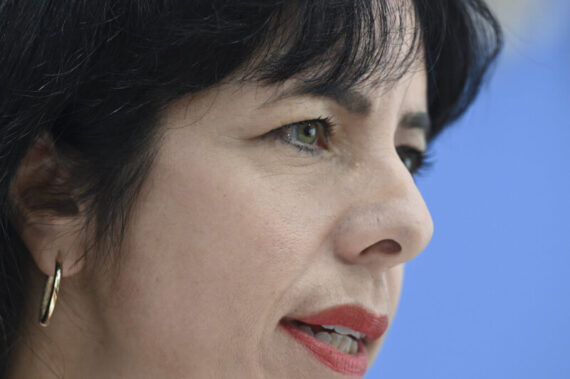
Another point worth noting is that in the state of Mecklenburg-Western Pomerania, the SPD, particularly incumbent SPD State Premier Manuela Schwesig, who positioned herself as a centrist in her election campaign over the past few months, managed to secure a 35.5 percent share of the vote. Although the SPD finished the election in second place, it is highly likely that it will form a coalition government once again. While the SPD lost approximately 4 percentage points compared to the 2021 election, this is still considered a relative success given the AfD’s current upward trend.
In contrast, the CDU achieved its worst-ever result in Mecklenburg-Western Pomerania. Failing to clear the 5 percent electoral threshold, the CDU, for the first time in German history, failed to secure seats in a state parliament election, remaining outside the legislature with 4.9 percent of the vote. The Left Party and the Greens were the other parties that managed to enter the state parliament, securing 6.5 percent and 5.7 percent of the vote, respectively.
After the polls closed, though this is not typically the case following state legislative elections, Chancellor Friedrich Merz (CDU) made a public statement. Merz described the election results as a “disaster,” but emphasized that he remains in office and is determined to implement the planned reforms in collaboration with the federal government. With this move, Merz aimed to preempt potential debates regarding speculation throughout the evening about whether he would step down.
Although he was partially successful with this maneuver, as the night wore on and it became clear that the CDU had failed to clear the electoral threshold in Mecklenburg-Western Pomerania, attention once again turned to potential critical voices within the CDU. Although election night was somehow weathered, and some CDU figures even issued statements of support for the Chancellor the following day, questions remain about how and to what extent the coalition can be sustained in light of these failures in the three state parliamentary elections.
Public support for Chancellor Merz and his party, the CDU, has been declining for quite some time. Since taking office in May 2025, Merz has faced criticism, particularly for failing to fulfill his campaign promises. In addition to this negative perception, he has once again come to the forefront of public discourse due to his controversial policy choices and rhetoric in recent months. The chancellor’s extremely low approval ratings in polls have also had a negative impact on election campaigns in the states in question. In particular, the AfD’s upward trend, as reflected in recent polls conducted at both the state and federal levels, has continued to put pressure on Merz and his party, narrowing the scope of the party’s rhetoric and concrete goals.
Amid this ongoing decline for parties purported to be centrist, it can be argued that the AfD’s increasing normalization has also been influenced by the policy promises favored by centrist parties. Consequently, the move toward aligning with the AfD’s promises has ultimately contributed to the normalization of these discourses and goals. As we witness the further normalization of extreme rhetoric and promises, the AfD has secured first place not only in the eastern states but also in recent polls conducted at the federal level. Consequently, the likelihood that voters are now choosing the AfD not merely as a reactionary choice but specifically because of the party’s own policy promises has also strengthened.
The CDU’s concrete failure in the three critical state parliament elections it lost can no longer be attributed solely to Merz and his criticized leadership. In the coming days, it is likely that the CDU/CSU-SPD coalition, which he leads as Chancellor, as well as the CDU as a whole will face a challenging process. These election results will lead to new developments in the coming weeks and months. For example, while there are indications that a change in the chancellor within the coalition or the possibility of early elections could be raised, it is also possible that Chancellor Merz may ultimately be forced to call for a vote of confidence. Despite all the negative developments, as Merz emphasized in recent days, his insistence that he was elected for a four-year term and that he has no intention of stepping down underscores the lack of concrete alternative options for the Chancellor—and indeed, for the coalition itself.
Aside from the difficulty of identifying an alternative CDU chancellor within the coalition, the prospect of gaining momentum within the coalition with this potential new figure can also be viewed as a challenging and risky process in the current equation. Especially as the AfD is expected to intensify its calls for early elections in the coming period, it is likely that the CDU/CSU and SPD, in particular, will lose even more ground in a potential new election against the AfD, which currently leads in the polls.
While it is difficult to speak of a generally positive public perception of Chancellor Merz over the past 16 months since he took office, assessments of him have taken an increasingly critical turn, particularly in recent weeks. Although this attitude is not a new trend, the Chancellor’s continued use of his customary rhetoric, particularly regarding communication, which has generally caused bewilderment throughout society, especially following the summer break, has made the situation even more challenging. Efforts are evident to push this negative perception, linked to domestic policy, into the background by pointing to current risks and developments in foreign policy. However, this approach has not garnered the response Merz had hoped for among the German public.
Recommended

The fact that the AfD was able to secure a near-absolute majority in the state of Saxony-Anhalt has, first and foremost, dealt a serious blow to the Chancellor’s party, the CDU, particularly at the federal level. The CDU, which is on the verge of losing its social credibility and its claim to being a centrist party, particularly in light of the results in these three states, faces even more critical days ahead. The goal of transforming the agreements reached following intensive negotiations with coalition partner the SPD into comprehensive reforms in the coming months constitutes the CDU’s most important and pressing promises at the federal level.
It remains uncertain whether the Chancellor and the coalition will be able to implement reforms deemed necessary but lacking sufficient public support, such as pension reform. The SPD’s desire to revise the agreements reached following the election results may prompt the CDU/CSU to make potential, partial concessions. However, such steps are likely to be risky maneuvers.
At this stage, it is worth recalling the harsh criticism Merz directed at former Social Democratic Chancellor Olaf Scholz (SPD) during his tenure as leader of the main opposition. At that time, while public support for Scholz remained low in polls, Merz, as leader of the main opposition, was persistently calling for Scholz to step down. Today, however, it should not be forgotten that Chancellor Merz’s own popularity and support within his party are at a lower level.
The current political crisis and lack of predictability in Germany are not merely a matter of a single individual but are also linked to a deepening crisis of credibility in politics as a whole. The failure to present lasting solutions to economic problems and a concrete vision for the coming years within a credible framework is, in general, also affecting the promises and reform goals of political parties. Alternative political parties positioned at the extremes, which address social demands with extreme promises, have managed to increase their current vote shares at the state or federal level during this process, likely aided by the comfort that comes with avoiding responsibility. Meanwhile, the efforts of parties such as the CDU/CSU and SPD, which claim to occupy the political center, to re-establish their political representation and voter mobilization capabilities are becoming increasingly difficult.
Finally, calls are emerging that the AfD, which finished first in the elections in the states of Saxony-Anhalt and Mecklenburg-Western Pomerania, should now be given the opportunity to form a state government, and that concessions should be made regarding the “firewall” principle of refusing to cooperate. At this stage, some observers point out that an AfD-led state government would fail within a short period if it came to power. The expectation that such a process could evolve into a more realistic transformation in the eyes of the public is, however, viewed as an extremely risky approach. One of the most prominent opposing viewpoints is the reluctance of centrist parties to take such a risk and the argument that the AfD cannot be compared to similar rising parties in other European countries. In this context, it is noteworthy that even similar parties in France or Italy have distanced themselves from the AfD in the past.
Ultimately, concrete developments regarding the future of the CDU/CSU-SPD coalition led by Chancellor Merz, who has been in office for approximately 16 months, can be expected in the coming weeks. As differences of opinion within the coalition become more pronounced, it is likely that the scrutiny of the Chancellor, both within the coalition and within his own party, will enter a new phase. Despite Merz’s determination to remain in office for now, it is possible that, in the coming period, he may be compelled to seek a vote of confidence from the Bundestag in the face of mounting criticism and pressure. Additionally, it is known that for several weeks now, certain alternative CDU figures have been mentioned in the public sphere as potential candidates for the next chancellor. However, there is still no concrete vision or plan from these potential candidates regarding how they would implement comprehensive reforms that are facing significant public resistance. Given the results of the recent state parliament elections, the political crisis in Germany is likely to deepen and enter an even more complex phase in the coming days.
(Originally published in Turkish by SETA Foundation)

M. Erkut Ayvaz graduated from the University of Erlangen-Nuremberg (Germany) with a double-major in Political Science and Public Law in 2011. He spent the academic year 2012-2013 at Duke University (NC, USA) with a DAAD-scholarship. In 2014 he received his MA after completing his master’s thesis which addressed the civil-military relations in Turkey. Currently, Ayvaz is working on his doctoral dissertation at the Otto-Friedrich-Universität Bamberg (Germany).
You can see how this popup was set up in our step-by-step guide: https://wppopupmaker.com/guides/auto-opening-announcement-popups/

Stay informed by subscribing to
our weekly newsletter.
You can see how this popup was set up in our step-by-step guide: https://wppopupmaker.com/guides/auto-opening-announcement-popups/
You can see how this popup was set up in our step-by-step guide: https://wppopupmaker.com/guides/auto-opening-announcement-popups/
You can see how this popup was set up in our step-by-step guide: https://wppopupmaker.com/guides/auto-opening-announcement-popups/
You can see how this popup was set up in our step-by-step guide: https://wppopupmaker.com/guides/auto-opening-announcement-popups/