Shifting Front Lines in Sudan and the Future of a Protracted War of Attrition
In Sudan, a decisive military resolution of the war appears unlikely.
October 20, 2026

T
he war that erupted between the Sudanese Armed Forces (SAF) and the Rapid Support Forces (RSF) on April 15, 2023, has evolved, after more than three years of fighting, into a conflict that can no longer be explained simply as a power struggle between two military organisations.
As of September 2026, the situation in Sudan points to a prolonged war of attrition in which military operations of varying intensity across different parts of the country, deepening economic fragmentation, a worsening humanitarian crisis and cross-border support networks involving external actors are increasingly reinforcing one another.
During the early stages of the war, the Khartoum and Darfur fronts formed the centre of the fighting. Today, however, the military centre of gravity has shifted significantly towards Kordofan, Darfur and the Blue Nile region.
The advances made by the SAF in and around Khartoum during 2025 enabled the Sudanese government to consolidate its control over the northern and eastern parts of the country. Although efforts to restore a degree of normality in the capital have begun, this does not mean that the war is approaching its end.
On the contrary, the RSF’s continued dominance in Darfur and the expansion of fighting into Kordofan and the Blue Nile region demonstrate that the geographical character of the conflict is changing.
North Kordofan, in particular, has become one of the war’s most critical strategic junctions since the summer of 2026. The SAF’s gains along routes around Bara in July and September are important for access to logistical corridors connecting El-Obeid with Darfur.
In response, the RSF has carried out drone attacks against SAF-controlled centres, particularly El-Obeid, attempting to offset pressure on the ground through long-range strikes.
Mutual attacks and new population movements continued in North Kordofan during the final week of September.
One of the most striking transformations in the conflict has been the way unmanned aerial vehicles have altered the war’s strategic character.
According to the United Nations Independent International Fact-Finding Mission for the Sudan, more than 1,000 people were killed in drone attacks during the first five months of 2026.
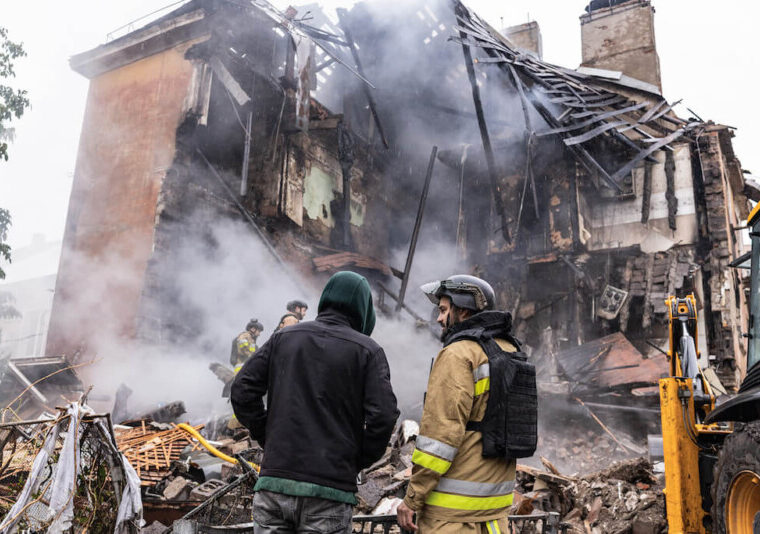
Both sides have acquired the capability to strike targets far behind the front lines. Electricity infrastructure, fuel facilities, hospitals, markets and areas sheltering displaced civilians have all been affected by attacks.
Sudan’s war has thus evolved into a conflict in which conventional ground warfare is intertwined with cross-border technology and weapons supply networks, turning the country into a de facto testing ground for weapons manufacturers.
Darfur continues to provide the RSF with military and economic depth in the war. The group’s capture of El Fasher in October 2025 consolidated its dominance across western Sudan.
As a result, an increasingly pronounced east-west division has emerged on Sudan’s de facto map of territorial control. The SAF largely controls the north, east and areas around Khartoum, while the RSF’s sphere of influence is concentrated in Darfur and parts of Kordofan connected to the region.
This does not, however, mean that a stable boundary has emerged between the two sides. On the contrary, Kordofan is becoming a transitional zone between their respective areas of control.
Control of El-Obeid is strategically important not only from a military perspective but also because of its position along the overland route linking Khartoum with Darfur.
Consequently, the possibility that the future of Sudan’s war will be determined less by Khartoum than by the Kordofan corridors, where control has repeatedly shifted between the parties in recent months, is becoming increasingly likely.
Meanwhile, renewed escalation in the Blue Nile region has added another dimension to the conflict.
The activities of the RSF and elements of the Sudan People’s Liberation Movement–North (SPLM-N) have transformed areas close to the Ethiopian and South Sudanese borders into a new security flashpoint.
Clashes around Geissan and Kurmuk in recent weeks, along with allegations concerning cross-border logistical routes, indicate that Sudan’s war is beginning to intersect more directly with instability in the Horn of Africa.
Perhaps one of the most significant dimensions of Sudan’s de facto fragmentation is emerging in the economic sphere.
In areas controlled by the SAF, the Sudanese pound’s black-market exchange rate against the US dollar has fallen by almost half since the summer of 2026. By contrast, the currency has followed a relatively more stable trajectory in some RSF-controlled areas.
According to figures for September 2026, the dollar was trading at approximately 7,500 Sudanese pounds on the black market in SAF-controlled areas, compared with around 4,200 pounds in RSF-controlled territories.
A significant share of Sudan’s gold, livestock, oilseed and gum arabic production is located in areas controlled by the RSF or in contested territories, further deepening the country’s economic fragmentation.
Consequently, control over the resources and trade routes that finance the war economy has become as decisive as territorial control itself.
Gold-producing areas, overland routes extending into Libya and Chad, Red Sea ports and oil infrastructure are now as important to the sustainability of the war as military bases.
One of the most important factors prolonging Sudan’s war is the inability to completely cut off external support channels.
United Nations reports have identified the involvement of individuals and entities linked to the UAE, Chad, Libya and Somalia in arms supplies, logistical operations and foreign fighter networks supporting the RSF. The UAE and Chad have denied allegations of involvement in such support.
At the same time, the SAF is reportedly expanding its long-range strike capabilities through externally supplied drone and ammunition systems.
Sudan is therefore increasingly becoming an arena for proxy competition in which regional and global military technologies are being tested.
The conflict is also having a direct impact on Sudan’s neighbours. Chad, Libya, South Sudan, Ethiopia and Egypt are all confronting the consequences of the war in terms of refugee movements, smuggling and arms-trafficking routes, and border security.
The Darfur-Chad and Darfur-Libya corridors, along with the Blue Nile-Ethiopia border, are among the most sensitive areas where the conflict could spill beyond Sudan’s borders.
An announcement in the final week of September that seven armed opposition groups in Ethiopia had joined forces to establish what they called an “alliance for survival” is another recent development worth monitoring in terms of its potential interaction with the Sudanese conflict.
The humanitarian situation remains extremely severe.
The total number of people displaced by the war has exceeded 14 million. Although approximately five million people are reported to have returned to areas that the SAF has recaptured, their return does not necessarily represent safe and sustainable normalization.
The destruction of essential infrastructure, unemployment, inflation and rising food prices are creating new difficulties for returning populations.
According to data from the Integrated Food Security Phase Classification (IPC), approximately 19.5 million people faced acute food insecurity during the first half of 2026.
Recommended
In the short term, a decisive military resolution of the war appears unlikely.
The SAF’s gains in Khartoum and advances in Kordofan have strengthened the central government’s capacity, but the RSF’s entrenched position in Darfur, access to economic resources and cross-border connections demonstrate that it retains the ability to sustain the conflict.
Three developments are therefore likely to prove decisive in the coming period.
First, the military balance along the El-Obeid and Kordofan corridor; second, the future of external supply channels reaching Darfur; and third, whether diplomatic initiatives involving the United States, Saudi Arabia, Egypt and the UAE can persuade the parties on the ground to agree to a genuine ceasefire.
The United Nations has also emphasised the need for a humanitarian ceasefire and regional coordination in ongoing diplomatic efforts.
In the medium term, however, the principal risk is not necessarily Sudan’s formal partition but the permanent entrenchment of two separate military and economic spheres under the nominal authority of a single state.
Such an arrangement would not only erode Sudan’s state capacity but also make the already fragile security belt stretching between the Red Sea, the Sahel and the Horn of Africa more porous.
The future of Sudan’s war is therefore not merely a question of who controls Khartoum or Darfur. The new balance of power emerging in Sudan will directly shape the security architecture of a much wider region extending from the Red Sea to Libya, and from Chad to Ethiopia.
(Originally published in Turkish by Kriter)

Kaan Devecioglu worked as a deputy coordinator at the African Coordination and Training Center, a project of the Association of Researchers on Africa. He is currently pursuing a PhD at the Department of International Relations at Istanbul Medeniyet University. His articles and book chapters have been published in international peer-reviewed journals and his analyses and opinions have been published in Anadolu Agency, Daily Sabah, TRT World, Yeni Safak newspaper and many international publications.
You can see how this popup was set up in our step-by-step guide: https://wppopupmaker.com/guides/auto-opening-announcement-popups/

Stay informed by subscribing to
our weekly newsletter.
You can see how this popup was set up in our step-by-step guide: https://wppopupmaker.com/guides/auto-opening-announcement-popups/
You can see how this popup was set up in our step-by-step guide: https://wppopupmaker.com/guides/auto-opening-announcement-popups/
You can see how this popup was set up in our step-by-step guide: https://wppopupmaker.com/guides/auto-opening-announcement-popups/
You can see how this popup was set up in our step-by-step guide: https://wppopupmaker.com/guides/auto-opening-announcement-popups/