Houthi Attacks and Saudi Arabia’s Security Dilemma
Bringing maritime traffic in the Red Sea under Houthi control was intended to exert pressure not only on Saudi Arabia but also on global actors.
November 2, 2026
T
he struggle for influence between Saudi Arabia and the Houthis in Yemen, which was once marked by intense fighting but had continued at a lower intensity particularly over the past four years, resurfaced following developments in September.
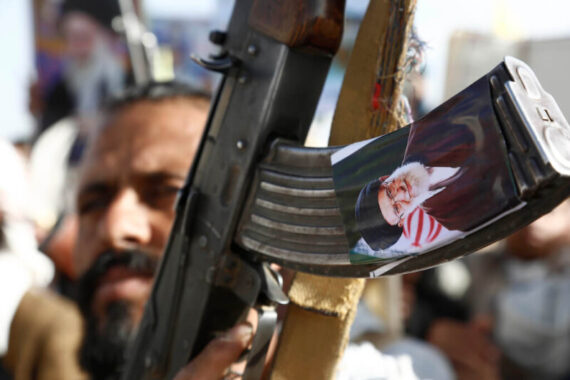
The wave of attacks launched by the Houthis against targets in Saudi Arabia on September 8 caused extensive damage to oil facilities and left dozens of people injured. These attacks demonstrated that the Yemen conflict, which Riyadh believed it had contained through the 2022 ceasefire, had once again intensified, bringing the fighting back onto Saudi territory.
Viewed within the broader regional and global geopolitical context, these developments can be regarded not only as a new phase of Yemen’s civil war but also as a new front in the war being waged by the United States and Israel against Iran.
The primary reason behind the Houthis’ adoption of a new strategy in Yemen and their increasingly confrontational stance towards Saudi Arabia can be identified as the collapse of the ceasefire between the United States and Iran. Indeed, following the breakdown of the ceasefire in July, the Houthis began intensifying their attacks against Yemen’s Saudi-backed central government, seeking, in a sense, to punish Riyadh, which they accused of acting in coordination with Washington.
In line with this strategy, the Houthis also sought to establish control over Yemen’s coastal regions. Bringing maritime traffic in the Red Sea under Houthi control was intended to exert pressure not only on Saudi Arabia but also on global actors.
Houthi forces rapidly captured stretches of the Red Sea coastline, including the port of Mocha and the strategically located island of Perim at the entrance to the Bab el-Mandeb Strait. They subsequently began targeting cities under central government control further inland, including Taiz and Marib.
The principal factor behind the Houthis’ remarkably rapid advance was the withdrawal of Saudi-backed forces from their positions within a very short period, in some cases without putting up any resistance. Alongside the Houthis’ military superiority, poor coordination among opposing forces also played an important role.
Beyond the realities on the battlefield, this development can be regarded as a major loss of prestige for Saudi Arabia, while also exposing significant strategic vulnerabilities.
An even more critical dimension of these developments emerged in the subsequent phase. Emboldened by the psychological advantage gained through their advances in Yemen, the Houthis began directly targeting Saudi territory.
These attacks frequently followed strikes against Houthi targets in Yemen, which the Houthis claimed had been carried out with Saudi Arabia’s involvement.
Furthermore, the Houthis regard Riyadh as the principal backer of Yemen’s central government and, for this reason, consider Saudi Arabia a legitimate target. Consequently, Houthi forces have been conducting attacks designed to inflict maximum damage on both Saudi Arabia’s military and economic capabilities.
The targeting of oil facilities in the Saudi city of Yanbu was a particularly significant development in this regard.
By seeking to undermine the oil-export capacity of Saudi Arabia, the world’s largest oil exporter, the Houthis aimed to exert pressure on Riyadh, setting the stage for a further escalation of tensions.
Indeed, in the period that followed, Saudi Arabia intensified its attacks against Houthi targets, both directly and through Yemen’s central government.
Through these attacks, the Houthis also sought to obstruct the Red Sea route that Saudi Arabia had activated as an alternative to the Strait of Hormuz.
This strategy aligns with Iran’s post-war policies and is being pursued with the objectives of threatening Riyadh’s stability while ensuring that Iran’s influence over the Strait of Hormuz becomes permanent.
Indeed, weakening the Red Sea corridor that Riyadh has sought to establish as a backup route also demonstrates the Houthis’ efforts to maximise both their deterrence capabilities and their bargaining power at the negotiating table.
Recommended

Another noteworthy aspect of the intensifying conflict is Saudi Arabia’s difficulty in responding effectively to Houthi attacks.
One of the principal reasons for this can be attributed not so much to a shortage of resources but rather to the inability to use existing resources properly and efficiently.
Indeed, the failure of Saudi Arabia, which has made the largest investments in armaments in the Middle East for years, and its local allies in Yemen to mount an effective defense against the Houthis has raised questions about Riyadh’s military capabilities.
Media reports even suggested that, during the period of intensified Houthi attacks, the Saudi crown prince called US President Donald Trump to request assistance, but Trump remained reluctant to intervene.
Trump’s proposal to offer diplomatic support and accelerate the sale of F-35 fighter jets, rather than conduct airstrikes in support of Riyadh, reportedly provoked a strong reaction from the Saudi leadership.
This process can therefore be seen as a renewed confirmation of the considerable risks Saudi Arabia faces as a result of relying on the United States as its sole security umbrella.
These developments have also paved the way for Saudi Arabia to turn towards alternative security mechanisms that it has been developing for some time.
One of the strategies prioritized by the Saudi leadership is to accelerate the implementation of the Mecca Agreement, signed jointly with Türkiye and Pakistan, and transform it into a protective security framework for Riyadh against potentially greater threats.
Although this alliance is not yet operational, it is expected to become one of the three countries’ most important security instruments in the near future.
Looking ahead, three scenarios stand out regarding Saudi Arabia-Houthi tensions, which have been among the major justifications for the US-Israeli war against Iran.
The first scenario involves the parties refraining from further escalation and instead pursuing negotiations. This could lead to a cessation of hostilities and the launch of a diplomatic process in which actors such as Oman, Pakistan or Qatar could play a role.
The second, and more dangerous, scenario would involve Saudi-backed forces launching a counteroffensive in an attempt to secure a decisive victory over the Houthis.
Such a development could prolong the conflict, pave the way for further humanitarian crises in Yemen, a country that has suffered from instability for years, and worsen the situation considerably.
The most pessimistic scenario would involve the crisis expanding into a regional confrontation, creating an environment in which a greater number of countries become directly involved in the fighting.
In fact, such an outcome could produce a geopolitical rupture far greater than that caused by the war against Iran and further entrench regional instability.
It could also make polarization among regional actors more pronounced and lead to the emergence of more clearly defined alliances.
Ultimately, Saudi Arabia’s reassessment of its security strategy concerning Yemen, along with a reconsideration of its relationship with the United States in this context, can be regarded as a necessity.
As one of the Gulf region’s most powerful countries, Saudi Arabia must first strengthen its national defense capabilities and, at the same time, invest in security frameworks developed with regional actors with whom it can establish relationships based on clear mutual trust. Such measures are essential if Riyadh is to preserve domestic stability, counter external threats and sustain its economic achievements.
Riyadh’s success in this process will have implications not only for Yemen but also for the wider geographical area stretching from the Red Sea to the Strait of Hormuz.
(Orignally published in Turkish by Kriter)

Ismail Numan Telci is the Vice President of Center for Middle Eastern Studies (ORSAM). He is also an Associate Professor at the Middle East Institute (ORMER) and at the Department of International Relations at Sakarya University. He is the author/editor of many books including 'Dictionary of the Egyptian Revolution', 'Eastern Mediterranean in International Politics' and 'Gulf Foreign Policy'. His comments appeared on international outlets including Al Jazeera, BBC, Le Monde, TRT World and Deutsche Welle.
You can see how this popup was set up in our step-by-step guide: https://wppopupmaker.com/guides/auto-opening-announcement-popups/

Stay informed by subscribing to
our weekly newsletter.
You can see how this popup was set up in our step-by-step guide: https://wppopupmaker.com/guides/auto-opening-announcement-popups/
You can see how this popup was set up in our step-by-step guide: https://wppopupmaker.com/guides/auto-opening-announcement-popups/
You can see how this popup was set up in our step-by-step guide: https://wppopupmaker.com/guides/auto-opening-announcement-popups/
You can see how this popup was set up in our step-by-step guide: https://wppopupmaker.com/guides/auto-opening-announcement-popups/