Global Aid Crisis Deepens as Military Spending Reaches Record $2.9 Trillion, SIPRI Warns

October 29, 2026

New research warns that cuts to development and humanitarian assistance could undermine global security, even as wealthy nations allocate unprecedented resources to defense.
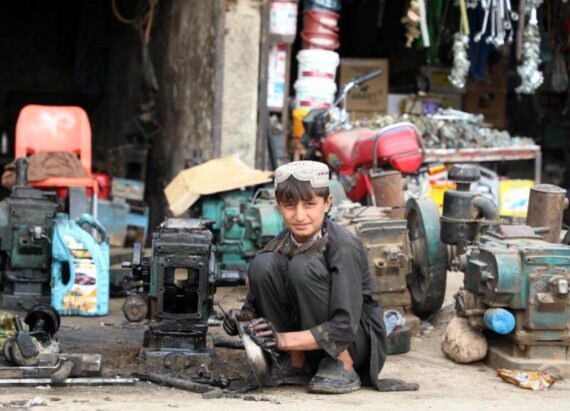
A child laborer from a market area is seen as daily lives continues in Helmand province, Afghanistan on February 05, 2022. Photo by Anadolu Images.

A

growing shift toward military spending among the world’s wealthiest countries is widening the gap between international development assistance and escalating humanitarian needs, potentially threatening human security and political stability, according to new research released Tuesday by the Stockholm International Peace Research Institute (SIPRI).

The report warns that major donor governments are increasing defense budgets while reducing development assistance, creating additional financial pressures for countries already struggling with armed conflicts, natural disasters and economic instability.

Global military expenditure reached a record $2.9 trillion last year, equivalent to 2.5% of global gross domestic product, according to SIPRI data.

Meanwhile, official development assistance (ODA) has been declining since 2024, based on figures from the Organization for Economic Cooperation and Development (OECD).

Researchers found that core development assistance began stagnating as early as 2021, although the underlying trend was temporarily obscured by increased support for Ukraine following Russia’s full-scale invasion and higher spending by donor countries on hosting refugees.

The largest reductions in core assistance have affected economic infrastructure and health programs, two areas considered essential to long-term development and human security.

Humanitarian funding gap could reach $179 billion by 2028

SIPRI researchers estimate that global development assistance requirements could climb to $326 billion by 2028, depending on the evolution of armed conflicts, natural disasters and other factors affecting humanitarian needs.

Under that scenario, the gap between required funding and expected assistance would reach $179 billion, exceeding the total amount of ODA commitments projected for that year.

The findings highlight a growing imbalance between governments’ military priorities and their commitments to international development.

Xiao Liang, a researcher with SIPRI’s Military Expenditure and Arms Production Programme, said wealthy countries in Europe and elsewhere had substantially increased defense spending in response to growing security threats.

However, those increases have coincided with significant reductions in other government expenditures, including humanitarian and development assistance.

Liang warned that declining aid could generate widespread insecurity for countries and populations dependent on international support.

He also cautioned that military expenditure was likely to continue increasing over the coming years, creating additional pressure on development assistance and competing budget priorities.

Nan Tian, director of SIPRI’s Military Expenditure and Arms Production Programme, described the findings as evidence of a sustained retreat from essential humanitarian and development commitments at a time when global needs are expanding.

However, the researchers stressed that the projected funding shortfall remains relatively small compared with the additional resources governments are committing to defense.

According to SIPRI, closing the anticipated aid gap would require redirecting only a fraction of planned increases in military spending, suggesting that meeting future development needs remains financially achievable.


Germany and Britain illustrate competing budget priorities

The report examines recent military and development spending policies in Germany and the United Kingdom, highlighting how governments have justified reductions in foreign assistance as necessary to finance higher defense expenditures.

Researchers found that the savings generated by these aid reductions would make only a marginal contribution to the military spending increases being planned.

The findings raise questions about the extent to which development assistance must be reduced to accommodate national security commitments.

SIPRI argues that treating military expenditure and development assistance as competing priorities overlooks the broader role of humanitarian and economic support in preventing instability.

Development programs can help address underlying sources of insecurity, including poverty, weak infrastructure and limited access to essential services.

The report comes amid increasing geopolitical tensions and militarization, with governments placing greater emphasis on strengthening their military capabilities.

Researchers acknowledge that countries face legitimate reasons to invest in defense as international cooperation weakens and security threats intensify.

However, they caution that military capabilities alone cannot guarantee lasting security, particularly when reductions in international assistance risk worsening the conditions that contribute to instability.

Liang emphasized that development aid should be regarded as complementary to defense expenditure rather than an alternative to it.

The findings underscore a central challenge facing major donor countries: balancing immediate military requirements with the long-term humanitarian and development investments needed to sustain international stability.

Without a change in current spending priorities, SIPRI warns, the widening aid gap could leave vulnerable populations facing greater insecurity even as global military expenditure continues to reach unprecedented levels.

(Source: SIPRI)

Politics Today is dedicated to publishing insightful analyses in order to understand the changing nature of contemporary politics. It aims to contribute to the sound and constructive discussion of international affairs.