Houthis Announce Naval Blockade of Saudi Arabia

July 21, 2026

The Houthis' announcement of banning Saudi ships from sailing at the Bab el-Mandeb briefly pushed oil prices higher before markets stabilized amid hopes that diplomatic negotiations could prevent a broader regional war.
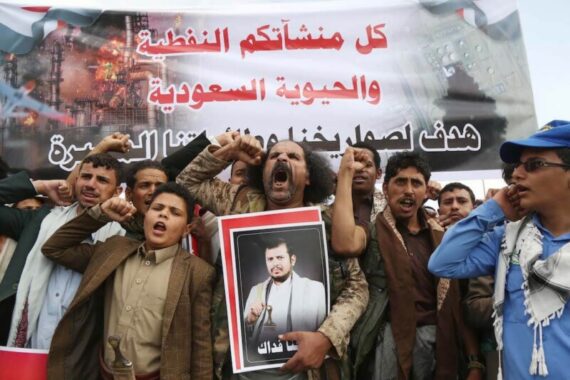
Houthis gather at Sabeen Square to hold a demonstration in support of Houthi leader in Yemen Abdul Malik al-Houthi's statements in Sanaa, Yemen on July 17, 2026. Photo by Anadolu Images.

Y

emen’s Iran-aligned Houthi movement announced a naval blockade against Saudi Arabia on Monday, threatening to expand the regional conflict linked to the ongoing U.S.-Iran war and raising concerns over global energy supplies and international shipping.

The Houthis said the “maritime embargo” would take effect immediately, describing it as retaliation against what they called Saudi Arabia’s continued blockade of Yemen. The announcement broadens the conflict beyond the Gulf, bringing the strategically vital Bab el-Mandeb Strait into focus after shipping through the Strait of Hormuz has already been severely disrupted.

The Saudi-led coalition said it would respond “with force” to the Houthi announcement and confirmed that additional security measures had been implemented to protect commercial and military vessels transiting the Bab el-Mandeb Strait, a critical route for Saudi oil exports.

The latest development raises the possibility of simultaneous disruptions at both the Strait of Hormuz and the Bab el-Mandeb, two of the world’s most important maritime energy corridors.

Analysts warn that a prolonged closure of Bab el-Mandeb could significantly reduce Saudi oil exports and further strain global energy markets already affected by the fighting in the Gulf.

Diplomacy continues despite escalation

The Houthi announcement came as diplomatic efforts to restore a ceasefire between Washington and Tehran appeared to continue.

A senior Iranian official told Reuters that mediators had presented Tehran with a proposal for a 10-day ceasefire aimed at preserving the interim agreement reached last month.

Iran’s Foreign Ministry confirmed that mediators had submitted proposals but did not disclose further details.

Separately, Pakistani officials said Iranian Interior Minister Eskandar Momeni had requested Islamabad to resume mediation efforts between the United States and Iran.

Despite renewed diplomatic contacts, military operations continued across the region.

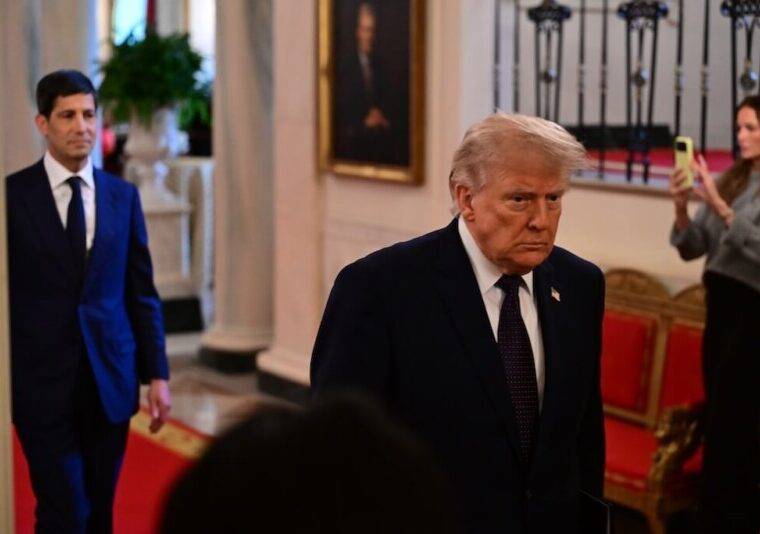
U.S. Central Command launched another wave of strikes against targets in Iran, while President Donald Trump defended the attacks, saying they were carried out in response to recent Iranian attacks that killed American service members.

The Pentagon identified two U.S. soldiers killed in an Iranian strike on a U.S. base in Jordan last week and said unidentified remains believed to belong to a third missing soldier had been recovered. A fourth U.S. service member was killed separately in northern Iraq during the controlled detonation of unexploded ordnance from an Iranian drone.

Iran’s Islamic Revolutionary Guard Corps (IRGC) said it launched missile attacks against U.S. military facilities in Jordan, Kuwait and Syria, while Bahrain reported repeated air raid sirens and Kuwait said its air defense systems intercepted Iranian drones overnight.


Shipping and oil markets under pressure

The Houthis’ announcement briefly pushed oil prices higher before markets stabilized amid hopes that diplomatic negotiations could prevent a broader regional war.

Insurance premiums for vessels operating in the Red Sea increased as shipping companies assessed the heightened security risks.

Meanwhile, the IRGC said two oil tankers had exploded after attempting to transit the Strait of Hormuz via what it described as an “unsafe” route, though Reuters was unable to independently verify the claim.

The United Kingdom Maritime Trade Operations (UKMTO) also reported that a commercial vessel had been struck by an unidentified projectile off the coast of Oman.

The latest escalation underscores the widening geographic scope of the conflict, with military operations now stretching from Iran and the Gulf to Yemen, Jordan, Syria and Iraq.

While diplomatic initiatives remain underway, continued exchanges of military strikes and expanding maritime threats have raised fears that the conflict could further destabilize regional security and disrupt global energy and trade routes.

(Source: Reuters)

Politics Today is dedicated to publishing insightful analyses in order to understand the changing nature of contemporary politics. It aims to contribute to the sound and constructive discussion of international affairs.