Trump Blames Anti-Israel Sentiment, Iran War for Republican Midterm Losses
Trump said Republican candidates had been affected by public dissatisfaction with the Iran war and the economic consequences of higher fuel prices.
November 12, 2026
A
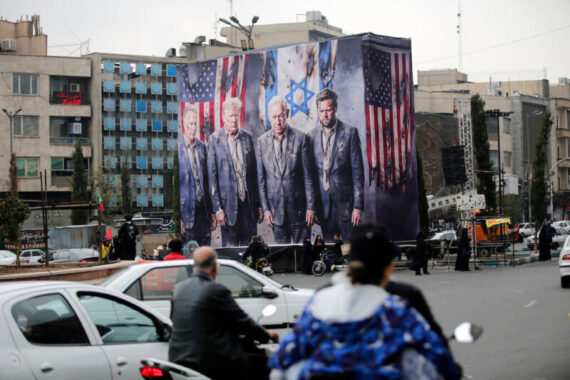
merican President Donald Trump has identified growing opposition to Israel, the war with Iran and rising gasoline prices as factors contributing to Republican losses in the midterm elections, acknowledging that support for Israel has become an increasingly divisive issue in American politics.
In an interview with CBS’s 60 Minutes, which aired Sunday, Trump said Republican candidates had been affected by public dissatisfaction with the war and the economic consequences of higher fuel prices. He also pointed to what he described as an unexpectedly strong dislike of Israel among American voters.
“I think if I was on the ballot, it would’ve been a much different situation because you saw the level of popularity and love,” Trump said, arguing that his personal popularity could have changed the electoral outcome.
However, he acknowledged that voters had reservations about his administration’s military campaign against Iran and the resulting increase in gasoline prices.
The president’s comments highlight a shift in the political debate over US support for Israel, which has traditionally enjoyed strong bipartisan backing in Washington. During the midterm campaign, military assistance to Israel and the broader US relationship with the country became increasingly controversial, creating challenges for Republican candidates.
The election results also exposed divisions within the Republican Party over the extent to which Washington should continue its traditional support for Israel, particularly amid the regional conflict involving Iran.
Trump agreed with Vice President JD Vance that the war with Iran had contributed to Republican electoral losses. However, he rejected the suggestion that the military operation had been a mistake, defending his decision to launch the campaign.
The president argued that preventing Iran from acquiring nuclear weapons was a necessary national security objective, even if the operation carried short-term political costs.
“You can’t let Iran have a nuclear weapon,” Trump said, adding that he believed the decision would ultimately be viewed positively despite its immediate consequences.
He maintained that allowing Tehran to develop nuclear weapons during his presidency would have exposed him to even greater criticism.
Trump also said the financial burden of the war should not fall entirely on the United States. He argued that countries benefiting from American military protection, including Israel, should reimburse Washington for the costs of the conflict.
“Those countries that we’ve protected are going to pay us back any and all costs that we’ve had for the war,” he said, adding that Israel would not exist without American support.
His remarks came after he announced on Election Day that the United States would end $4 billion in annual aid to Israel this year, potentially changing a central element of the two countries’ longstanding security relationship.
Several days later, Israeli Prime Minister Benjamin Netanyahu said that military assistance would eventually shift toward a new partnership arrangement, although he did not clarify whether Trump had informed him in advance of the announcement.
The proposed change has raised concerns in Israel about the future of American military and financial support, particularly as the country continues to face security challenges linked to Iran and the wider Middle East.
Recommended
The growing criticism of Israel during the election campaign has raised concerns among Israeli officials and commentators about the country’s standing in Washington.
Democratic Senator-elect Abdul El-Sayed of Michigan emerged as one of the most prominent critics of Israel during the campaign. However, opposition to US military and financial assistance to Israel extended beyond progressive Democrats, with some Republicans also questioning whether Washington should maintain its traditional policy.
Vance’s remarks suggesting that Republicans may need to reconsider their approach to Israel have added to concerns about a possible shift in the party’s position.
Israeli journalist Amir Tibon warned that both Democrats and Republicans were increasingly competing to distance themselves from Israel.
In a post on X, Tibon said the next US Congress could begin blocking arms sales to Israel unless the Israeli government acted to repair relations with Washington. He also called for a change in Israel’s political leadership, arguing that Netanyahu’s policies had damaged the country’s international standing.
The debate has become particularly sensitive as the United States remains Israel’s most important military partner and a central source of diplomatic support.
Israeli President Isaac Herzog also referred to the country’s growing diplomatic challenges on Sunday, when he tasked Netanyahu’s rival, Gadi Eizenkot, with forming the next government.
Herzog warned that Israel faced serious and urgent challenges, including continuing threats from Iran and the need to establish a diplomatic framework for the region after the war.
“Iran does not pause for a moment in its schemes and threats,” Herzog said, emphasizing the need to develop a regional diplomatic horizon.
Netanyahu has long presented himself as the Israeli leader best positioned to maintain a close relationship with Washington, particularly with Trump. However, the recent developments have raised questions about the future of that partnership and the political costs of Israel’s current policies.
For the United States, the election results have brought the debate over Israel, Iran and military spending further into domestic politics. For Israel, the possibility of reduced American assistance and growing criticism from both major US parties presents a significant diplomatic challenge.
The extent to which these political shifts will translate into changes in US policy remains uncertain, but Trump’s comments suggest that support for Israel can no longer be treated as an issue free from electoral consequences in Washington.
(Source: CNN)

Politics Today is dedicated to publishing insightful analyses in order to understand the changing nature of contemporary politics. It aims to contribute to the sound and constructive discussion of international affairs.
You can see how this popup was set up in our step-by-step guide: https://wppopupmaker.com/guides/auto-opening-announcement-popups/

Stay informed by subscribing to
our weekly newsletter.
You can see how this popup was set up in our step-by-step guide: https://wppopupmaker.com/guides/auto-opening-announcement-popups/
You can see how this popup was set up in our step-by-step guide: https://wppopupmaker.com/guides/auto-opening-announcement-popups/
You can see how this popup was set up in our step-by-step guide: https://wppopupmaker.com/guides/auto-opening-announcement-popups/
You can see how this popup was set up in our step-by-step guide: https://wppopupmaker.com/guides/auto-opening-announcement-popups/