The Social Impact of War in Iran: Fracture and Uncertainty
The Iranian people entered the February 2026 war carrying heavy problems and deep social wounds that had accumulated over many years.
October 27, 2026
T
he year 2026 became one of the major turning points in Iran’s history. The war, which intensified with joint US-Israeli airstrikes on Tehran on the morning of February 28, profoundly affected the political future of the Middle East and the balance of power in the region. Yet the Iranian people bore the war’s most severe social consequences. They experienced the conflict amid exhaustion and frustration caused by years of political developments, street protests that resulted in loss of life, economic crises and deepening polarization. To assess the impact of the war on Iranian society, it is first necessary to examine the social environment created by these developments in Iran.
Although opposition movements had existed in Iran since the 1978 revolution, the 2009 presidential election and the protests that followed marked a major turning point in the public’s attitude toward politics and authority. At the time, a large majority of the population still believed that change and reform were possible. Allegations of electoral fraud, however, triggered months of protests, and for the first time the Islamic regime,including Supreme Leader Ali Khamenei,was directly targeted by slogans. It should nevertheless be noted that the slogans of that period were much less intense than those heard today, and most did not challenge the foundations of the regime.
In the following years, despite mounting sanctions, a deteriorating economy and increasing pressure on opponents, a significant segment of society was not entirely opposed to the foundations of the regime. Against this backdrop, Hassan Rouhani, the reformists’ candidate, was elected president on expectations of change in the economy, mandatory hijab regulations and foreign relations. For many opponents, however, the Rouhani era also became a period in which hopes for reform were exhausted. A broad segment of society came to believe that a president like Rouhani was not necessarily lacking the will to pursue reform, but that Iran’s political structure prevented him from implementing it.
The core base of regime supporters, meanwhile, remained loyal to the government and the revolutionary leadership despite all the difficulties. Although a significant portion of this group shifted toward the opposition over the years, bloody protests and declining mutual tolerance deepened the divide between the two camps. Opponents accused regime supporters of backwardness and radical religiosity, while regime supporters accused opponents of treason and of serving as agents of foreign powers.
The death of Mahsa Amini in 2022 led to changes that had developed gradually in Iran and ultimately amounted to a quiet revolution in social life. The hijab requirement, which had been mandatory for decades and remained a constant issue on the national agenda, was largely abandoned by opposition-minded segments of society following the incident, although not officially. In cities such as Tehran, Isfahan, Rasht and Tabriz, women began demonstrating the courage to go outside without wearing the hijab. The process, during which hundreds of people lost their lives, became one of the largest expressions of accumulated social anger against practices such as mandatory hijab rules and the morality police.
By 2025, Iran had been severely weakened by high inflation, a rising exchange rate, reports of corruption and increasing political pressure. Demonstrations that began in Tehran at the end of December to protest worsening economic conditions quickly spread across the country. The protests, however, were met with one of the harshest crackdowns in Iran’s recent history. Iranian opposition sources and some foreign media outlets reported that more than 30,000 people had been killed, although official Iranian sources gave considerably lower figures. For many opponents, these events became an irreversible turning point.
The US-Israeli attacks that began a month after these bloody events made the divisions within society even more visible. In the course of our reporting, many Iranian opponents with whom we spoke said that years of accumulated anger toward the government,particularly the harsh crackdown on the latest protests,had convinced them that supporting the attacks was the only way to fight the regime. Regime supporters, meanwhile, maintained their backing for the new leadership despite the profound shock caused by the death of the revolutionary leader on the first day of the war, while expressing intense anger toward opponents who supported the US attacks.
The Iranian people entered the February 2026 war carrying heavy problems and deep social wounds that had accumulated over many years. While the regime and its supporters were troubled by Iran’s loss of influence in the Middle East, opponents did not believe that there was any way out of the crises facing the country.
One of the possibilities that most frightened the public during the war was the damage or destruction of infrastructure and vital oil and energy facilities. A complete internet blackout lasting more than two months, daily increases in the prices of basic necessities, uncertainty about the country’s future, and waking up to the sound of bombardments severely affected the mental health of a society that had already accumulated years of trauma.
Since the beginning of the war, one of the greatest concerns expressed by many Iranians with whom we spoke both in Türkiye and Iran has been the uncertainty surrounding the country’s future. Sudden fluctuations in the exchange rate and the closure of trade routes have disrupted the operations of many businesses while making it increasingly difficult for people to make a living. From food and housing rents to automobile prices, it has become difficult even to speak of a price remaining stable for a full week. Opposition groups have reacted angrily to the continued allocation of national resources to military activities such as the missile program and to regional proxy forces such as Hezbollah while the population is struggling under these conditions. Indeed, during negotiations with the United States in April, demands that Israel withdraw from the territories it had occupied in Lebanon and end its attacks on Hezbollah were criticized by opponents as an indication that Iran’s fate was being tied to that of other countries and groups.
Against this backdrop, the internet shutdowns deserve particular attention. As mentioned above, Iran had already experienced nationwide internet restrictions during previous protests. But beginning in February, for the first time, communication with the outside world was completely cut off for more than two months. Internet access was unavailable except through Starlink and paid VPN/proxy services. Some Iranians identified as Starlink users were also subjected to demands for execution or severe punishment on espionage charges. For many Iranians who already felt isolated from the world, losing all communication with the outside world during the difficult days of the war made the situation even harder.
The scale of the social and economic difficulties becomes clearer when tens of thousands of online businesses whose activities were brought to a standstill by the internet shutdown are considered alongside other businesses forced to suspend operations because of the war, resulting in further unemployment.
One of the common factors bringing together different segments of Iranian society is a sense of patriotism and nationalism. Regardless of their ethnic origins or political views, the importance they attach to their Iranian identity and the territorial integrity of the country is clearly visible in their words and actions. Throughout the war, however, this sentiment has also led regime supporters and opponents to accuse one another of treason, particularly on social media.
For regime supporters, defending or supporting attacks by the enemy,the United States and Israel,is an unforgivable act of treason regardless of the justification. For opponents, however, the existing political order must be dismantled in order to protect their country’s future, and the only way to achieve this is to support attacks targeting the regime. Statements of support from US and Israeli officials toward the Iranian people, as well as assurances that civilians would not be targeted, were welcomed and defended by opposition groups. This helped foster a belief and hope among some opponents that the war would end with the regime’s downfall without causing harm to civilians or infrastructure.
Some Iranian officials, meanwhile, had hoped that an external attack would unite society, as happened during the Iran-Iraq War in the 1980s. Yet in the more than four decades since then, Iran’s social dynamics, as well as public expectations and demands, have changed considerably. Moreover, the fractures that have emerged between different segments of society have become too deep to be repaired quickly or easily.
Regime supporters have, of course, also been affected by the negative consequences of the war described above and continue to suffer from them. Yet for this segment of society, preserving the government’s existence outweighs the hardships being experienced. Many say they are prepared, if necessary, to fight and make sacrifices with all their strength, both inside and outside the country.
Particularly during the first days of the war, this group gathered every night in the main squares of almost all cities, staging a continuous display of strength for months. This was a powerful message both to opponents supporting US and Israeli attacks and to enemy forces. Opposition groups, however, argued that these gatherings and demonstrations did nothing to improve the country’s or the war’s deteriorating situation, while instead disrupting daily life and wasting national resources. Opposition Persian-language channels broadcasting from Europe and the United States also reported allegations that citizens participating in the demonstrations were being provided with financial incentives. Ultimately, although the regime’s efforts strengthened the ranks of its supporters, they failed to create reconciliation between the different segments of society.
Recommended
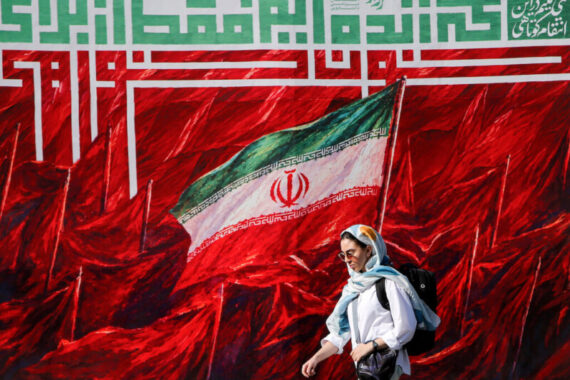
Following the Mahsa Amini incident, the opposition, much of which consists of younger generations, has continued to oppose religious discourse and restrictions imposed on religious grounds more openly. It is now possible to see many Iranian women on the streets of Tehran who do not comply with the hijab requirement and who attract attention with relatively revealing styles of dress. However, it would not be entirely accurate to explain this development simply as a relaxation brought about by the state of war and uncertainty. As noted above, the turning point in this transformation began with the Mahsa Amini protests.
Today, music events are being held in shopping malls in many cities, where women and men can participate and socialize without complying with rules that were previously enforced. Music events were also held in the past, of course, but participants were subject to strict rules and supervision. In recent months, however, those rules have increasingly been ignored, while authorities appear to be tolerating the situation, either deliberately or reluctantly under prevailing circumstances. Conservative segments have called on authorities to intervene through social media, but some officials within the system have also acknowledged that methods used for many years are no longer effective.
In particular, the return to Iran in recent months of opposition artists such as Mohsen Namjoo, who had lived abroad for many years, as well as calls by Iranian officials for artists living overseas to return home, have been interpreted as attempts to win over the younger opposition-minded generation. In this context, it should also be noted that artists such as Mohsen Chavoshi, who lives in Iran and has a large following, have faced criticism from some of their fans after producing works perceived as supportive of the regime. Similarly, appearances by celebrities from the film and television industries on state television,which opposition groups regard as a propaganda tool of the regime,and their supportive statements about the government have also drawn criticism from the opposition. This demonstrates that, particularly during the war, pressure to openly declare one’s political side has become increasingly visible across many areas of life, including art and the media.
At this point, there is still no lasting agreement or peace between Iran and the United States. The Iranian government is facing serious difficulties in selling oil, the country’s most important source of revenue. Intensifying sanctions, flight bans imposed on Iranian airlines and the possibility of another war breaking out at any moment continue to wear down the Iranian people.
Ultimately, every Iranian says they want their country to prosper and develop. Yet there are deep disagreements over which political system and ideology will be necessary to achieve that goal in the future.
(Originally published in Turkish by Kriter)

Yusuf Sosar is a Turkish journalist and Middle East news producer at TRT World. A native-level Farsi (Persian) speaker, he is also fluent in Arabic and English, holding a degree in Arabic Language and Literature from Shahid Beheshti University in Tehran. He began his career as an official translator in Iran and Türkiye before transitioning into journalism in 2019 with TRT Arabi, where he worked as a field news producer covering stories across multiple countries.
Currently serving on the MENA Desk at TRT World, Sosar produces and plans news content while also appearing as a presenter on TRT Farsi. Across the TRT network, he regularly produces and presents stories in Farsi, Arabic, English, and Turkish, bringing a multilingual and on-the-ground perspective to regional coverage.
You can see how this popup was set up in our step-by-step guide: https://wppopupmaker.com/guides/auto-opening-announcement-popups/

Stay informed by subscribing to
our weekly newsletter.
You can see how this popup was set up in our step-by-step guide: https://wppopupmaker.com/guides/auto-opening-announcement-popups/
You can see how this popup was set up in our step-by-step guide: https://wppopupmaker.com/guides/auto-opening-announcement-popups/
You can see how this popup was set up in our step-by-step guide: https://wppopupmaker.com/guides/auto-opening-announcement-popups/
You can see how this popup was set up in our step-by-step guide: https://wppopupmaker.com/guides/auto-opening-announcement-popups/