A
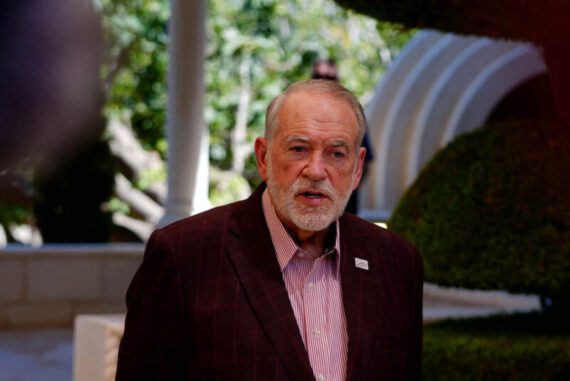
merican Ambassador to Israel Mike Huckabee raised doubts Tuesday over whether Washington will halt its $3.8 billion in annual military assistance to Israel by the end of 2026, tempering a surprise Election Day pledge made by President Donald Trump earlier this month.
Speaking in a pre-recorded interview aired at a conference hosted by the Institute for National Security Studies (INSS) in Tel Aviv, Huckabee pointed out that the existing bilateral security agreement, known as a Memorandum of Understanding (MoU), is scheduled to run through 2028. Because the funds have already been appropriated by Congress, Huckabee said he was uncertain whether aid could be cut off abruptly without congressional action.
“The MoU is supposed to continue for two more years, so I’m not certain that there will be a cessation on an abrupt basis by the end of this year,” Huckabee said.

Trump’s election day announcement and political fallout
President Trump had caught observers off guard on November 3, the day of the U.S. midterm elections, when he announced he had reached an understanding with Israeli Prime Minister Benjamin Netanyahu months earlier to end roughly $4 billion in yearly U.S. military funding. Trump argued that Israel no longer required the financial assistance and claimed the funding had become a political liability used against him by left-wing critics.
The announcement did not prevent major Republican losses in the midterms, where Democrats, many of whom oppose unconditional military aid to Israel, captured control of both chambers of Congress. Public support for Israel in the United States has eroded across party lines amid Israel’s military campaign in Gaza and an unpopular conflict launched against Iran earlier this year by Trump and Netanyahu.
Recommended
Shifting dynamics in U.S.-Israel relations
Huckabee noted that U.S. and Israeli officials had been negotiating a successor agreement to the current MoU for several months, though he declined to specify whether those talks remain active following Trump’s November 3 remarks. He also pushed back against viewing the arrangement strictly as foreign aid, arguing that the partnership funds American defense manufacturing, supports U.S. jobs, and strengthens intelligence sharing that protects American lives.
In Israel, where Netanyahu is serving as caretaker prime minister after losing his parliamentary majority in an October 27 election, the Democratic sweep in Washington has stirred unease. While Netanyahu had previously floated gradually phasing out U.S. military assistance to blunt American criticism, Huckabee expressed hope that the bilateral alliance would avoid a “dramatic, seismic shift”.
(Source: Reuters)