A New Era in Baghdad: Ali al-Zeydi, from Businessman to Prime Minister
Born in Baghdad in 1986, Ali al-Zeydi is the youngest prime ministerial candidate in Iraqi history.
May 6, 2026
T
he five-month political deadlock in Iraq, which had persisted since the November 2025 elections, ended on 27 April 2026 with the announcement of a surprise candidate. The country’s largest parliamentary bloc, the Shiite Coordination Framework, nominated 41-year-old businessman Ali al-Zeydi as its candidate for prime minister, and Iraqi President Nizar Amedi officially tasked Zeydi with forming the new government. Zeydi, a figure with no political background who is seen as a ‘technocratic consensus figure’, has reignited both internal balances and the dynamics along the Washington–Tehran axis. The young prime ministerial candidate is expected to present his cabinet to parliament within 30 days.
In Iraq, the process of forming a government has traditionally been fraught with difficulties due to the ethnic-sectarian quota system known as ‘Muhasasa’, which has been in place since the US invasion of 2003. Under this system, the presidency is allocated to the Kurds, the speakership of parliament to the Sunnis and the premiership to the Shia Arabs, despite this not being enshrined in the constitution. However, this power-sharing arrangement, particularly when combined with competition between factions within the Shia bloc and the interventions of external actors, can lead to governance vacuums lasting several months.
A similar scenario emerged during the latest crisis following the November 2025 elections. Rivalry between former prime minister Nuri al-Maliki and incumbent prime minister Mohammed Shia al-Sudani brought the process to a standstill. This deadlock was only resolved when both figures withdrew their candidacies in the national interest and reached a consensus on Ali al-Zeydi, a non-political figure. Zeydi’s candidacy was approved by the majority of leaders within the Coordination Framework, thereby becoming the will of parliament’s largest bloc.
Born in Baghdad in 1986, Ali al-Zeydi is the youngest prime ministerial candidate in Iraqi history. He studied law and finance and completed a master’s degree in banking and finance. Notably, he has never previously held any political office or served in government.
Prior to entering politics, he was a wealthy businessman at the helm of major conglomerates such as the Al-Owais Group and National Holding, spanning 15 sectors including agriculture, property, energy, logistics, education, and healthcare. Furthermore, his management of major contracts supplying food to the Iraqi army, as well as his educational investments, including Al-Shaab University, demonstrate the extent of his economic influence. However, Zeydi’s profile is not without controversy. The South Islamic Bank, of which he is chairman of the board, was subjected to sanctions in 2024 at the request of the US Treasury Department due to suspicions of money laundering and dollar smuggling. The bank was also barred from conducting dollar transactions. Some analysts have criticised this situation as an attempt to normalise and sweep under the carpet the ongoing major corruption investigations in Iraq.
Zeydi’s candidacy is seen as an attempt to maintain balance between Nuri al-Maliki and Muhammad Shia al-Sudani within the Coordination Framework. Zeydi is known to have close ties with the incumbent Prime Minister, Sudani, and his cousin, Ziya al-Zeydi, is a parliamentarian from Sudani’s coalition. This raises the question of whether Zeydi is an extension of the current system.
Nevertheless, Zeydi’s name has also been well received by other key political figures. In addition to the leaders of the Kurdish KDP and KYB parties, the Sunni Azm, Siyada and Taqaddum alliances have also congratulated Zeydi and issued messages of support. Shortly after his appointment, Zeydi met with Sunni leaders and promised to establish a government that would represent all Iraqis.
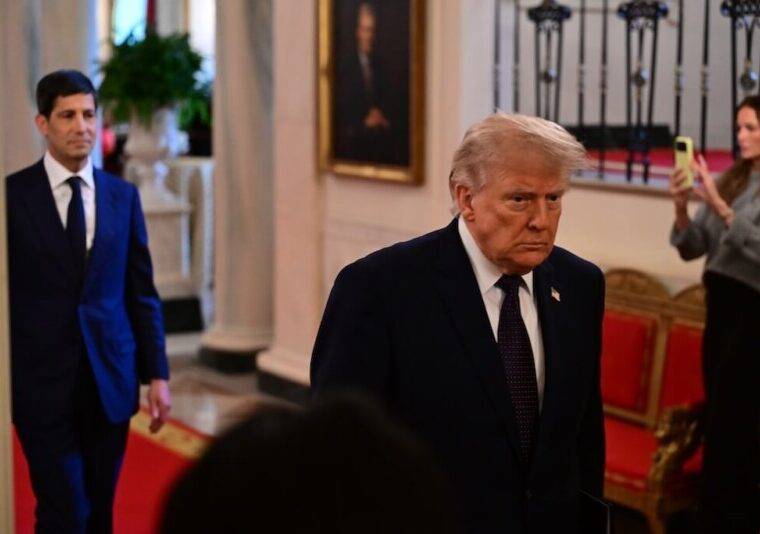
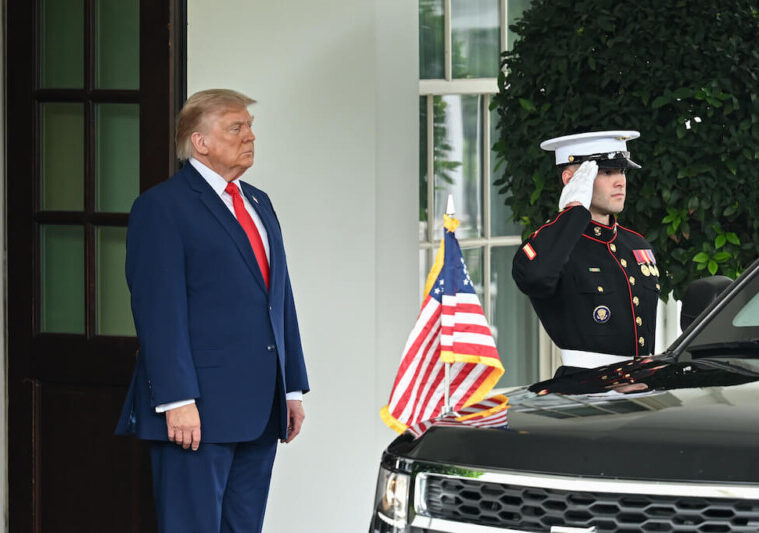
One of the key figures involved in the process was US President Donald Trump. As is well known, Trump firmly vetoed Nuri al-Maliki, the Shiite bloc’s first choice and a figure known for his close ties to Iran, threatening to cut off all support for Iraq should Maliki become prime minister. This pressure from Washington forced the Coordination Framework to back down, prompting it to reconsider its options for prime ministerial candidates.
However, Trump openly supported Zeydi’s candidacy, posting a message on Truth Social reading “Congratulations, Ali!” and inviting him to Washington once he had formed the government. This apparent green light from the US appears to be conditional on Zeydi forming a government that maintains a ‘distance from Iran’. Meanwhile, the Tehran administration initially remained silent, but Iranian Foreign Minister Abbas Arakchi later congratulated Zeydi, stating that they supported Iraq’s stability. Political circles are also discussing whether Zeydi’s appointment might be the result of a “mysterious” agreement between Washington and Tehran regarding Iraq, as has been the case in all prime ministerial selection processes since 2003, or whether it is a temporary step back by Iran to avoid sanctions.
One of the key figures involved in the process was US President Donald Trump. As is well known, Trump firmly vetoed Nuri al-Maliki, the Shiite bloc’s first choice and a figure known for his close ties to Iran, threatening to cut off all support for Iraq should Maliki become prime minister. This pressure from Washington forced the Coordination Framework to back down, prompting it to reconsider its options for prime ministerial candidates.
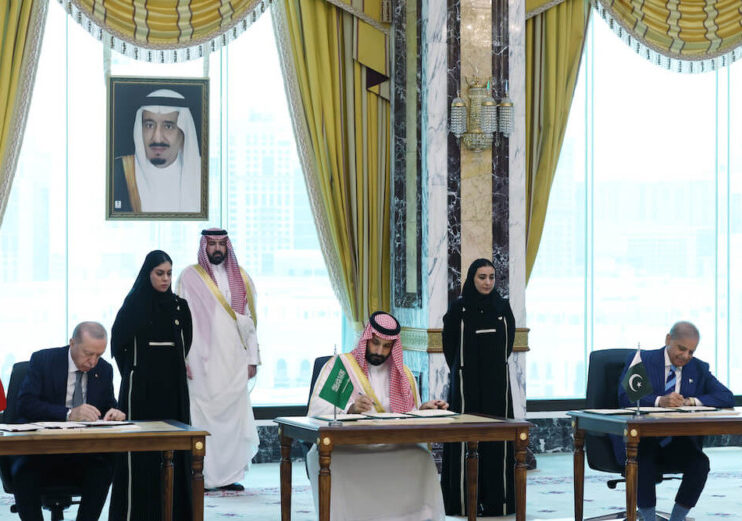
Ali al-Zeydi’s appointment to form a government has received widespread support, both within and beyond the US and Iran. In its congratulatory message, the Turkish Ministry of Foreign Affairs emphasised the deep historical ties between the two countries and expressed a desire to develop strategic institutional cooperation further in the coming period. During a telephone conversation, Pakistani President Asif Ali Zardari congratulated Zeydi and they discussed the development of bilateral relations and Pakistan’s role in reducing regional tensions. Arab League Secretary-General Ahmed Abu Ghait welcomed the appointment, expressing hope that the new government would fulfill the Iraqi people’s aspirations for security and prosperity.
Leaders of many Arab countries, including Syria, the United Arab Emirates, Qatar, Kuwait, Jordan and Lebanon, also telephoned al-Zeydi to offer their personal congratulations. The European Union (EU) Delegation to Iraq and British Ambassador to Baghdad, Irfan Siddiq, stated that they viewed the appointment positively and emphasized that they would continue to support Iraq’s reform, peace and development process.
Recommended
Securing a vote of confidence from an absolute majority of the 329-seat parliament within the 30-day legal timeframe is Ali al-Zeydi’s greatest test on the path to becoming Prime Minister. Should Zeydi succeed in forming a government, the economic crisis will be the first of many challenges he will face. The closure of the Strait of Hormuz and the disruption of oil exports due to tensions between the US, Israel and Iran have already severely impacted Iraq’s struggling economy.
Corruption and security issues constitute another major crisis awaiting Zeydi. Combating deep-rooted corruption and addressing the future of Shia militia groups (Hashd al-Shaabi), which operate outside the army’s full control, are among the most sensitive issues facing the new government. Political stability is another area where it remains to be seen whether Zeydi will be able to succeed, given that Iraq has been unable to achieve it for years. After all, it is unclear how influential figures such as Muqtada al-Sadr will react to this process.
Some predict that, should Zeydi fail to form a government, the Coordination Framework could propose new candidates to buy time, while others suggest that the country could be drawn into a cycle of early elections. Ultimately, it will become clear in the coming weeks whether this ‘rejuvenation’ operation in Baghdad constitutes genuine reform or merely a tactical manoever, depending on the nature of the cabinet to be formed.
This article was originally published by Middle East Africa in Turkish.

After completing his bachelor’s degree in International Relations at Sakarya University in 2012, Recep Tayyip Gürler began his master’s studies in the Department of Middle Eastern Studies at Sakarya University that same year and graduated with a master’s degree with a thesis titled “The Role of Shiite Actors in Iraqi Politics.” He subsequently completed his doctoral dissertation titled “Reflections of Lockean and Kantian Culture in Iraq’s Policy Toward Iran: Competition, Conflict, and Friendship (1958–2020).” Recep Tayyip Gürler began working as a research assistant at the Institute of Social Sciences at Sakarya University in 2012 and currently continues his work as an Assistant Professor at the Institute of Middle Eastern Studies. He teaches courses at the Institute of Middle Eastern Studies and the Department of International Relations within the Faculty of Political Sciences.
You can see how this popup was set up in our step-by-step guide: https://wppopupmaker.com/guides/auto-opening-announcement-popups/

Stay informed by subscribing to
our weekly newsletter.
You can see how this popup was set up in our step-by-step guide: https://wppopupmaker.com/guides/auto-opening-announcement-popups/
You can see how this popup was set up in our step-by-step guide: https://wppopupmaker.com/guides/auto-opening-announcement-popups/
You can see how this popup was set up in our step-by-step guide: https://wppopupmaker.com/guides/auto-opening-announcement-popups/
You can see how this popup was set up in our step-by-step guide: https://wppopupmaker.com/guides/auto-opening-announcement-popups/