Where Is the Israel/US–Iran War Dragging Iraq?
The war on Iran is transforming the conflict in Iraq from a momentary or periodic tension into a deeper, more enduring equilibrium.
April 22, 2026
T
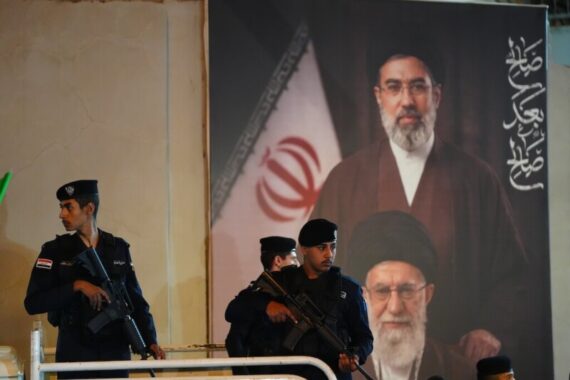
he process, which began on 28 February with US and Israeli attacks on Iran and rapidly escalated with Iran’s direct retaliations, is no longer merely a conflict between two sides but has transformed into a war dynamic that has spread across the region. From the very first days of the war, Iraq has been the sole country where the direct and indirect attacks of both the US/Israel axis and Iran have intersected; the country has effectively become the second front of this war. Furthermore, whilst Iraq has become one of the parties that is involved in the war, it also lies at the centre of a multi-layered crisis spiral where military, political and strategic dimensions feed into one another.
It would not be inaccurate to say that the impact of the US/Israel–Iran war on Iraq goes beyond a classic example of a ‘neighboring country being affected’. The emerging picture shows that Iraq has become not only country bearing the consequences of the war but also a terrain where the war is being waged directly. In this sense, it would be appropriate to analyze the dynamics unfolding in Iraq today through the lens of a three-layered reality.
Consequently, in this process, Iraq has transformed into a ‘secondary front’ militarily; strategically, Iran and the US/Israel have begun to wear each other down through its territory; and politically, the Iraqi state has once again demonstrated that it faces sovereignty issues within its own borders. Indeed, from the very first days of the war, the targeting of US bases, diplomatic missions and energy infrastructure, coupled with the rapid development of a high-intensity attack capability by Iran-backed militia networks, has transformed Iraq from a passive spectator into an active theatre of conflict.
Indeed, the decisions taken at the meeting of the Iraqi National Security Council on 24 March, following the attack on the Popular Mobilization Forces headquarters in Anbar on the night of 23 March—in which more than 15 PMF members lost their lives—are noteworthy. In a statement issued after the Iraqi National Security Council meeting, whilst it was emphasized that the state is the sole authority on decisions regarding war and peace, it was also announced that a decision had been taken to respond to attacks against Iraqi security forces—particularly the PMF—within the framework of the “right to legitimate self-defense and retaliation”.
Whilst this decision does not technically constitute a declaration of open war against any state, it demonstrates that Iraq has effectively abandoned its position of remaining outside the conflict. This is because, for the first time on this scale and with this clarity, the state has defined its authority to provide a collective and institutional response to attacks against its own security apparatus. More importantly, rather than interpreting this decision merely as a defensive reflex, it can also be assessed as a step that redefines Iraq’s position within the conflict. Whilst this decision challenges the monopolisation of decisions regarding war and peace by non-state actors, it simultaneously positions the state itself as one of the parties to this conflict.
Although the decisions taken by the Iraqi National Security Council—which include the simultaneous protest against US and Iranian representatives and the expression of preparations to appeal to the United Nations—may indicate that Iraq is attempting to pursue a policy of balance, the reality on the ground is increasingly eroding this balance. In this context, the decision in question reveals that Iraq is positioned not as a ‘declared party’ to the war, but as an actor that has become involved both de facto and institutionally.
Consequently, Iraq has moved beyond being merely a geographical area where conflict is waged, becoming a country directly involved in the dynamics of this war through its own security institutions, political decision-making mechanisms and military reflexes. This marks a new threshold for Iraq; the country’s capacity for neutrality has been replaced by controlled participation and compulsory engagement.
Today, the military manifestation of the Israel/US–Iran conflict in Iraq is, in fact, creating a hybrid arena where two distinct models of warfare intersect. The fact that the majority of attacks are carried out using drones and rockets, supplemented by a limited number of ballistic missiles and precision air strikes, indicates that the parties are pursuing a strategy focused on low-cost, sustained pressure that wears down the opposing side’s defence systems, rather than conventional frontline warfare. The war in Iraq is being waged, on the one hand, by actors possessing high-intensity conventional warfare capabilities and, on the other, through proxy networks carrying out low-cost, flexible and deniable attacks.
Within this framework, the Iranian axis seeks to establish territorial pressure through quantity—that is, via intense and dispersed attacks—whilst the US/Israeli axis strives to achieve qualitative superiority through more selective and lethal targets. The methods employed by structures affiliated with or aligned to Iran are aimed at saturating air defence systems, straining reaction times, and creating a constant state of alert to reduce the operational tempo of the opposing side. In contrast, the US-Israel axis’s approach aims to disrupt the integrity of the network by targeting command-and-control nodes, logistics centres and critical infrastructure through intelligence-based targeting.
However, this asymmetric balance creates a persistent climate of insecurity across Iraqi territory rather than producing a definitive outcome on the ground. This is because one side’s dispersed and regenerative attack capacity cannot be entirely neutralised by the other side’s high-precision but limited interventions.
At this juncture, the decisive factor is increasingly the ‘shadow militias’ and proxy structures. As these structures provide both operational flexibility and political deniability, they ensure the conflict’s continuity whilst keeping its costs under control. In this context, the military picture emerging on the Iraqi battlefield can be interpreted as a war of attrition rather than a decisive war. Rather than gaining ground, the parties are focusing on eroding the opponent’s capabilities, testing their deterrence, and exerting long-term pressure. This renders the conflict unpredictable, fragmented and chronic. Indeed, even if tensions between Israel/the US and Iran were to ease in the coming period, or even if the war were to end, it would not be wrong to expect the conflict dynamics in Iraq to persist. Furthermore, this conflict dynamic will not be confined solely to the military sphere; as seen in the country’s political system following 2003, it could drag Iraq into a multi-layered system of competition.
Indeed, on the strategic level, Iraq serves as a ‘proxy depth’ for Iran and a ‘containment corridor’ for the US and Israel. Through its militia networks in Iraq, Iran is able to exert pressure on the US without opening a direct and costly front, thereby keeping the conflict away from its own territory whilst actively utilizing its regional influence. This model provides Iran with both operational flexibility and escalation control.
This situation removes Iraq from being a buffer zone in the classical sense, transforming it into a flexible and permeable arena of conflict where both sides impose costs on one another. In other words, no actor can fully control Iraq, yet all actors utilize Iraq for their own strategic calculations. This state of ‘uncontrolled use’ enhances Iraq’s geopolitical value whilst simultaneously deepening its fragility.
The most severe consequence of this military and strategic pressure is manifesting in the political sphere. The Iraqi state is compelled to both maintain its security relationship with the US and react to the targeting of militia structures that form part of its own security architecture. This situation pushes Baghdad into a contradictory position, making it both dependent on Washington yet in tension with it. This contradiction goes beyond a diplomatic dilemma for Iraq; it directly becomes a matter of state capacity and sovereignty. This is because if Iraq remains silent regarding the targeting of The Popular Mobilization Forces elements—which it defines as part of its own security structure—it weakens its internal legitimacy; if it responds, however, it increases the risk of direct tension with the US. Consequently, Baghdad is becoming increasingly trapped in a ‘policy of forced balance’ with a narrowing scope for manoevre.
This predicament has become more apparent in recent decisions taken by the Iraqi National Security Council. More importantly, the manner in which these decisions are implemented has the potential to affect directly Iraq’s internal political balances. The question of which actors will exercise the right to self-defense, to what extent, and under what coordination, could redefine the balance of power between the central state and militia structures. If this process cannot be managed under central command, the scope of action for non-state actors may expand, and this could further deepen Iraq’s already contentious ‘multi-headed security structure’.
Conversely, should central authority bring this process under control, the position of the Popular Mobilization Forces (PMF) within the state could become even more institutionalized. Both scenarios carry the potential to create new fault lines in Iraqi politics. For this reason, the current situation should be assessed not merely as a classic foreign policy crisis, but as a structural breaking point simultaneously transforming Iraq’s state structure, security architecture and political balances.
Recommended
Indeed, this moment of rupture is also deepening the rift between Baghdad and Erbil. On the one hand, Erbil is becoming a direct target due to the US presence and energy infrastructure; on the other, it is providing Iran with a pretext for intervention by citing the presence of Iranian-backed armed opposition groups within KRG borders. Furthermore, the KRG is also being targeted by militia groups in other regions of Iraq.
This situation also leaves the KRG facing a strategic dilemma. For Erbil, wishes to maintain the security and economic ties it has established with the US, it is simultaneously compelled to counterbalance Iran’s direct military pressure. This significantly restricts the KRG’s room for manoeuvre and renders the region more vulnerable to competition among external actors. Consequently, the war has become not only a security threat for the KRG but also a structural stress test that directly affects its political integrity and strategic orientation.
Ultimately, the war is transforming the conflict in Iraq from a momentary or periodic tension into a deeper, more enduring equilibrium. This equilibrium produces a state of tension that is constantly fluctuating rather than stable, yet never fully resolved. The security vacuums emerging in different regions of Iraq, the local and externally linked actors filling these vacuums, and the central authority’s limited capacity for intervention not only sustain the conflict but also render it reproducible.
At this stage, even if external actors were to withdraw partially from the field, it would not be inaccurate to state that the power distribution formed internally, along with institutionalized armed groups and competing political blocs, possesses the capacity to rapidly fill this vacuum. Consequently, even if the direct fighting were to cease, the potential for Iraq to become locked into a long-term, low-intensity yet persistent conflict is very high.
(Originally published in Turkish by Kriter)

Bilgay Duman completed his undergraduate and master’s degrees in the Department of International Relations at Kırıkkale University in 2004 and 2007, respectively. He received his Ph.D. in 2024 from the Department of International Relations at Bolu Abant İzzet Baysal University with a dissertation titled “The Ethnicity–Sectarianism Nexus in Iraq after 2003: The Case of the Turkmens.” Since 2004, Duman has served as a researcher, analyst, and coordinator at various think tanks in Türkiye. As of November 2024, he has been working at Anadolu Agency, where he currently serves as Manager of Strategic Analysis. In addition to this role, he teaches courses on the Middle East at several universities. Duman’s research primarily focuses on the Middle East, particularly Iraq, while he also conducts studies on Turkish foreign policy and the Turkic world. He has numerous national and international publications and has participated in many panels, conferences, and seminars. He frequently provides expert commentary to various media outlets and has also served as an international observer in election monitoring missions in several countries.
You can see how this popup was set up in our step-by-step guide: https://wppopupmaker.com/guides/auto-opening-announcement-popups/

Stay informed by subscribing to
our weekly newsletter.
You can see how this popup was set up in our step-by-step guide: https://wppopupmaker.com/guides/auto-opening-announcement-popups/
You can see how this popup was set up in our step-by-step guide: https://wppopupmaker.com/guides/auto-opening-announcement-popups/
You can see how this popup was set up in our step-by-step guide: https://wppopupmaker.com/guides/auto-opening-announcement-popups/
You can see how this popup was set up in our step-by-step guide: https://wppopupmaker.com/guides/auto-opening-announcement-popups/