Ankara After Washington and Tehran: Iraq’s Path to Development
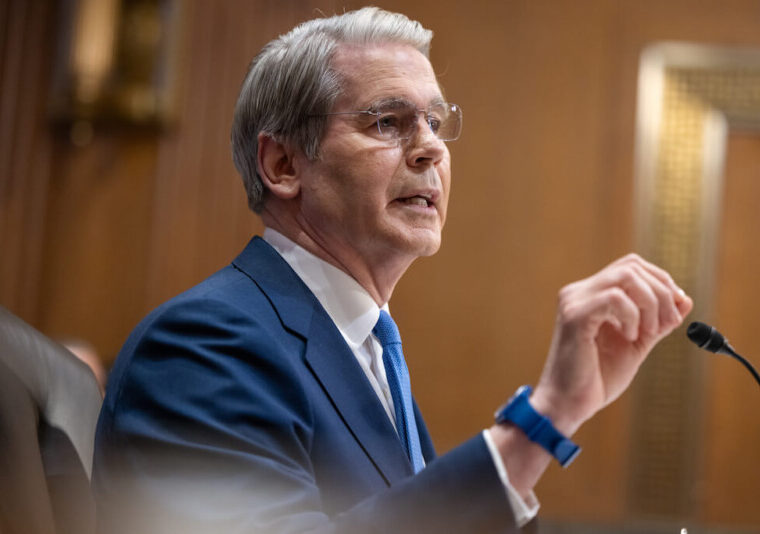
Looking at Zaidi’s initial foreign policy moves, he is seeking investment from Washington, political balance from Tehran and economic links from Ankara.
August 24, 2026
I
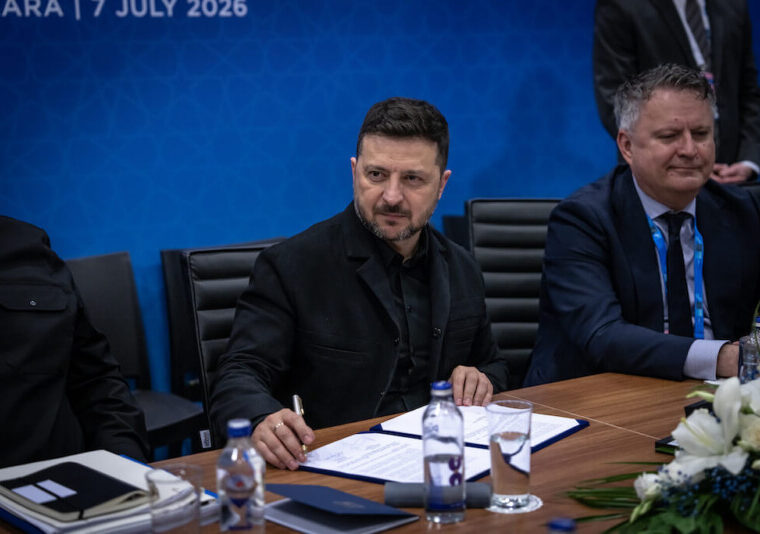
raqi Prime Minister Ali al-Zeidi’s visits to Washington, Tehran and Ankara in quick succession are significant in terms of demonstrating the new government’s approach to foreign policy. For Iraq, Washington and Tehran are two capitals closely linked to security, capital, historical influence and developments in Iraqi domestic politics. Ankara, on the other hand, represents the most concrete, stable and reliable economic route through which the country can access global markets. For this reason, al-Zaidi’s visit to Ankara immediately following his engagements in Washington and Tehran should not be viewed as a mere neighbourly visit. This visit demonstrates that Baghdad, which has placed economic development at the centre of its government program, views Türkiye not merely as a trading partner but as a strategic gateway in Iraq’s production, transport and energy equation.
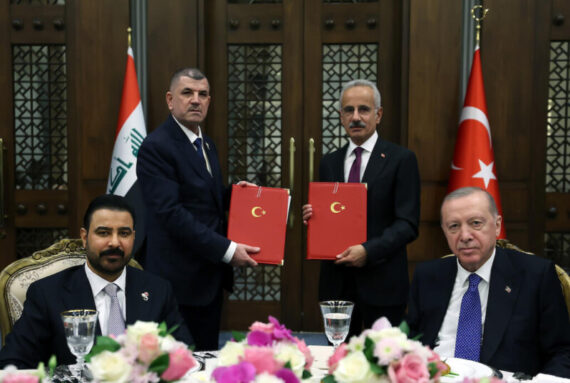
The most significant aspect of the talks in Ankara is not the number of documents signed, but rather the needs of Iraq and Türkiye that they address. Five memoranda of understanding were signed between the two countries covering educational and academic cooperation, youth and sport, industrial property, rail and road transport via the Fishhabur–Ovaköy border crossing, and the development of transport infrastructure in Iraq in exchange for natural resources. Whilst the first three agreements broaden the social and institutional foundation of the relationship, the latter two are of direct strategic importance for Iraq’s economic future. This is because these agreements strengthen the necessary links to move the Development Corridor Project – which aims to connect the Grand Faw Port in Basra to the Turkish border via Iraq and from there to Europe – into the implementation phase.
The visit also demonstrates that the strong relations established between Iraq and Türkiye in recent years are being maintained by the new Iraqi government. During President Erdoğan’s visit to Baghdad in April 2024, 27 legal texts were signed, whilst 11 documents were signed at the High-Level Strategic Cooperation Council meeting held in May 2025. The fact that Zaidi has included Ankara in the itinerary of his first foreign visit since taking office suggests that Türkiye has secured a permanent place in Iraq’s development plans.
Iraq has been producing oil for many years but has been unable to establish sufficient control over the routes by which this oil is transported. The fact that a very large proportion of oil revenues depends on exports via the southern ports and the Strait of Hormuz means that any military tension in the Gulf directly becomes a problem for the Iraqi budget. The closure of ports and disruption to tanker traffic affects not only oil companies but the entire state apparatus, from public sector wages to social spending. Road, rail and pipeline links via Türkiye therefore represent both a means of facilitating trade and a tool for economic security from Baghdad’s perspective.
This is where the true significance of the Development Corridor comes to the fore. If successful, the project—which is planned to link the Port of Faw to Türkiye via a network of approximately 1,200 kilometres of railways and motorways—will do more than simply transport containers from Basra to Türkiye. It will also create new industrial zones, logistics centres, energy networks and urban development areas along the route. Given Iraq’s young population and high unemployment rate, this transformation could provide an alternative to the limited employment opportunities currently available in the oil sector alone.
Türkiye plays a role in this equation that no other neighbour can easily fulfil. Iran is linked to Iraq through energy, trade and political networks, whilst the Gulf states can provide capital to Iraq. However, Türkiye is the only direct neighbour capable of connecting Iraq to the European market by road and rail, and to the Mediterranean via Ceyhan. Moreover, the economic foundation between the two countries will not be built from scratch. Trade volume between Türkiye and Iraq reached approximately 17 billion dollars in 2025, and Turkish companies have undertaken over 1,000 projects in Iraq with a total value of around 40 billion dollars. The setting of a medium-term trade target of 30 billion dollars during the Ankara talks demonstrates the will to roughly double the current level of trade.
Developments in the energy sector also demonstrated that the visit was not limited solely to the transport agenda. Although no long-term, comprehensive energy agreement was signed at the ceremony in Ankara, TPAO’s acquisition of a 15 per cent stake in the company managing BP’s operations in Kirkuk is a step that could transform Türkiye from merely being a buyer and transit country for Iraqi oil into a production partner.
A few days after the visit, Türkiye and Iraq signed a provisional agreement extending the use of the existing oil pipeline for another year, with a capacity of 750,000 barrels per day. This also showed that the talks in Ankara had begun to produce concrete results. Whilst time is being gained to prepare a broader energy agreement, Baghdad has secured the use of the only operational oil export pipeline. Given that the pipeline carries approximately 170,000 barrels per day, increasing the current capacity could be a significant step in Iraq’s efforts to reduce its dependence on the Strait of Hormuz.
The signing ceremony in Ankara also brought to light the main obstacle facing the Iraqi government. Whilst the signing of five agreements was expected, President Erdoğan’s realization that one agreement had not been signed, followed by Zaidi’s turn to Iraq’s Minister of Transport, Veheb al-Hasani, and the subsequent inclusion of the remaining documents in the signing process, were widely discussed in the media of both countries. Hasani later explained the incident as a technical and protocol-related disagreement. A spokesperson for the Iraqi Ministry of Transport, however, stated that there had been a prior dispute on the Iraqi side—involving the Ministry of Foreign Affairs, the Prime Minister’s Office and the Ministry of Oil—regarding the inclusion of the document in the visit’s program.
In contrast, some Iraqi and Turkish commentators alleged that the minister, who has a background in the Badr Organization, was attempting to slow down the Development Corridor agreement under Iranian influence. This claim could not be definitively confirmed, and the available information is insufficient to characterize the events as a definitive act of sabotage by Iran. However, the incident itself remains significant. Whether the problem stems from a lack of protocol, inter-institutional disagreement or political influence, it demonstrates that during the implementation of strategic decisions in Iraq, different ministries, parties and actors with external connections are not acting in unison. Viewed from this perspective, the success of the Zaidi government’s economic program will in fact depend not so much on how many agreements it signs abroad, but rather on the extent to which it can implement state decisions at home.
Recommended
The joint Saudi Arabian–US air strikes that took place immediately after the visit to Ankara once again demonstrated just how fragile the security environment is in which Zaidi’s development diplomacy is being conducted. US Central Command stated that the strikes targeted logistics and weapons sites belonging to groups it alleged were directed by the Iranian Revolutionary Guards. Reports citing Iraqi and Iranian sources stated that at least 20 members of the Hashd al-Shaabi were killed. Baghdad condemned the strikes as a violation of its sovereignty, and Zaidi cancelled his visit to Riyadh, which had been scheduled for July 30. Thus, within a matter of days, Iraq – which had been discussing transport corridors and economic integration in Ankara – has once again been drawn into the military arena of US-Iranian tensions.
This development does not diminish the importance of the Ankara visit; on the contrary, it enhances it. This is because the path for Iraq to extricate itself from regional military rivalry does not lie solely in maintaining balanced relations with Washington and Tehran. Iraq must raise the cost of the conflict by developing its economic ties, thereby forcing countries to step back from clashing on its territory. It would be difficult to claim that the intensive trade, energy and transport networks to be established with Türkiye will provide Baghdad with an absolute security guarantee. However, these links will make Iraq’s stability more valuable to Türkiye, Europe, the Gulf states and international companies. Economic interdependence alone will not prevent war, but it will help Iraq move away from being perceived solely as a country defined by militias, military bases and spheres of influence.
Looking at Zaidi’s initial foreign policy moves, he is seeking investment from Washington, political balance from Tehran and economic links from Ankara. Among these three capitals, Türkiye stands out for offering the most viable route to turn Iraq’s geography into an economic advantage. Multi-billion-dollar deals in Washington could provide capital and technology. Relations with Tehran cannot be entirely disregarded in terms of internal stability. However, Iraq’s ability to generate non-oil revenue, open up to Europe, create new employment opportunities and reduce its dependence on the Strait of Hormuz depends to a large extent on the operationalisation of the routes extending northwards.
Ultimately, the visit to Ankara has done more than simply demonstrate Iraq’s growing rapprochement with Türkiye; it has also revealed the direction of the new government’s approach to development. The real issue is not the signing of the five documents. The real issue is whether the pipeline stretching from Ovaköy to Faw, the oil flowing from Kirkuk to Ceyhan, and the $30 billion trade target will make the Iraqi state stronger and more independent. If the Zaidi government can support these projects with institutional reform, transparency and state authority, relations with Türkiye could transform Iraq’s quest for balance in foreign policy into an economic strategy. Otherwise, the documents signed in Ankara will simply be added to the long list of agreements that Baghdad has accumulated over the years but has been unable to implement. .
(Originally published in Turkish by Middle East Africa)

After completing his bachelor’s degree in International Relations at Sakarya University in 2012, Recep Tayyip Gürler began his master’s studies in the Department of Middle Eastern Studies at Sakarya University that same year and graduated with a master’s degree with a thesis titled “The Role of Shiite Actors in Iraqi Politics.” He subsequently completed his doctoral dissertation titled “Reflections of Lockean and Kantian Culture in Iraq’s Policy Toward Iran: Competition, Conflict, and Friendship (1958–2020).” Recep Tayyip Gürler began working as a research assistant at the Institute of Social Sciences at Sakarya University in 2012 and currently continues his work as an Assistant Professor at the Institute of Middle Eastern Studies. He teaches courses at the Institute of Middle Eastern Studies and the Department of International Relations within the Faculty of Political Sciences.
You can see how this popup was set up in our step-by-step guide: https://wppopupmaker.com/guides/auto-opening-announcement-popups/

Stay informed by subscribing to
our weekly newsletter.
You can see how this popup was set up in our step-by-step guide: https://wppopupmaker.com/guides/auto-opening-announcement-popups/
You can see how this popup was set up in our step-by-step guide: https://wppopupmaker.com/guides/auto-opening-announcement-popups/
You can see how this popup was set up in our step-by-step guide: https://wppopupmaker.com/guides/auto-opening-announcement-popups/
You can see how this popup was set up in our step-by-step guide: https://wppopupmaker.com/guides/auto-opening-announcement-popups/