The New Government in Iraq and the Future of Strategic Rapprochement with Türkiye
Ankara no longer views the Iraqi theatre solely through a security-centric lens.
June 23, 2026
T
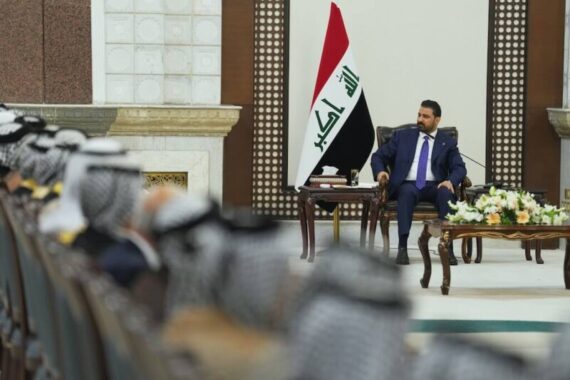
he political crisis in Iraq, which lasted for approximately six months, was partially resolved on May 14, when Ali Faleh Kazem Al-Zaidi’s government secured a partial vote of confidence in parliament. However, it would be an oversimplification to view the situation in Baghdad merely as a delayed government negotiation. For whilst politics in Iraq may appear to be functioning today, the balance that sustains the system is becoming increasingly fragile.
The presidential election process laid this bare. For months, a two-thirds majority could not be secured in parliament. The election of Nizar Amedi, the candidate of the Patriotic Union of Kurdistan (PUK), as president cleared the way for the government; however, the resulting picture points to a period in which new power distributions are becoming visible rather old balances continuing. Indeed, the fragmentation within the Shia political sphere, the intensifying rivalry between the KDP and the KYB, the emergence of more pragmatic networks among Sunni political actors, and the internal divisions within groups aligned with Iran all indicate that the political landscape in Baghdad has shifted.
Nevertheless, it would be incorrect to claim that the system has completely collapsed. Indeed, in the new framework, the presidency remains with the Kurds, the premiership with the Shias, and the speakership of parliament with the Sunnis. However, it is evident that the political balance underpinning this structure no longer reflects the old Iraq. In the current order, alliances are formed more flexibly, the political arena is becoming more fragmented, and actors are acting more pragmatically. Yet the state apparatus is failing to centralize to the same extent.
It is possible to interpret this emerging picture as a form of ‘asymmetric continuity’. In other words, the system continues, but the political algorithm that sustains it is changing. Indeed, as the sphere of representation expands, decision-making capacity becomes increasingly fragile. The manner in which the Zeydi government was formed also demonstrated this. Of the 23 ministers, only 14 were able to secure a vote of confidence in parliament. The confidence votes for some ministers were postponed, some candidates withdrew, and others were outright rejected. For Iraq, the issue is no longer merely forming a government; it is about establishing a state structure that functions, can make decisions, and possesses the capacity to exercise sovereignty over the country.
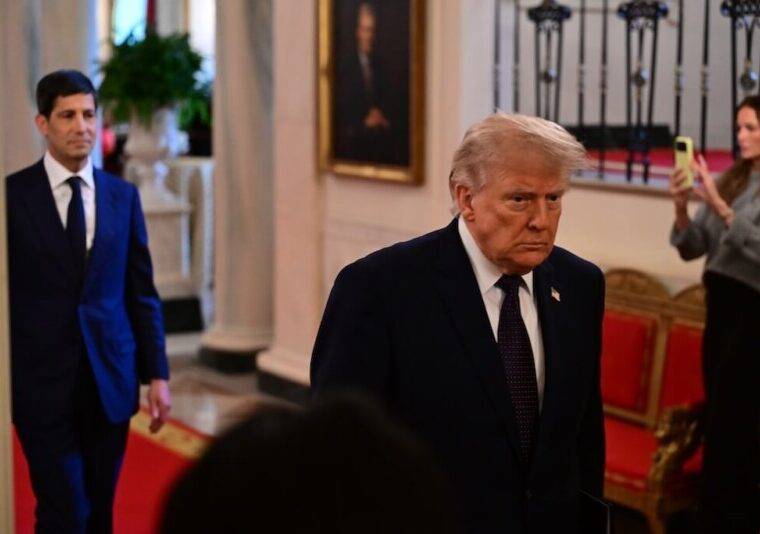
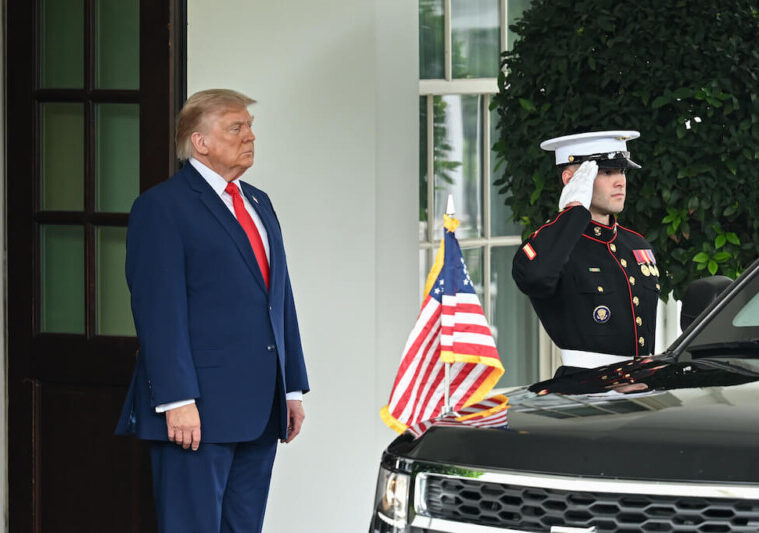
It is precisely at this point that the US-Iran balance is once again becoming decisive. Historically, Iraqi politics has been interpreted through the narrow prism of ‘whether the US or Iran is “winning” Yet the recent process has revealed a different picture. Neither can Iran be pushed outside the system, nor can Washington establish a decisive sphere of influence on its own. In this sense, a more controlled model of competition appears to have emerged. The parties are not completely eliminating each other’s room for manoeuvre, but are attempting to establish strategic boundaries.
This situation felt particularly in the security sphere. The fact that certain figures close to Iran can hold positions in the government demonstrates that Tehran’s influence persists, whilst reservations regarding certain critical security posts highlight Washington’s sensitivity regarding Iraq’s security architecture. From the US perspective, the issue is not to eliminate Iranian influence entirely. Given the fragile structure in Iraq, such a move would risk making the system even more unstable. Consequently, within the new balance taking shape in Baghdad, a controlled competitive arena has emerged where the parties do not completely exclude one another but rather limit each other’s scope of action.
The Zeydi government’s program also reflects this very search for balance. The approach of “Stable State – Productive Economy – Balanced Partnerships” actually sets out the government’s orientation quite clearly. Upon close examination of the program, it becomes apparent that security, the economy and foreign policy are not treated as independent spheres, but as components of the same strategic framework. It is fair to say that the strengthening of state capacity, economic reforms, energy investments, the centralization of security decisions and a policy of balance in foreign affairs are all assessed within the same framework.
One of the notable points here is that the government program largely retains the roadmap established during the Sudani era. In particular, the Development Corridor Project, efforts towards integration in the energy sector, and the approach to regional connectivity are continuing. However, despite this strategic continuity in the government program, the political composition of the cabinet appears more fragile compared to the Sudani era. A structure is emerging that is more political, more fragmented and generates more bargaining. Consequently, the fundamental challenge facing Baghdad will be managing the tension between strategic continuity and political fragmentation.
The recent shift in Türkiye’s policy towards Iraq takes on its full significance precisely here. This is because Ankara no longer views the Iraqi theatre solely through a security-centric lens. The approach that had long been shaped by the PKK threat, border security and military operations is giving way to a broader strategic framework. Iraq’s political stability, economic capacity, regional connectivity and state institutionalization have become direct strategic issues for Türkiye.
Indeed, during the presidential election process and government negotiations, Ankara did not pursue a policy focused on ensuring the victory of a specific candidate or group. For Türkiye, the issue centered not so much on who would become prime minister, but rather on the question of how relations could be maintained within the new equation emerging in Iraq. The swift messages of support issued immediately following the formation of the Zeydi government were also a continuation of this approach.
It is possible to interpret the approach that has become more visible in recent times through the lens of ‘conjunctural rationalism’. Türkiye is upholding its fundamental strategic principles. Iraq’s territorial integrity, political unity, protection from conflict, and the preservation of regional stability remain unchanging priorities for Ankara. However, Türkiye is now implementing these principles through more flexible networks of relations and shifting on-the-ground balances. The controlled normalization developing with the KYB, the new political balance emerging in Kirkuk, and the thaw in relations between Ankara and Sulaymaniyah are all part of this transformation.
This strategic expansion is also evident in the security sphere. Türkiye’s ‘Türkiye Without Terrorism’ process has now moved beyond the traditional security approach confined to the border. This is because the issue is not merely the PKK’s military presence. The structure stretching from Qandil to Sinjar, and from Mahmur to the disputed territories, has also become part of Iraq’s sovereignty crisis.
Recommended
For this reason, Ankara has recently been developing a broader strategic approach that, alongside military operations, seeks to build state capacity, institutional cooperation, economic integration and connectivity. Today, Türkiye does not view the security issues emerging in the Iraqi and Syrian theaters solely through the prism of the presence of armed groups. The real issue lies in the political, military and economic vacuums arising in areas where state capacity has eroded. For this reason, alongside moving security risks away from the border, Türkiye is seeking to establish a regional stability corridor that will contribute to filling these vacuums as much as possible.
The Development Corridor Project therefore holds a special place. It appears that Iraq, which has long served as a transit zone for conflicts, is for the first time turning towards an endeavor to establish itself as a regional hub through connectivity. Iraq’s status as a central country is regaining significance here. For Iraq is not merely a fragile geography; it is also one of the Middle East’s most critical transit zones.
Virtually every regional crisis in recent years has demonstrated this once again. The US-Iran tensions, the fragility arising after the Gaza war, and the new equation emerging following Israel’s attacks on Iran have all directly affected Iraq. This is because Iraq continues to be one of the areas where regional power struggles intersect. For this reason, any political vacuum that emerges in Baghdad can quickly transform into an arena of regional competition.
However, this very central geographical position also affords Iraq a significant strategic advantage. In terms of energy routes, trade corridors, transport networks and regional connectivity, Iraq’s geopolitical position makes it one of the Middle East’s most critical hubs. Consequently, whether the country reverts to a fragile fault line beset by conflict and proxy struggles, or emerges as a hub for regional integration, holds the potential to produce outcomes that will shape not only Iraq’s but the entire region’s future.
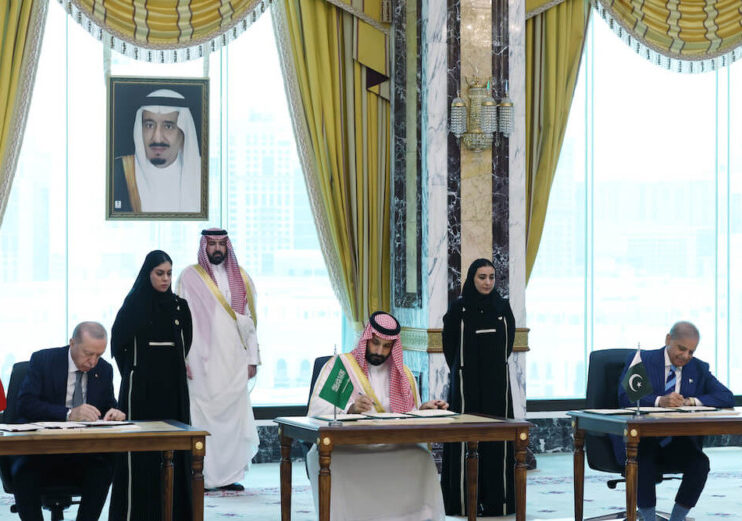
Precisely for this reason, it would be a mistake to interpret the strategic rapprochement that has emerged between Türkiye and Iraq in recent times as merely a routine bilateral process. The new ground being established here is evolving into one of the key battlegrounds in the struggle between security-centered fragmentation and connectivity-centered integration in the Middle East. However, the sustainability of this process does not depend solely on the strategic will demonstrated by Ankara. Baghdad also needs to manage the balance between political flexibility and state capacity. Therefore, the direction Iraq takes in the coming period will directly affect not only the country’s domestic political future but also the direction along which the regional order will be shaped.
(Originally published in Turkish by Kriter)

Bilgay Duman completed his undergraduate and master’s degrees in the Department of International Relations at Kırıkkale University in 2004 and 2007, respectively. He received his Ph.D. in 2024 from the Department of International Relations at Bolu Abant İzzet Baysal University with a dissertation titled “The Ethnicity–Sectarianism Nexus in Iraq after 2003: The Case of the Turkmens.” Since 2004, Duman has served as a researcher, analyst, and coordinator at various think tanks in Türkiye. As of November 2024, he has been working at Anadolu Agency, where he currently serves as Manager of Strategic Analysis. In addition to this role, he teaches courses on the Middle East at several universities. Duman’s research primarily focuses on the Middle East, particularly Iraq, while he also conducts studies on Turkish foreign policy and the Turkic world. He has numerous national and international publications and has participated in many panels, conferences, and seminars. He frequently provides expert commentary to various media outlets and has also served as an international observer in election monitoring missions in several countries.
You can see how this popup was set up in our step-by-step guide: https://wppopupmaker.com/guides/auto-opening-announcement-popups/

Stay informed by subscribing to
our weekly newsletter.
You can see how this popup was set up in our step-by-step guide: https://wppopupmaker.com/guides/auto-opening-announcement-popups/
You can see how this popup was set up in our step-by-step guide: https://wppopupmaker.com/guides/auto-opening-announcement-popups/
You can see how this popup was set up in our step-by-step guide: https://wppopupmaker.com/guides/auto-opening-announcement-popups/
You can see how this popup was set up in our step-by-step guide: https://wppopupmaker.com/guides/auto-opening-announcement-popups/