CSIS Report Says Russian Losses Exceed 1.4 Million as War Enters Fifth Year

July 3, 2026

Researchers said Russia has lost around 450,000 troops killed, representing roughly 1% of the country's population. Ukraine's military fatalities were estimated at between 125,000 and 150,000.
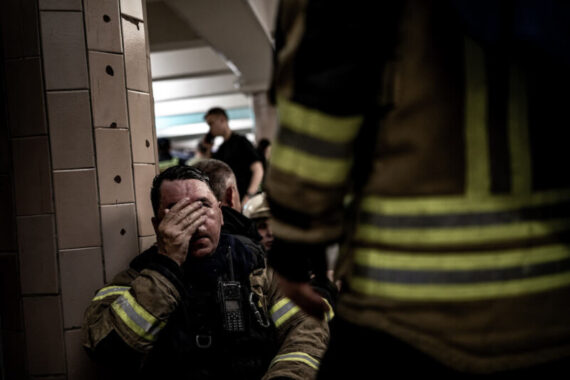
Firefighters in the metro during an alert of a possible Russian double-tap following a drone attack in Kharkiv, Ukraine, on June 14, 2026. Photo by Anadolu Images.

R

ussia’s full-scale invasion of Ukraine has resulted in more than 2 million military casualties on both sides, making it one of the deadliest conflicts since the Second World War, according to a new study by the Washington-based Center for Strategic and International Studies (CSIS).

The report estimates that Russia has suffered approximately 1.4 million casualties, including soldiers killed, wounded and missing, while Ukraine has endured between 525,000 and 625,000 casualties. Combined, the figures place the total human cost of the war above 2 million military casualties.

Researchers said Russia has lost around 450,000 troops killed, representing roughly 1% of the country’s population. Ukraine’s military fatalities were estimated at between 125,000 and 150,000.

Neither Moscow nor Kyiv regularly publishes official casualty figures, making independent verification difficult. However, the CSIS estimates broadly align with assessments previously released by Western governments and intelligence agencies.

The study, authored by Seth G. Jones and Riley McCabe, describes Russia’s losses as unprecedented in the post-World War II era.

“These rates are astounding,” the authors wrote, arguing that Russian fatalities in Ukraine now exceed the combined U.S. military deaths in all conflicts since World War II and are substantially higher than total Soviet and Russian military deaths across all wars during the same period.

According to the report, casualty rates have become increasingly uneven as the conflict has evolved.

During much of the war, Russian forces suffered approximately two to three casualties for every Ukrainian casualty. In the first half of 2026, however, researchers estimate the ratio has widened to nearly eight Russian casualties for every Ukrainian casualty.

The report attributes much of that shift to Ukraine’s expanding drone warfare capabilities.

Researchers said Kyiv has significantly enlarged what they describe as the battlefield “kill zone,” using drones to make it increasingly difficult for Russian forces to advance toward Ukrainian defensive positions.

“Ukraine’s defense-in-depth strategy has been effective in killing and wounding Russian soldiers, as well as limiting Russian maneuver,” the study concluded.


Recruitment challenges mount as battlefield losses increase

Beyond Ukraine’s technological improvements, the researchers identified several structural weaknesses contributing to Russia’s growing losses.

These include Moscow’s reliance on attrition warfare, shortcomings in combined-arms operations, poor tactical planning, inadequate troop training, corruption and declining morale among frontline forces.

The study also suggests Russia is no longer recruiting replacement soldiers at the same pace that it is sustaining battlefield losses, raising questions about the long-term sustainability of its military campaign.

The burden of casualties has fallen disproportionately on Russia’s poorer regions and ethnic minority communities, according to the report.

Researchers noted that economically disadvantaged regions have supplied a significant share of military recruits, with Russian independent media increasingly reporting that some remote villages have lost much of their male population during the conflict.

Although Russia has continued to mobilize volunteers through financial incentives and recruitment campaigns, the study argues that mounting casualties are placing increasing strain on the country’s manpower resources.

The report also highlights the broader historical significance of the conflict.

With military casualties now estimated to exceed 2 million, researchers said the war has likely surpassed the total casualties suffered during the Battle of Stalingrad, long regarded as one of history’s bloodiest battles.

The findings underscore the enormous human cost of a war that has entered its fifth year with no comprehensive peace agreement in sight. Despite repeated diplomatic initiatives, fighting continues across multiple fronts as both Russia and Ukraine seek military advantages while preparing for potential future negotiations.

The CSIS report concludes that although Ukraine continues to face severe military and humanitarian challenges, Russia is bearing increasingly heavy battlefield losses as technological changes, particularly the widespread use of drones, reshape the nature of modern warfare.

(Source: CNN)

Politics Today is dedicated to publishing insightful analyses in order to understand the changing nature of contemporary politics. It aims to contribute to the sound and constructive discussion of international affairs.