Documents Detail Epstein’s Extensive Middle East Connections
Epstein attempted to engage political figures during the 2017–2021 blockade of Qatar by Saudi Arabia, the United Arab Emirates, Bahrain and Egypt.
February 18, 2026
N
ewly released documents from the U.S. Department of Justice (DOJ) show that disgraced financier and convicted sex offender Jeffrey Epstein attempted to cultivate relationships with influential political and business figures across the Middle East.
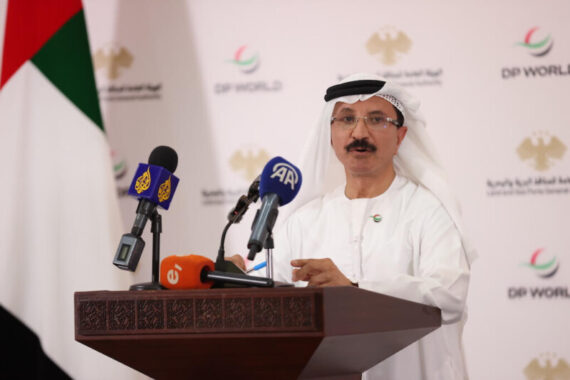
The most immediate fallout in the region came with the resignation of Sultan Ahmed Bin Sulayem, chief executive and chair of Dubai-based ports operator DP World.
According to two sources familiar with the matter, the decision followed increased scrutiny after Bin Sulayem’s name appeared in the DOJ’s document release. DP World confirmed the leadership change but declined further comment. Bin Sulayem did not respond to requests for comment.
Dubai’s ruler also issued a decree appointing a new chairman for Dubai’s Ports, Customs and Free Zone Corporation, one of several roles previously held by Bin Sulayem.
Some of the correspondence reviewed by Reuters included personal email exchanges between Epstein and Bin Sulayem. In one 2007 email, Bin Sulayem described meeting a woman in New York with whom Epstein had helped arrange contact.
An undated photograph included in the files shows Epstein and Bin Sulayem cooking together in what appears to be a relaxed setting.
Being named in the files does not constitute evidence of criminal wrongdoing. However, following the disclosure, some of DP World’s international financial partners raised concerns.
The UK development finance agency British International Investment (BII) and Canadian pension fund La Caisse announced they would pause new investments in DP World pending clarification. After the resignation was announced, both institutions signaled their willingness to continue cooperation under new leadership.
The DOJ documents suggest Epstein also attempted to engage political figures during the 2017–2021 blockade of Qatar by Saudi Arabia, the United Arab Emirates, Bahrain and Egypt.
In exchanges with Sheikh Jabor Yousuf Jassim Al Thani, a Qatari businessman and member of the ruling family, Epstein offered strategic advice during the diplomatic crisis. He reportedly criticized Qatar’s leadership at the time and suggested steps to improve relations with Washington.
Epstein urged Doha to consider strengthening ties with Israel to maintain favorable relations with then–U.S. President Donald Trump. Qatar ultimately maintained its policy course, and the regional blockade ended in 2021 when ties were restored.
Qatar’s current prime minister and foreign minister, Mohammed bin Abdulrahman Al Thani, has not publicly commented on Epstein’s characterizations in the documents.
The files also reveal that Epstein discussed the potential public listing of Saudi Aramco in multiple email exchanges.
In correspondence dating back to 2016 and 2017, Epstein warned that a public offering could expose Saudi Arabia to legal risks and asset seizures. He also floated alternative proposals, including selling a major stake to China rather than pursuing a traditional IPO.
Saudi Aramco declined to comment on the emails.
Recommended
Epstein’s network appeared to extend to Egypt as well. Documents show that following the 2011 ouster of former President Hosni Mubarak, a request for assistance from a family member — reportedly connected to Gamal Mubarak — was passed on to Epstein.
The nature of the requested assistance remains unclear, and Reuters was unable to determine whether Epstein took any action.
The large cache of emails, text messages and related documents reinforces what investigators have previously alleged: that Epstein sought to leverage his wealth and global access to build relationships with powerful figures in politics, finance, academia and business worldwide — including across the Middle East.
Reuters reported it could not determine how successful Epstein was in influencing decision-makers in the region.
The latest revelations add to ongoing scrutiny surrounding Epstein’s international connections, years after his 2019 death while in federal custody in the United States.
(Source: Reuters)

Politics Today is dedicated to publishing insightful analyses in order to understand the changing nature of contemporary politics. It aims to contribute to the sound and constructive discussion of international affairs.
You can see how this popup was set up in our step-by-step guide: https://wppopupmaker.com/guides/auto-opening-announcement-popups/

Stay informed by subscribing to
our weekly newsletter.
You can see how this popup was set up in our step-by-step guide: https://wppopupmaker.com/guides/auto-opening-announcement-popups/
You can see how this popup was set up in our step-by-step guide: https://wppopupmaker.com/guides/auto-opening-announcement-popups/
You can see how this popup was set up in our step-by-step guide: https://wppopupmaker.com/guides/auto-opening-announcement-popups/
You can see how this popup was set up in our step-by-step guide: https://wppopupmaker.com/guides/auto-opening-announcement-popups/