Energy Push in Somalia: The Next Phase of Türkiye’s Multi-Layered Strategy
Türkiye’s commencement of oil exploration activities in Somalia may, at first glance, appear to be a purely technical energy initiative. It is not.
May 25, 2026
I
n recent years, Türkiye’s presence in Somalia has deepened significantly. Whilst energy and space initiatives feature prominently, the foundation of this process lies in security, infrastructure and institutional capacity-building. In particular, the multi-layered cooperation model established after 2011 has laid the groundwork for the steps being taken in the energy sector today.
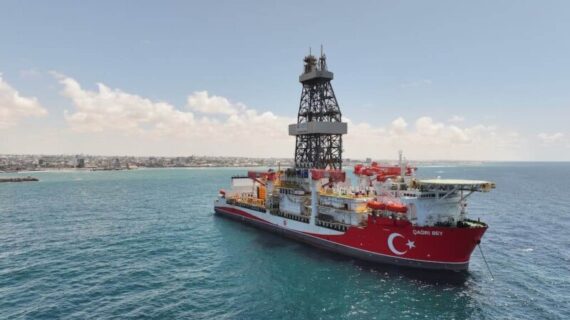
Türkiye’s commencement of oil exploration activities in Somalia may, at first glance, appear to be a purely technical energy initiative. However, this development is part of a much broader strategic framework. The operations currently being carried out by the deep-sea drilling vessel Çağrı Bey off the coast of Somalia are situated at the intersection of security, the economy, state capacity and geopolitical competition. Therefore, assessing the matter solely under the heading of energy exploration amounts to failing to grasp the bigger picture.
When evaluated within this broader framework, Türkiye’s oil exploration activities in Somalia represent a new phase. The work to be carried out by the domestically built and operated drilling vessel Çağrı Bey in the Curad-1 field goes far beyond a mere technical operation. The drilling, capable of reaching a depth of approximately 7,500 metres, is a process requiring advanced technology and high engineering capacity. Expected to last 288 days, this activity is considered a long-term strategic investment.
One of the most significant aspects of this initiative is the development of Somalia’s capacity to discover and manage its own resources. The potential discovery of an energy reserve could be a turning point for the Somali economy. This would not only mean an increase in revenue but also the strengthening of the state’s financial capacity and the acceleration of development processes.
From Türkiye’s perspective, this step represents the extension of its energy supply security strategy to an overseas dimension. Expanding into new fields in line with Türkiye’s objective of reducing its dependence on energy imports will contribute to it assuming a more active role in the global energy equation. Türkiye’s commencement of oil exploration in Somalia is not merely a one-dimensional energy investment. This development constitutes a multi-layered strategic move where security, economy, sovereignty and geopolitics are intertwined. The steps being taken in Somalia today will not only yield short-term results but will also shape the country’s economic and political transformation in the long term. Similarly, from Türkiye’s perspective, this process is a significant indicator of its transformation from a country that consumes energy to an active player in the energy sector.
If this process is successfully concluded, Somalia will cease to be a country associated with crises and will emerge as a new ‘safe haven’ and economic actor at both regional and global levels. Türkiye, as one of the key partners in this transformation, has the potential to further strengthen its strategic position in Africa.
For many years, the most fundamental issue in Somalia has been security. The weakness of state capacity and the influence of terrorist organisations have severely limited the development of economic activity. Türkiye’s approach in this regard has evolved from humanitarian aid to development assistance, and subsequently continued with military training tailored to local needs. However, this approach has not been limited to a purely military perspective but has aimed to build a more comprehensive security architecture.
At the current stage, Türkiye’s contributions are playing a decisive role in enhancing Somalia’s counter-terrorism capabilities. Reconnaissance and surveillance support provided by unmanned aerial vehicles, the operational contribution of air assets, and military training programmes have shifted the balance on the ground in favour of the Somali state. This has had both a military and a psychological impact. The narrowing of terrorist organisations’ operational space and the reduction in their attack capacity have contributed to the re-establishment of state authority.
The relative improvement in security has also paved the way for economic activities and investment. The rapid urbanization observed in Mogadishu in recent years, along with increased construction activities and private sector investment, are concrete indicators of this transformation. The active role of Turkish companies in infrastructure and superstructure projects serves as a significant lever in the revitalisation of the Somali economy.
One of Somalia’s greatest untapped potentials lies in its marine resources, which have remained underutilised for many years. From a blue economy perspective, fisheries, maritime transport and energy resources present critical opportunities for Somalia. Within the framework of the partnerships developed with Türkiye, fishing activities to be carried out in Somali territorial waters represent a significant step towards harnessing this potential. This process will not only generate economic revenue but will also strengthen Somalia’s control over its maritime zones.
In parallel, the process of building up Somalia’s naval forces is also noteworthy. These efforts, carried out with Türkiye’s support, are of critical importance in combating piracy and ensuring maritime security. Maritime security, whilst a military matter, is also decisive for the sustainability of trade and economic activities.
Furthermore, the operation of port and airport facilities in Somalia by Turkish companies constitutes a significant aspect of Türkiye’s economic presence in the country. However, as the Somali economy grows, the existing infrastructure is beginning to prove inadequate. This situation brings new port and airport projects to the fore. Another notable development, in terms of accelerating trade and reducing costs, is the increasing use of the Somali flag on commercial vessels. This step has the potential to significantly shorten trade transit times. This will not only accelerate Somalia’s integration into global trade networks but also enhance its competitive strength.
Recommended
Somalia’s geopolitical position makes these developments all the more significant. The Gulf of Aden, the Bab el-Mandeb Strait and the Red Sea route constitute one of the most critical chokepoints for global trade and energy transportation. Any instability in this region has repercussions on a global scale.
Recent Houthi attacks in Yemen and regional tensions have made the security of the Gulf of Aden, the Bab el-Mandeb Strait and the Red Sea route more fragile. Furthermore, the possibility of Israel unilaterally recognizing the Somaliland administration, or engaging in political contacts in this direction, is making the issue of Somalia’s sovereignty and territorial integrity even more sensitive. For such a step would imply that Israel is jeopardizing Somalia’s national integrity in pursuit of its own security and geopolitical interests in the Gulf of Aden and the Red Sea.
This situation could have serious consequences not only for Somalia’s domestic politics but also in terms of the emergence of a new crisis of legitimacy and sovereignty in the Horn of Africa. Furthermore, there is growing discussion that such a scenario could increase the likelihood of the Houthis in Yemen targeting the Somaliland administration or locations in the region believed to be linked to Israel. In this context, ensuring Somalia’s stability and maritime security holds national, regional and global significance. The ability of vessels flying the Somali flag to navigate this high-risk region more effectively is one of the factors enhancing the country’s geopolitical value.
Alongside these developments, the fact that vessels flying the Somali flag will now be able to sail across the globe represents a significant step forward. This situation holds, above all, symbolic and strategic importance for Somalia’s international representation. Furthermore, the Federal Government of Somalia aims to establish the Somali flag as one of the region’s trusted flags. Particularly at a time when threats in maritime chokepoints are on the rise, Somalia’s friendly relations in the region and its balanced foreign policy could transform the Somali flag into a key advantage in potential future crises.
Furthermore, the enactment of the cabotage law in Somalia has further strengthened this process. Under this law, vessels not flying the Somali flag will be restricted from conducting commercial activities in Somali territorial waters; such vessels will only be permitted to utilize the right of transit passage. This represents an extremely important step in strengthening Somalia’s sovereignty over its maritime zones.
(Originally published in Turkish by Kriter)

Assistant Professor of International Relations at Mersin University and a researcher at the SETA Foundation. His research focus is the Horn of Africa.
You can see how this popup was set up in our step-by-step guide: https://wppopupmaker.com/guides/auto-opening-announcement-popups/

Stay informed by subscribing to
our weekly newsletter.
You can see how this popup was set up in our step-by-step guide: https://wppopupmaker.com/guides/auto-opening-announcement-popups/
You can see how this popup was set up in our step-by-step guide: https://wppopupmaker.com/guides/auto-opening-announcement-popups/
You can see how this popup was set up in our step-by-step guide: https://wppopupmaker.com/guides/auto-opening-announcement-popups/
You can see how this popup was set up in our step-by-step guide: https://wppopupmaker.com/guides/auto-opening-announcement-popups/