E
uropean leaders used the final day of the Munich Security Conference to counter sharp criticism from Washington, with the EU’s top diplomat rejecting what she called “Europe-bashing” and dismissing claims that the continent risks cultural or political collapse.
Kaja Kallas said talk of a declining, “woke” Europe was detached from reality.
“Contrary to what some may say, ‘woke, decadent Europe’ is not facing civilizational erasure,” she told delegates, arguing that the European project continues to draw interest from far beyond the continent.
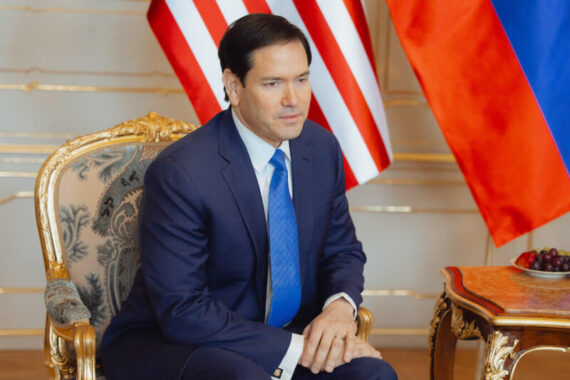
Kallas welcomed remarks from Marco Rubio a day earlier stressing that the United States and Europe are historically bound together.
“The message that we heard is that America and Europe are intertwined, have been in the past and will be in the future. I think this is important,” she said.
But she cautioned that disputes will endure. “It is also clear that we don’t see eye to eye on all the issues, and this will remain the case.”
Roots of the dispute
Tensions flared after a U.S. national security strategy released in December warned that European migration trends and political choices could leave the continent “unrecognizable” within decades. European commentators reacted with alarm, with newspapers such as Le Monde saying readers were stunned by language suggesting Europe was engaged in “civilizational erasure.”
The document also accused European governments of limiting free speech and suppressing opposition, despite high press-freedom rankings across EU member states.
American officials in recent years have frequently framed their concerns using arguments critics link to the so-called “great replacement” narrative, an idea that has circulated widely in far-right movements.
In his own address, Rubio sought to soften the atmosphere, insisting the trans-Atlantic partnership remains fundamental even as Washington pushes hard on issues such as immigration, trade and climate.
He said the United States does not seek a break with Europe, a line many participants viewed as an attempt to steady relations after months of uncertainty.
Recommended
Russia and Ukraine front and center
Beyond the exchange with Washington, Kallas urged Europeans to remain firm toward Russia as diplomatic efforts continue to explore ways to end the war in Ukraine.
“Let’s be clear-eyed about Russia. Russia is no superpower,” she said, describing the country as “broken” and warning that Moscow must not be allowed to secure more through negotiations than it has achieved militarily.
She argued that Europe’s security “starts in Ukraine” and said any settlement should involve limits on Russia’s military capacity, reparations for damage caused by the invasion and accountability for war crimes.
Other officials echoed the need for Europe to rely more on itself. Benjamin Haddad, France’s minister for European affairs, said Europeans should concentrate less on comforting words from U.S. speeches and more on strengthening their own defenses.
“The worst lesson we could draw,” he said, would be to relax instead of accelerating rearmament and support for Kyiv.
Despite the friction, Kallas said Rubio’s comments confirmed that the bond across the Atlantic remains real, even if increasingly complex.
Differences over migration, climate and trade are likely to persist, she said, but the task now is to manage them while preserving cooperation on shared security challenges.
If you want, I can adapt this into a punchier front-page style, a broadcast script, or a shorter news agency brief.
(Source: AFP)