A
wave of youth-led demonstrations is sweeping across Europe, with Generation Z protesters taking to the streets to demand affordable housing, better education, economic opportunities and political accountability, as growing frustration with established leadership fuels an increasingly influential movement.
Thousands of young demonstrators have mobilized across France, Italy, Belgium and Albania, while student-led protests in Serbia culminated in the electoral defeat of longtime leader Aleksandar Vucic following nearly two years of demonstrations.
Further protests are scheduled in Germany this weekend, highlighting the expanding geographical reach of a movement driven by young Europeans who say their governments have repeatedly ignored their concerns.
In Brussels, 19-year-old student Maya Gourdel has joined demonstrators demanding improvements to education and living conditions, adopting protest slogans inspired by the film The Hunger Games.
For many participants, the demonstrations represent more than frustration over individual government policies. They reflect a broader sense that younger generations are being denied economic security and meaningful opportunities.
Rising living costs and deteriorating schools fuel youth anger
Economic pressures have emerged as a central driver of the demonstrations, particularly among students facing expensive housing, limited employment prospects and deteriorating public services.
A European Union survey published in 2025 found that rising prices and living costs concerned 40% of people aged between 16 and 30.
Among the 92.7 million EU residents facing poverty or social exclusion that year, young adults aged 18 to 24 recorded the highest risk, at 26.3%, compared with 18.8% among people aged 65 and older.
In Italy, 21-year-old student Chiara described the protests as an expression of accumulated frustration with a political establishment that has failed to provide younger generations with a credible future.
She pointed to schools suffering from teacher shortages and deteriorating buildings, alongside the prospect of poorly paid employment and increasingly unaffordable accommodation.
Similar grievances have emerged in France, where 17-year-old student Bilal Narjissi criticized conditions at his school near Paris, citing previous rat infestations and an incident in which students were evacuated after a roof collapsed into a courtyard.
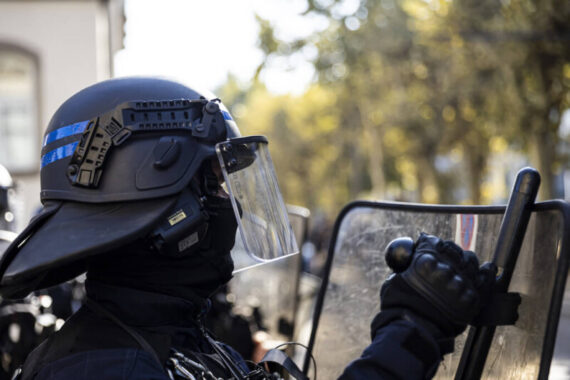
The demonstrations have occasionally escalated into violence, particularly in France, where thousands of businesses have reportedly been damaged or looted in recent weeks.
Police have deployed water cannons and stun grenades during confrontations with protesters.
The unrest has also intensified debate over generational inequality in government spending.
According to French think tank OFCE, people older than 60 represent approximately one-quarter of France’s population but own 60% of the country’s wealth.
A French government report published in October found that pension expenditure increased by 2.5 percentage points of GDP between 2000 and 2023, while education spending declined by half a percentage point.

Recommended
Serbia’s political upheaval inspires protesters across Europe
Serbia has provided the movement with its most significant political victory so far, after student-led demonstrations helped bring an end to Vucic’s longstanding leadership through parliamentary elections.
The outcome followed nearly two years of protests against perceived corruption and authoritarianism.
Student protester Stasa Piletic described the election result as a moment of relief and victory, although the movement now faces the challenge of translating protest momentum into effective governance.
Elsewhere, Albania has witnessed growing demonstrations against Prime Minister Edi Rama’s government over allegations of corruption, inadequate education and limited employment opportunities.
Xyke Kurti, a 19-year-old architecture student, criticized the government for failing to respond to protesters’ demands, arguing that many young Albanians increasingly see their futures outside the country.
In Belgium, Gourdel similarly accused political leaders of ignoring peaceful appeals until demonstrations became more confrontational and attracted media attention.
The expanding movement illustrates a growing generational divide across Europe, with young people questioning whether existing political institutions can adequately address their economic and social concerns.
As further demonstrations approach in Germany, Europe’s governments face increasing pressure to respond to a generation demanding not only immediate financial relief but also meaningful influence over decisions shaping its future.
(Source: Reuters)