S
ince Donald Trump took office as president of the United States at the beginning of 2025, his desire to annex Greenland, his openly expressed intentions to annex Canada, and his threats of higher tariffs against European countries have led Germany, like many other European countries, to express its desire for a “rules-based international order.” Almost everyone, including politicians, journalists, academics, and various segments of society, is trying to understand how the U.S., which Germany has relied on until now, is behaving so lawlessly and moving towards a ruleless world. Faced with this overt power politics from their “ally” across the Atlantic, even targeting Europe, they are expressing both disappointment and are now trying to develop strategies to adapt to this new world.
Defending the Rules—Selectively
Germans and other Europeans take great pleasure in portraying themselves as the new protectors of the rule of law, as the United States, which emerged as the “founder and protector” of the post-World War II international political system, has transformed into a power that threatens this rules-based order. They enjoy making statements along the lines of, “America betrayed the rules-based order, but we will continue to defend it and uphold the rule of law.” They particularly favor Ukraine as an example, explaining how a significant portion of Germany and other Europeans heroically supported Ukraine’s “struggle for rights and freedoms” against the Russian occupation.
However, when it comes to the Middle East, Germany appears to be pursuing a policy that completely disregards the rules of international law. A country that champions a rules-based international order and criticizes others for violating it would be expected to oppose Israel’s genocide in Gaza, its attacks on Lebanon and Syria, and its unjust war of aggression against Iran. Similarly, Germany, which claims to value the rules, should also oppose the U.S. attack against Iran. Indeed, in 2015, it was one of six countries that signed an agreement with Iran to peacefully resolve the issue stemming from that country’s nuclear activities.
When the U.S., with Trump’s presidency, decided to withdraw from the agreement and reimpose harsher sanctions against Iran, Germany and other EU countries had the opportunity to keep Iran in the agreement. They could have defied U.S. sanctions and maintained trade and economic relations with Iran, thereby ensuring Tehran’s adherence to the agreement despite Washington’s stance, but they failed to do so. At the time, they created The Instrument in Support of Trade Exchanges (INSTEX) mechanism, giving the impression that they were trying to maintain trade with Iran, but subsequently succumbed to U.S. sanctions and were unable to effectively operate this mechanism.
Support for Israel
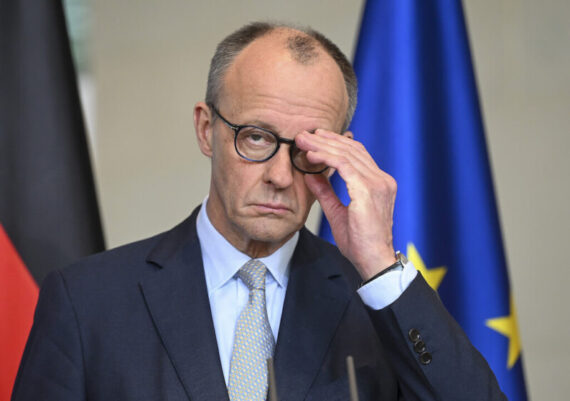
In the subsequent period, Germany, along with many other European countries, moved away from its classic “critical dialogue” policy towards Iran and adopted an approach aligned with the pressure and sanctions policies of the U.S. and Israel. The point we have reached now is that Germany, which once called on the U.S. to exercise restraint on Iran, has been replaced by a Germany that openly supports the U.S. and Israeli attacks on Iran. Particularly during the presidency of Friedrich Merz, who took office in May 2025, Germany’s stance towards Iran hardened, resulting in further deterioration of relations between the two countries due to the reactions and statements from Iran.
German Chancellor Merz’s statement during the 12-Day War, which began with Israel’s attack on Iran, that “This is Israel’s dirty work for all of us,” was a clear endorsement of an attack and an aggressor launched in violation of international law. Merz, who justified this attack as “part of Israel’s right to protect its existence and ensure the security of its citizens,” did not bother to explain how such legitimacy could be possible in a war of aggression. When Germany speaks of a “rules-based order,” the first element that comes to mind is international law, and according to international law, “war of aggression” is explicitly prohibited. Only the use of military force in self-defense or in accordance with a UN Security Council resolution is legitimate.
Neither of these justifications existed in Israel’s war against Iran, which began on June 13; there was no Security Council resolution authorizing military intervention against Iran, nor was there any Iranian attack targeting Israel. Israel’s attempt, like the U.S. on numerous occasions before, to legitimize its attack on Iran by framing it as a preventive war and claiming it as self-defense is not an acceptable approach under current international law. Despite this, the German Chancellor’s support for this war, which violates international law, constitutes a clear distortion of the principles of a rules-based international order.
Recommended
Anti-Iranian stance
Germany’s stance of supporting Israel in its unjust attack on Iran, as it did during the Gaza genocide, has further deteriorated relations between Berlin and Tehran. During this process, Germany, traditionally known for its more moderate and conciliatory policy in Iran-Western relations—a natural consequence of its status as a trading nation—has increasingly adopted a harsher stance towards Iran. This tension is evident in the statements of German Chancellor Merz. Following the widespread protests in Iran in January, which resulted in thousands of deaths, Merz stated that the Iranian regime’s days were numbered and demanded that the Revolutionary Guard Corps be added to the EU’s list of terrorist organizations.
Germany’s stance, targeting the Iranian regime and supporting Israeli aggression, has provoked strong reactions from the Iranian side. In a social media post in January, Foreign Minister Abbas Araghchi stated that “Of all governments, the one in Germany is perhaps the worst placed to address ‘human rights’,” and asked, “What, then, does Mr. Merz have to say about his wholehearted support for the mass murder of 70,000 Palestinians in Gaza?” Araghchi’s message on February 5 on X, stating, “Germany was once the engine of Europe’s progress; now it has turned into an engine of regression… We Iranians have unfortunately been faced with several other examples of Merz’s political naivety and distasteful character,” is significant in demonstrating the current state of German-Iranian relations.
Germany’s stance targeting Iran continued even during the period when the U.S. was preparing for an attack on the country and increasing its threats. During this process, Chancellor Merz adopted a supportive position towards the U.S., stating that they “supported the U.S. initiatives to remove Iran as a factor destabilizing the region.” This stance by Merz was met with criticism from some in the German opposition. Fabio de Masi, leader of the BSW party, criticized Germany for not taking a similar decision to British Prime Minister Keir Starmer’s statement that the UK would not allow the U.S. to use its military bases in a potential attack on Iran, and accused Merz of acting like “Trump’s lackey.”
Referring to the stance of then-Chancellor Gerhard Schröder, who openly opposed the illegal U.S. aggression against Iraq in 2003, he stated that the current German government should adopt the same approach, saying, “Merz must stop being Donald Trump’s lackey and refrain from indirectly dragging Germany into an aggressive war that violates international law.”
The influence of the Zionist lobby on Germany’s policy towards Iran and the Middle East in general has been significant. However, as de Masi points out, during the Iraq War under Social Democratic Chancellor Schröder, Germany was able to take an anti-war stance despite this lobby and pressure from the U.S. Now, the Social Democrats are partners in the coalition government, but they are not raising an effective voice of opposition to Merz’s excessive subjugation of German-Iranian relations to the influence of the Zionist lobby and the U.S.
Beyond Germany moving far from the independent foreign policy of the Schröder era under Christian Democratic foreign policy leadership, the Merz-Wadephul duo appears to be bringing Germany’s Middle East policy closer to the Israel-U.S. axis even more than during the terms of previous Christian Democratic chancellors. The fact that Germany is doing this at a time when it views Trump’s foreign policy as a threat to the “rules-based international order” seems to require explanation.
(Originally published in Turkish by Kriter)