Gulf States Reassess Security Strategy as US-Iran Agreement Raises Regional Concerns

June 26, 2026

For Gulf countries whose economies depend heavily on energy exports passing through the waterway, the prospect of expanded Iranian influence over maritime security has generated considerable debate.
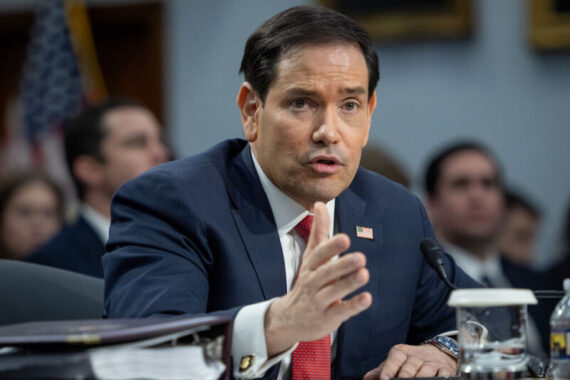
U.S. Secretary of State Marco Rubio testifies before a House Committee on Appropriations Subcommittee on National Security, Department of State, and Related Programs budget hearing at the Rayburn House Office Building in Washington, DC on June 2, 2026. Photo by Anadolu Images.

G

ulf Arab states are reassessing their long-standing security relationship with the United States following Washington’s emerging agreement with Iran, amid concerns that the proposed deal could reshape the regional balance of power and leave key security issues unresolved.

The framework agreement between the United States and Iran, announced after months of conflict and negotiations, has been welcomed across the Gulf as a step away from a wider regional war. However, analysts and diplomats say many governments in the region remain deeply uneasy about its long-term implications, particularly regarding Iran’s military capabilities and growing regional influence.

The agreement seeks to end hostilities between Washington and Tehran, reopen the Strait of Hormuz to international shipping and establish a process for broader negotiations on Iran’s nuclear program, sanctions relief and economic reconstruction. While Gulf capitals support efforts to prevent another devastating conflict, many officials are questioning whether the arrangement adequately addresses their security concerns.

Trust in US erodes

For decades, Gulf monarchies have relied heavily on the United States as their principal security guarantor. American military bases, naval deployments and defence partnerships have formed the backbone of regional deterrence against external threats, particularly from Iran.

Yet confidence in those guarantees has gradually weakened over the past several years.

Regional observers point to a series of developments that have fuelled doubts, including the limited U.S. response to attacks on Saudi oil facilities in 2019 and Washington’s broader shift toward reducing its military footprint in the Middle East.

Those concerns have resurfaced following the latest U.S.-Iran agreement, which many Gulf officials view as another indication that Washington is increasingly prioritising diplomacy and strategic disengagement over long-term military commitments in the region.

The agreement also introduces new arrangements affecting navigation through the Strait of Hormuz, one of the world’s most strategically important maritime corridors. Under the framework, Iran is expected to play a role in future discussions on managing commercial shipping alongside Oman and other regional stakeholders.

Possible Iranian influence on maritime security

For Gulf countries whose economies depend heavily on energy exports passing through the waterway, the prospect of expanded Iranian influence over maritime security has generated considerable debate.

Analysts argue that while reopening shipping lanes would benefit global energy markets, Gulf governments remain cautious about any arrangement that could strengthen Tehran’s leverage over regional trade.

The deal also leaves several contentious issues unresolved.

Although negotiations on Iran’s nuclear activities are expected to continue during a 60-day transition period, the current framework does not directly address Tehran’s ballistic missile programme or its relationships with armed groups across the Middle East.

Many Gulf governments have long regarded those issues as posing a more immediate security challenge than Iran’s nuclear ambitions alone.

During a regional tour following the announcement of the agreement, U.S. Secretary of State Marco Rubio sought to reassure Gulf allies that Washington would continue consulting closely with them throughout negotiations and would not pursue policies that undermine their security.

Rubio emphasised that future discussions concerning Iran’s missile program would be coordinated with regional partners and reaffirmed America’s commitment to longstanding alliances in the Gulf.

Despite those assurances, regional analysts say trust has been weakened by years of uncertainty surrounding U.S. policy in the Middle East.

Diversifying military partnerships

Several experts argue that Gulf states increasingly believe they must prepare for a future in which they shoulder greater responsibility for their own defense.

As a result, some governments have accelerated efforts to diversify their military partnerships and defence procurement beyond traditional suppliers.

Turkey has emerged as one potential alternative source of military equipment and defense cooperation, reflecting a broader strategy of reducing dependence on any single security partner.

At the same time, Gulf countries continue to strengthen economic ties with the United States. Major investment commitments announced in recent years demonstrate that while questions persist over security arrangements, economic cooperation remains a central pillar of bilateral relations.

The proposed agreement with Iran also includes plans for a multibillion-dollar reconstruction and investment fund intended to support Iran’s economic recovery after the conflict.

Although Washington has indicated that Gulf participation would be important, several regional governments have said they have not yet committed funding and are awaiting further details before making any decisions.

For many Gulf leaders, preventing another regional war remains the immediate priority.

The recent conflict exposed the vulnerability of Gulf states to missile and drone attacks and highlighted the economic consequences of disruptions to energy exports and international shipping.

Greater dialogue between Gulf states and Iran

As a result, several governments have supported diplomatic initiatives aimed at reducing tensions, even while expressing reservations about specific elements of the agreement.

Some analysts believe the changing regional landscape could encourage greater dialogue between Gulf states and Iran, including discussions on confidence-building measures and possible non-aggression arrangements designed to reduce the risk of future conflict.

However, many caution that diplomacy alone is unlikely to provide lasting security without credible deterrence and stronger regional defense cooperation.

Experts argue that Gulf countries will continue investing in integrated missile defense systems, intelligence sharing and military modernization while pursuing diplomatic engagement with Tehran.

The evolving situation reflects a broader transformation in Middle Eastern geopolitics, where regional powers are increasingly adapting to shifting U.S. priorities and seeking more diversified approaches to security.

While the U.S.-Iran agreement may reduce immediate tensions and lower the risk of renewed conflict, it has also prompted Gulf governments to rethink assumptions that have shaped their strategic planning for decades.

Whether the agreement ultimately contributes to long-term regional stability will depend not only on the success of future negotiations with Iran but also on the ability of Gulf states to balance diplomacy, deterrence and evolving partnerships in an increasingly uncertain security environment.

(Source: CNN)

Politics Today is dedicated to publishing insightful analyses in order to understand the changing nature of contemporary politics. It aims to contribute to the sound and constructive discussion of international affairs.