Where Does the Arab Gulf Stand on the Iran-Israel War?
Gulf countries continue to strive to prevent war from spreading to their regions while ensuring regional security cooperation.
September 8, 2025
T
he Gulf countries’ reliance on U.S. military bases makes them vulnerable to Iran. Furthermore, their cooperation with the U.S., which creates instability in the Middle East, pits the Gulf countries against Iran. Iran views the U.S. as the Great Satan and enemy. Thus, Gulf countries that provide military bases and land access for U.S. regional policies are seen by Iran as the greatest threat to regime security.
The ongoing shadow conflicts between Iran and Israel reached a new level on June 13, 2025, when Israel launched large-scale attacks against Iran. Unlike the conflict theater of April 2024, the tension between the two countries turned into a direct military crisis this time. This crisis also created major security concerns in the Gulf countries.
The conflict between Israel and Iran has deeply affected the region’s geopolitical dynamics and the Gulf’s security strategies. Israel repeatedly targeted and struck Iranian-backed militias in Syria until December 8, 2024. Then, on June 13, 2025, Israel attacked Iran’s embassy in Damascus. The ongoing clashes between the two countries after this date produced asymmetric results in Israel’s favor and were a warning sign for the Gulf countries.
Following these events, the Gulf countries’ efforts to balance their relations with Iran and Israel became paramount. While maintaining security cooperation with the U.S. and Israel, the Gulf countries sought to strengthen diplomatic relations with Iran. This created a security paradox that complicated the region’s security paradigm.
The security architecture of Gulf countries relies heavily on the military support and defense cooperation that the U.S. and its Western allies provide. Historically, these countries have relied on the U.S. security umbrella against direct or indirect threats from Egypt, Iraq, and, currently, Iran via proxies. At the same time, many U.S. allies, including Israel, cooperate directly and indirectly in the field of defense.
However, this situation creates several significant security vulnerabilities. First, the Gulf countries’ dependence on U.S. bases leaves them vulnerable to Iran. Furthermore, their cooperation with the U.S., which creates instability in the Middle East, positions the Gulf countries against Iran. The Gulf countries provide the U.S. with military bases and land access for its regional policies and view Iran as the greatest threat to their security because Iran views the U.S. as the Great Satan/enemy.
Conversely, the U.S. military presence in the Gulf could be targeted by Iran and draw a reaction from other regional actors. Iran has openly threatened to attack U.S. bases. The first such attack occurred on June 23, 2025, when Iran launched missiles at Al-Udeid Air Base in Qatar.
Although there were no casualties from the attack, it exposed weaknesses in the Gulf’s security umbrella. Such attacks demonstrate the fragility of the Gulf countries’ security relations with the U.S. Trump and the U.S. administration responded weakly to the Houthis’ 2019 attack on Saudi Arabia’s oil production facilities, the kingdom’s most important source of income. This failure to meet the Gulf’s security expectations is evident.
However, Iran’s threat to close the Strait of Hormuz poses another major security risk for the Gulf. The Strait of Hormuz is a vital route for a significant portion of the world’s oil trade, impacting the energy exports of Gulf countries. Iran’s threat to close this route poses a significant geopolitical and economic threat. Closing the Strait of Hormuz could directly affect the security of regional energy routes and threaten the economic interests of Gulf countries. This further complicates Gulf countries’ relations with Iran and greatly affects regional security.
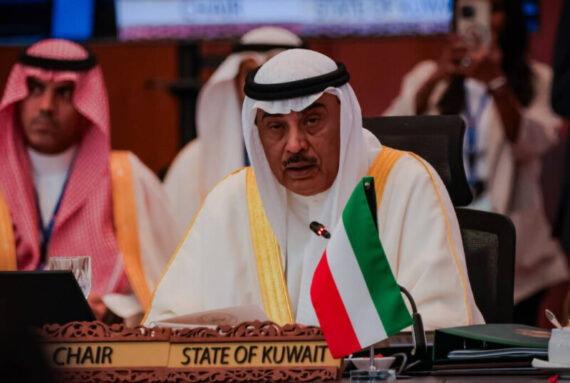
Qatar is the country that best exemplifies this paradox in the Gulf’s security architecture. It has strong military ties with the United States and is home to Al-Udeid Air Base, the largest U.S. military base in the region. At the same time, however, Qatar plays an important role as a diplomatic mediator. Its relations with Hamas, in particular, have made Qatar a critical actor in raising international awareness of the humanitarian situation in Gaza.
This leaves Qatar in a paradoxical position in the Iran-Israel conflict. Qatar engages in dialogue with Iran while condemning Israel’s military attacks. For instance, Qatar condemns Israel’s attacks on Iran as “a clear violation of sovereignty,” yet, as a country hosting a U.S. military presence, Qatar’s stance is contradictory.
Following Iran’s 2025 missile attack, Qatar declared that it was under threat; however, no serious damage occurred thanks to the effective deployment of its missile defense systems. In reacting to Iran in this incident, Qatar emphasized the importance of maintaining regional stability.
This demonstrates Qatar’s efforts to mitigate security vulnerabilities while maintaining its role as a mediator for regional stability. This dual approach has established Qatar as a key player in the Gulf’s security architecture. However, maintaining this balance may not always be possible, as Qatar’s security ties with the U.S. could complicate regional diplomacy.
Gulf countries are engaged in various diplomatic efforts to prevent the Iran-Israel conflict from escalating. Saudi Arabia, the United Arab Emirates (UAE), and Oman, for example, are deepening their relations with Iran in an attempt to reduce tensions in the region. This diplomatic opening was solidified by the agreement reached in March 2023 between Saudi Arabia and Iran, which was brokered by China.
However, the Gulf countries’ flexible security strategies also pose a risk. These countries are simultaneously exposed to pressure from both their Western allies and Iran. Although Gulf countries rely on their cooperation with the U.S. and the West for security guarantees, this situation could increase regional tensions.
Gulf countries continue to strive to prevent war from spreading to their regions while ensuring regional security cooperation. These efforts require a constant balancing act between ongoing communication with Iran and covert and/or overt relations with Israel. By maintaining this balance, Gulf countries aim to prevent a regional war. Nevertheless, this complex security architecture and strategic dilemma create uncertainty regarding the Gulf’s long-term security.
Recommended
The repercussions of the Iran-Israel conflict for the Gulf region pose a significant security challenge. Gulf countries are maintaining diplomatic relations with Iran while also strengthening their security ties with the U.S. Qatar’s unique position underscores the contradictions and strategic challenges within the Gulf’s security architecture.
While maintaining its military relations with the US and Israel, Qatar is also trying to strengthen its diplomatic ties with Iran. This further complicates Gulf countries’ efforts to avoid escalating regional tensions and maintain stability. Nevertheless, the Gulf’s strategic balancing efforts offer a glimmer of hope for regional security and serve as an important diplomatic tool for preventing war. In order to prevent war from breaking out and ensure regional stability, Gulf countries must remain under the security umbrella and maintain their diplomatic relations.
(Originally published in Turkish by Kriter)

Mehmet Rakipoglu completed his BA in International Relations at Sakarya University. He worked as a teaching assistant at Sakarya University Center for Middle Eastern Studies from 2015-2017. Rakipoglu is currently a PhD candidate at the same Center. His research areas include foreign policy in the Gulf, Turkey’s policies towards the Gulf region, and political Islam.
You can see how this popup was set up in our step-by-step guide: https://wppopupmaker.com/guides/auto-opening-announcement-popups/

Stay informed by subscribing to
our weekly newsletter.
You can see how this popup was set up in our step-by-step guide: https://wppopupmaker.com/guides/auto-opening-announcement-popups/
You can see how this popup was set up in our step-by-step guide: https://wppopupmaker.com/guides/auto-opening-announcement-popups/
You can see how this popup was set up in our step-by-step guide: https://wppopupmaker.com/guides/auto-opening-announcement-popups/
You can see how this popup was set up in our step-by-step guide: https://wppopupmaker.com/guides/auto-opening-announcement-popups/