International Crisis: Rare Earth Elements in Greenland
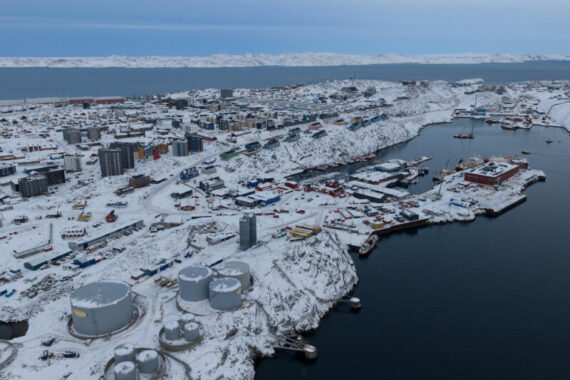
Greenland is home to significant REEs reserves and is located in a region that is both geographically close and politically stable and pro-Western
February 11, 2026
T
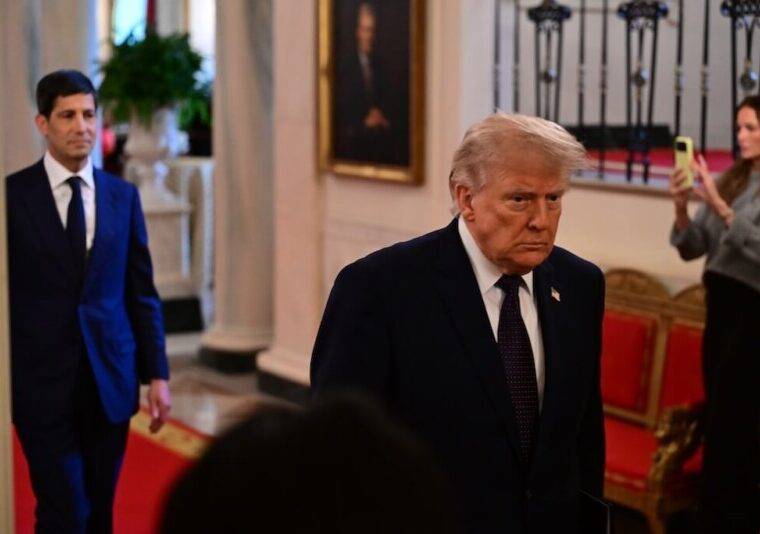
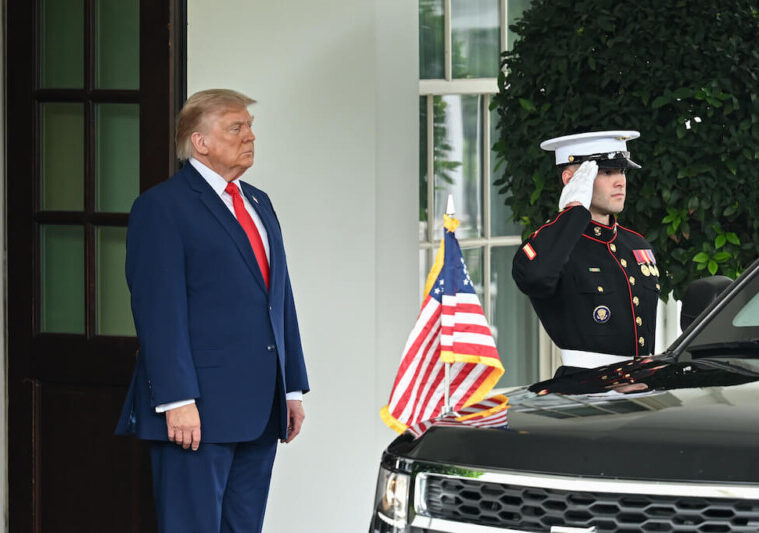
he aggressive stance of Trump and his inner circle, coupled with the issue of Greenland, has brought the US and its Western allies to the brink of a new crisis. European allies, who have categorically rejected the idea that Greenland is ‘for sale’, are concerned about the US’s attempts to take control of the region. In turn, Trump is threatening to impose additional customs duties on Denmark, Norway, Sweden, France, Germany, the Netherlands, Finland and the United Kingdom. In response, the 27 EU leaders are holding an emergency meeting in Brussels to discuss the situation in Greenland and try to curb the US’s aggressive stance.
Alongside Trump’s historical claims that Greenland actually belongs to the US, he has also emphasised the ‘incompetence’ of the Biden administration. Indeed, in 2019, during Trump’s first term, Greenland and the US signed a memorandum of understanding to jointly explore the region and exchange scientific and technical knowledge in order to develop rare earth elements (REEs) and critical mineral resources. However, this agreement was not renewed during the Biden administration, which led to the end of US REE exploration activities in Greenland.
Why have rare earth elements (REEs), which have recently been described as more important than oil, become such a critical issue in addition to the political crisis? Scientists consider the use of REEs in all systems, ranging from energy to technological infrastructure, to be a necessity rather than a choice. Indeed, examination of the structure of REEs reveals that they are lighter and more durable than other elements and minerals, and they add minimal functionality to the areas in which they are used.
It must also be acknowledged that the accelerating energy, technology and defense industries are built upon REEs. Consequently, REEs is considered an indispensable raw material for the defense industry, as well as for renewable energy systems and all associated technologies. In fact, REEs is referred to as the seed of technology. As it evolves from being defined to becoming functional, the value of REEs increases day by day.
The uneven and limited distribution of global REEs reserves, which become functional when combined with critical minerals, is one of the foundations of today’s global geopolitical crises. China’s undisputed leadership in the field of REEs, with 70 per cent of reserves and a 90 per cent refining rate, exacerbates this crisis. The first use of REEs as a geopolitical power tool occurred during the 2010 crisis between China and Japan. The arrest of a Chinese fisherman by the Japanese coastguard in disputed waters between the two countries, followed by China’s export ban on REEs and REEs-based technology products, meant that China’s dependency on REEs within the international system was characterized as an international security issue.
This crisis resulted in significant changes to international energy and security policies. Until 2011, the US played a secondary role in REEs exploration, extraction and production, based on both refining and environmental factors. However, this changed with China’s REEs export bans. REEs is now considered a matter of national security for the US. Against this backdrop, the US has concluded a series of REEs agreements with Japan, Kazakhstan, Malaysia, Australia and Kyrgyzstan in order to diversify its sources. Furthermore, China’s status as a global leader in the REEs sector, as well as the launch of its Arctic policy — the Polar Silk Road — and its designation as a Near-Arctic State in 2018, provides the backdrop to the United States’ interest in Greenland.
The rapid melting of Greenland’s ice sheet has made the extraction of rare earth elements (REEs) more accessible. This has attracted international interest in Greenland, with the aim of challenging China’s dominance in the REEs sector. According to international geological studies and modeling of the island’s reserve potential, it is estimated that Greenland holds 1.5 million tonnes of REEs reserves, ranking eighth globally in terms of quantity. These reserves are considered to be the closest secondary source to China. The presence of high concentrations of REEs reserves on the island is one of the factors increasing Greenland’s importance on a global scale.
However, there are a number of challenges associated with extracting REEs in Greenland. These include the fact that there are fewer than 100 kilometers of roads across the entire island; the fact that transport is almost entirely dependent on ships and aeroplanes; the fact that there is high resistance to mining among the local population; and the fact that the reserves in question are still located hundreds of meters under the ice.
To date, exploration activities have primarily been concentrated in coastal and southern Greenland, where logistics are more favorable. Despite local pressure, there was a significant increase in exploration permits in the region as of 2010, and by 2020, almost the entire territory of Greenland had been granted exploration permits. However, to date, projects involving REEs, uranium or other critical minerals have not entered commercial operation, and the project development and licensing phases are ongoing.
The Kvanefjeld project, located at the southern tip of Greenland, is one of the world’s most important sites for both rare earth elements (REE) and uranium. The project is owned by Australia-based Energy Transition Minerals, with China-based Shenghe Resources being its second largest partner. Kvanefjeld is strategically important because it contains critical elements for magnets, particularly those used in the defense industry, such as neodymium, dysprosium and terbium. In light of the agreement signed by the US and Australia in the NTE sector in October 2025, it is fair to say that Trump is doing everything he can to bolster the defence against China.
Another important site similar to Kvanefjeld is the Tanbreez project, which contains a mixture of high-value, heavy REEs deposits at a rate of 30 per cent, as well as zirconium and niobium deposits. A diplomatic and commercial battle between the US and China lasting two years dominated the Tanbreez project. Ultimately, the US exerted long-term pressure on Denmark regarding this project, and Tanbreez was subsequently sold to the US-based company Critical Metals Corp, which hindered China’s objectives in Greenland.
Recommended
In the US context, Greenland is home to significant REEs reserves and is located in a region that is both geographically close and politically stable and pro-Western. However, the US’s recent rhetoric about seizing and/or annexing Greenland is naturally viewed as an action that intensifies local sensitivities regarding sovereignty. This leads to diplomatic friction and makes it difficult to obtain social approval for mining. Furthermore, given Greenland’s geographical conditions, even if potential REEs sites are identified, transitioning to the production stage is likely to take longer, involve more risk, and be more expensive than in developed mining regions. However, focusing on developments in the advanced mining sector, we know that REEs exploration and production activities have been realized in challenging geographical areas, albeit over a long period of time.
In this context, the fundamental hurdle to be overcome in Greenland is understandably the local population’s sovereignty sensitivities and the stance of EU countries — potentially seen as the Western bloc — against the idea of Greenland being taken over by the US. Finally, in addition to the alliance agreements concluded by the US to counter China’s global dominance, its dominance in Greenland’s REEs fields will undoubtedly increase the REEs reserve ratio. However, if the established alliances fail to develop a technological investment and joint business model for REEs refining, NTE extracted from Greenland will likely be processed in China once again.

Emine Çelik completed her master’s degree in Political Science and Public Administration at Necmettin Erbakan University and finished her PhD at the same institution as a 100/2000 YÖK Scholarship holder. She has served as a visiting lecturer at Necmettin Erbakan University, where she taught courses on Political Violence and Terrorism, Art and Politics, and Social Media and Politics. As an independent researcher, Çelik has published analyses in various international and national outlets and has contributed to reports for NGOs. Her academic research interests include terrorism, radicalization, cyberterrorism, artificial intelligence, and rare earth elements (REEs).
You can see how this popup was set up in our step-by-step guide: https://wppopupmaker.com/guides/auto-opening-announcement-popups/

Stay informed by subscribing to
our weekly newsletter.
You can see how this popup was set up in our step-by-step guide: https://wppopupmaker.com/guides/auto-opening-announcement-popups/
You can see how this popup was set up in our step-by-step guide: https://wppopupmaker.com/guides/auto-opening-announcement-popups/
You can see how this popup was set up in our step-by-step guide: https://wppopupmaker.com/guides/auto-opening-announcement-popups/
You can see how this popup was set up in our step-by-step guide: https://wppopupmaker.com/guides/auto-opening-announcement-popups/