NATO Chief Urges Focus on Ukraine Amid Greenland Tensions
Rutte stressed that while issues like Greenland should be addressed through dialogue, they should not overshadow the war in Ukraine.
January 22, 2026
N
ATO Secretary General Mark Rutte said Wednesday that Ukraine must remain the alliance’s top priority, warning against distractions such as territorial disputes over Greenland while Russia continues its attacks on Ukraine.
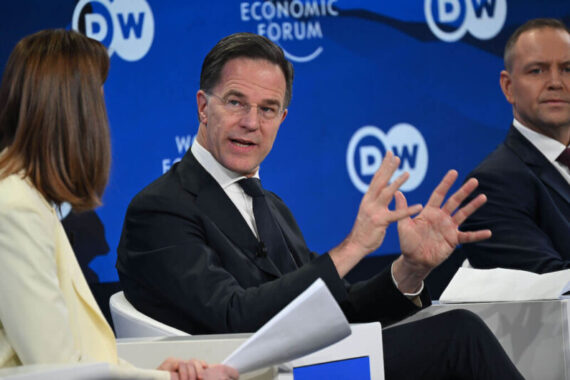
Speaking at a panel discussion during the World Economic Forum in Davos, Rutte emphasized that European and US security depends on sustained military, financial, and political support for Kyiv.
Rutte stressed that while issues like Greenland should be addressed through dialogue, they should not overshadow the war in Ukraine.
“Focus in Ukraine should be our number one priority, and then we can discuss all the issues, including Greenland,” he said, noting that Russian missiles and drones are continuing to strike Ukraine’s energy infrastructure.
The NATO chief expressed concern that excessive attention to secondary disputes could weaken collective resolve at a critical moment in the conflict.
“As we speak, Russian attacks are ongoing,” Rutte said, warning that losing focus could undermine efforts to support Ukraine’s defense.
Rutte acknowledged the importance of diplomatic initiatives and financial backing, including the EU-led €90 billion ($105 billion) support package, but said immediate military assistance remains essential.
He underscored the need to ensure Ukraine has sufficient resources to defend itself against Russian aggression.
Recommended
Highlighting NATO’s integrated defense system, Rutte reaffirmed the alliance’s reliance on strong cooperation between Europe and the United States.
He noted that European countries have increased defense spending in response to US expectations and stressed mutual commitment within the alliance.
“I have no doubt the US will come to the rescue here, and we will come to the rescue of the US,” Rutte said, emphasizing NATO’s collective security principle.
Rutte concluded by stressing that NATO’s effectiveness depends on unity and sustained investment in defense capabilities on both sides of the Atlantic, particularly as the war in Ukraine continues to shape the security landscape in Europe and beyond.
(Source: Anadolu Agency)

Politics Today is dedicated to publishing insightful analyses in order to understand the changing nature of contemporary politics. It aims to contribute to the sound and constructive discussion of international affairs.
You can see how this popup was set up in our step-by-step guide: https://wppopupmaker.com/guides/auto-opening-announcement-popups/

Stay informed by subscribing to
our weekly newsletter.
You can see how this popup was set up in our step-by-step guide: https://wppopupmaker.com/guides/auto-opening-announcement-popups/
You can see how this popup was set up in our step-by-step guide: https://wppopupmaker.com/guides/auto-opening-announcement-popups/
You can see how this popup was set up in our step-by-step guide: https://wppopupmaker.com/guides/auto-opening-announcement-popups/
You can see how this popup was set up in our step-by-step guide: https://wppopupmaker.com/guides/auto-opening-announcement-popups/