Japan Braces for Prolonged Diplomatic Freeze with China
The diplomatic chill has already led Beijing to rule out a potential encounter between Takaichi and Chinese Premier Li Qiang at this weekend’s G20 summit in South Africa.
November 20, 2025

J
apan is facing its most severe diplomatic crisis with China in more than a decade after an unscripted remark by newly appointed Prime Minister Sanae Takaichi triggered a furious reaction from Beijing, prompting economic retaliation and plunging bilateral ties into uncertainty.
The dispute erupted after Takaichi, responding spontaneously to a question during her first parliamentary grilling, suggested that a Chinese attack on Taiwan could lead to a Japanese military response. The comment broke with years of strategic ambiguity maintained by successive Japanese leaders and immediately infuriated China, which views Taiwan as part of its territory.
According to two Japanese government officials familiar with internal deliberations, the remark was neither planned nor designed to signal a major policy shift. “It would have been better not to say it, but it’s not incorrect,” one official said, acknowledging that Tokyo now has little room to walk the comment back. “We can’t retract it.”
Beijing wasted no time demonstrating its displeasure, announcing a set of measures designed to hit Japan’s economy, the world’s fourth largest. These include a halt to Japanese seafood imports, cancellation of cultural exchanges, and a boycott on travel to Japan that could strip billions from the tourism sector. Some official meetings have also been abruptly suspended.
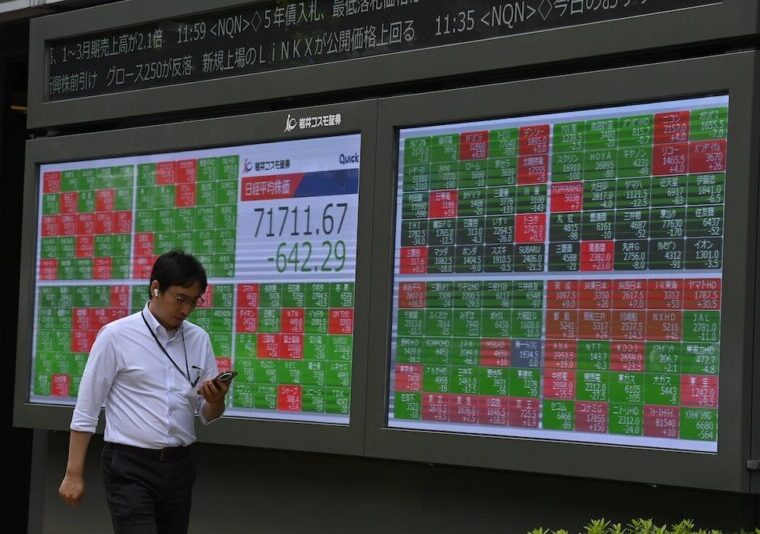
Economists warn the impact could be severe. China’s travel boycott alone is estimated to cost Japan more than $14 billion annually, according to Nomura Research Institute economist Takahide Kiuchi. A wider consumer backlash within China, similar to the one that followed Japan’s 2012 nationalization of disputed islands, could reduce Japanese corporate sales by the equivalent of 1% of Japan’s GDP, analysts say.
Perhaps more worrisome for Tokyo is the possibility that China could curb exports of rare earth minerals, critical to Japan’s electronics and automotive industries. Despite efforts to diversify supply chains, China still accounts for around 60% of Japan’s rare earth imports.
Attempts by Tokyo to calm tensions have, if anything, only underscored the deepening divide. Talks in Beijing this week between senior foreign ministry officials were described by Chinese diplomat Liu Jinsong as “solemn”. Images aired by Chinese media showed Liu standing with his hands in his pockets — an intentional gesture of defiance in a formal setting.
Even Liu’s attire drew attention: he wore a five-button, collarless suit associated with the May Fourth Movement of 1919, a student-led protest against Japanese imperialism. Chinese state media highlighted the symbolism, casting it as a pointed reminder of historical grievances.
The diplomatic chill has already led Beijing to rule out a potential encounter between Takaichi and Chinese Premier Li Qiang at this weekend’s G20 summit in South Africa. Analysts say the freeze could last throughout Takaichi’s tenure. “Takaichi inadvertently boxed herself in,” said Jeremy Chan, a senior Northeast Asia analyst at Eurasia Group. “There really is no immediate off-ramp.”
Recommended
Despite the turmoil, Takaichi’s comment has not dented her popularity at home. Opinion polls show her approval ratings remain robust, with many voters viewing her stance as a firm response to regional security concerns.
Her office has insisted that Japan’s official policy on Taiwan has not changed. “Japan remains open to various forms of dialogue between the two countries,” a spokesperson said, adding that her remarks did not contradict existing government positions.
But in Beijing, the rhetoric has hardened dramatically. A Chinese diplomat appeared to allude to Takaichi’s beheading in a now-deleted post, while nationalist commentators branded her an “evil witch”. A cartoon posted by China’s military on social media depicted her burning Japan’s pacifist constitution.
With no signs of compromise on either side, officials and analysts increasingly fear the dispute could deepen further before any thaw becomes possible. “Right now, there’s not even a starting point for improvement,” a Japanese official said.
A senior U.S. diplomat in Asia added that a near-term resolution is unlikely unless Beijing seeks to mend ties with Washington and uses Japan as a diplomatic bridge. “Until then,” he said, “we’re looking at a long winter in Japan–China relations.”
(Source: Reuters)

Politics Today is dedicated to publishing insightful analyses in order to understand the changing nature of contemporary politics. It aims to contribute to the sound and constructive discussion of international affairs.
You can see how this popup was set up in our step-by-step guide: https://wppopupmaker.com/guides/auto-opening-announcement-popups/

Stay informed by subscribing to
our weekly newsletter.
You can see how this popup was set up in our step-by-step guide: https://wppopupmaker.com/guides/auto-opening-announcement-popups/
You can see how this popup was set up in our step-by-step guide: https://wppopupmaker.com/guides/auto-opening-announcement-popups/
You can see how this popup was set up in our step-by-step guide: https://wppopupmaker.com/guides/auto-opening-announcement-popups/
You can see how this popup was set up in our step-by-step guide: https://wppopupmaker.com/guides/auto-opening-announcement-popups/