I
n the context of the ‘Turkey Without Terror’ process, which began with statements by MHP leader Devlet Bahçeli calling for the PKK to lay down its arms and ultimately cease to exist, the Turkish state has been in contact with Öcalan and the organization’s leadership for months. Following Öcalan’s call, the PKK announced its decision to dissolve, marking a new phase in the process. A commission comprising representatives from political parties within the Turkish Grand National Assembly has started working on the necessary political and legal reforms.
While the process is not yet complete, the fact that Kandil has heeded Öcalan’s call for the organization’s self-dissolution — at least rhetorically — and the existence of a legal framework for the continuation of the process are positive developments. However, in Syria, which has been seen as a potential focal point since the beginning of the process, events are unfolding in an undesirable manner for the organization.
The isolation of the YPG
Although the YPG (the Syrian branch of the PKK) initially stated that they viewed Öcalan’s call for the region positively, they never formally accepted it. Events show that the Kandil cadres were the decisive actors in shaping the YPG’s stance. Nevertheless, under pressure from Ankara and Washington, YPG leader Mazlum Abdi met several times with the new Syrian leader, Ahmed Shara, and negotiations began. However, these negotiations reached an impasse due to the Damascus government’s unwillingness to share sovereignty with an organization whose leadership was based in Kandil, and the YPG’s resistance to genuine integration with Damascus.
In this context, Damascus made several constructive offers to the YPG, such as integrating several of its divisions into the army and granting various positions to its political cadres as part of the integration process, including the governorship of Hasakah. The army also avoided entering cities with large Kurdish populations. However, the YPG’s demands were so inflexible and unreasonable that a sovereign government would not accept them. Ultimately, the YPG has become largely isolated on the ground, while the US has moved closer to the Damascus side.
Ultimately, Damascus refused to accept the continuation of the YPG as an independent or autonomous military structure, demanding that the organization’s armed elements be placed under the army’s command. The US indicated its approval of this demand through Tom Barrack’s statements. However, the YPG insisted that it would only accept this scenario if it could maintain its autonomy within the army, instead opting to play for time. The YPG’s irrational and distant attitude towards this compromise stems from its fear of losing its military and financial gains in the region, as well as Israel’s interventions in Syria. Israeli air strikes have increased in recent months, taking on a different dimension with the Tel Aviv administration playing the ‘protector’ card for the Druze in Syria.
The Druze factor
The fact that Druze political and military elements, most of whom have organic ties to the Assad regime, are resisting the new regime in Syria with Israeli support and are currently in an autonomous position along the Suweida line, has whetted the appetite of the YPG. Israel’s dissatisfaction with the new Damascus administration and its interventionist policies has led the YPG to believe that they could receive Israeli support too. In early January, Ilham Ahmed, a prominent figure in the organization’s political wing, held a telephone conversation with Israeli Foreign Minister Gideon Sa’ar. In the following days, she announced that they were “open to all kinds of assistance”.
However, the intense diplomatic efforts of the Syrian government have also yielded results with the US. Damascus’ participation in the International Coalition against ISIS and the constructive roles undertaken by Riyadh and Ankara in Washington–Damascus relations have improved US–Syria relations to the best point in 60 years. This has paved the way for sanctions to be lifted and capital to flow more freely to Damascus, including US capital. The US’s recognition of the Damascus administration as a promising source of “stability and cooperation” has also led to a cessation of Israeli air strikes and ground harassment in Syria in recent weeks. Consequently, for objective observers, the support that the YPG expected from the Israeli air force against Damascus has become nothing more than an irrational wish.
Recommended
Ground for defeat
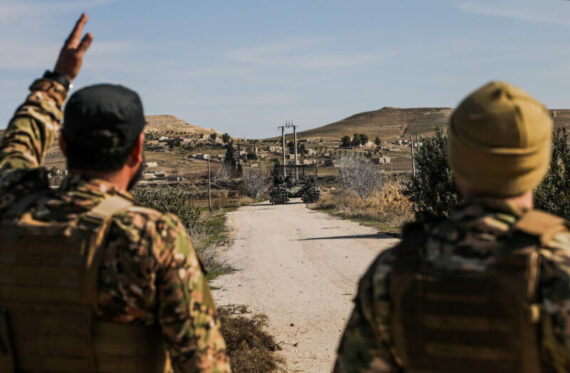
As 2025 drew to a close, the deadline set by Damascus for the YPG to leave also expired, and the front lines began to heat up. The process of clearing the Ashrafiyeh and Sheikh Maqsoud neighborhoods in the centre of Aleppo, which were YPG strongholds that regularly threatened civilian life in the city, continued amid rapid changes in territorial control on both banks of the Euphrates River and in the Raqqa-Deir ez-Zor-Hasakah triangle. The YPG/SDF were quickly defeated by the changing international balances and demographics, or in other words, by the realities on the ground.
Arab tribal groups, who had established close ties with the Damascus government during the Druze-Bedouin clashes in Suweida, gradually broke away from the SDF and revolted in their regions. This led to a new reality in which Damascus gained control of most of the oil fields and vast territories that the YPG/SDF had used as bargaining chips within a few weeks. By the end of January 2026, Deir ez-Zor and the entire southern countryside of Hasakah, as well as the city centre of Raqqa, had fallen into the hands of Damascus. The organization had lost all its Arab forces, been driven out of most of its territory and was confined to the Ain al-Arab-Hasakah-Qamishli-Malikiyet line.
Although the ceasefire process is being maintained despite violations by the YPG, thanks to US mediation efforts, Kandil’s uncompromising stance could reignite the conflict in February or lead to a wave of assassinations targeting certain figures in the organization’s leadership. By choosing to ignore all mediation efforts and the negative momentum on the ground, Kandil is perpetuating the conflict with every move, paving the way for an even heavier defeat.
In conclusion, Turkey’s strong military presence along its borders, its close cooperation with the US on integrating the YPG into Damascus and the influx of billions of dollars into Damascus with US approval and partnership are all obstacles to the YPG initiating a large-scale conflict that would lead to chaos. This is because, if Turkey and the US act in coordination, the YPG would not dare engage in a prolonged conflict, as this could lead to consequences that would result in the organization’s demise. Conversely, the Damascus government will not launch an all-out war against the YPG without a green light from the US, in order to maintain good relations with it. However, periodic mutual provocations and clashes lasting a few days may occur along the border.
Prolonged clashes could lead to problems such as the operation of oil wells and the distribution of water resources in eastern and northern Syria, which could negatively impact daily life in the region. However, unless the conflict escalates to include Turkey and Israel – which the current situation does not suggest – it is not expected to affect regional and global capital investments or cause capital flight. The large-scale agreements reached, and the role played by the US in them, have effectively made the US a guarantor against the escalation of a possible conflict between Damascus and the YPG.