Lindsey Graham Remembered for Hawkish Foreign Policy, Staunch Support for Israel and Alliance with Trump

July 14, 2026

Political analysts say two themes are likely to dominate assessments of Graham's career: his advocacy for interventionist foreign policy and his transformation into one of Trump's closest allies.
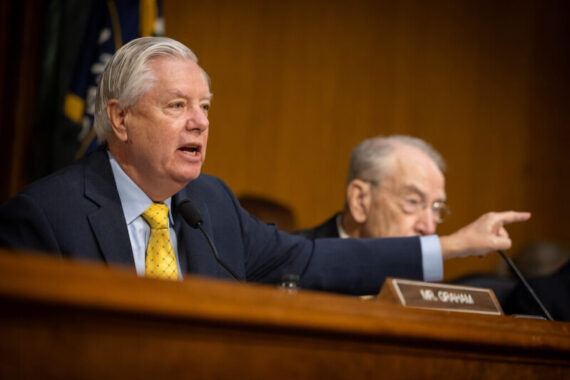
During a Senate Judiciary Committee oversight hearing on the Department of Homeland Security held at the Dirksen Senate Office Building in Washington, D.C., the capital of the United States, Senator Lindsey Graham asked a question of U.S. Secretary of Homeland Security Kristi Noem. Photo by Anadolu Images.

T

he death of longtime Republican Senator Lindsey Graham has renewed debate over his enduring influence on U.S. foreign policy, with supporters praising his commitment to American leadership abroad and critics pointing to his advocacy for military intervention and unwavering support for Israel.

Graham, who died on Saturday at the age of 71 following what his office described as a brief and sudden illness, was one of the most recognizable Republican voices on national security issues for more than two decades. Throughout his career, he consistently championed military action, backed strong U.S. alliances with Israel, and maintained a hardline stance toward Iran, Russia and China.

His passing prompted tributes from U.S. President Donald Trump, Israeli Prime Minister Benjamin Netanyahu and several Republican lawmakers, while also drawing criticism from anti-war advocates and Palestinian rights groups, who argued that Graham’s legacy was defined by support for prolonged military conflicts.

Political analysts say two themes are likely to dominate assessments of Graham’s career: his advocacy for interventionist foreign policy and his transformation into one of Trump’s closest allies.

Michael Hanna, U.S. Program Director at the International Crisis Group, said Graham had cultivated a long-standing reputation for promoting military solutions to international crises.

“He was a major supporter of the Iraq War and remained a strong advocate for the use of military force throughout his career,” Hanna said, adding that Graham played an influential role in encouraging the Trump administration’s hardline approach toward Iran.


Strong backing for Israel

Support for Israel remained central to Graham’s foreign policy positions. He repeatedly called for expanded U.S. military assistance to Israel and defended its military operations following the October 7, 2023 attacks and the subsequent war in Gaza.

In 2021, Graham successfully pushed for an additional $1 billion in U.S. military assistance after visiting Israel, where he posed alongside Prime Minister Benjamin Netanyahu holding a sign reading “More for Israel.”

Netanyahu paid tribute to Graham following his death, describing him as one of Israel’s strongest supporters in Washington and recalling that the senator often advocated for greater U.S. assistance than Israel itself requested.

Graham’s rhetoric on the Gaza war frequently drew international criticism. He defended Israel’s military campaign in Gaza in uncompromising terms and made several controversial remarks about the conflict that human rights advocates condemned as inflammatory.

Palestinian advocacy groups said Graham consistently supported policies that contributed to escalating violence in the region, while critics described him as one of the most outspoken proponents of military solutions in U.S. foreign policy.

Graham was also among the leading congressional advocates for confronting Iran militarily. Earlier this year, he publicly supported U.S. military action against Tehran and maintained close contact with President Trump as tensions between Washington and Iran escalated.

Analysts say Graham’s influence was one of several factors shaping the administration’s approach, although decisions ultimately rested with the president.

Alliance with Trump

Although Graham was an outspoken critic of Trump during the 2016 Republican presidential campaign—calling him “unfit for office” and “a kook”—the senator later became one of the president’s closest political allies.

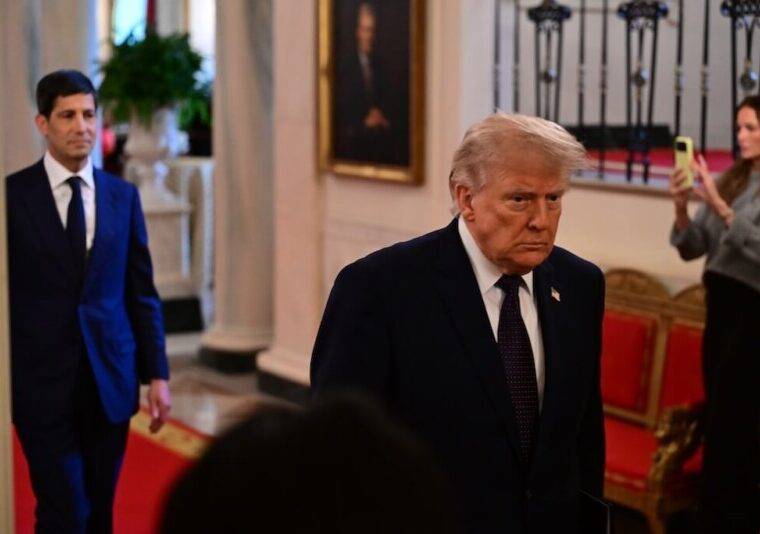
The two frequently met at the White House and appeared together at public events, with Graham emerging as a trusted adviser on national security and foreign affairs.

Following Graham’s death, Trump called on South Carolina Governor Henry McMaster to appoint Graham’s sister, Darline Graham Nordone, to temporarily fill the Senate seat, describing the move as a fitting tribute to the late senator.

Observers say Graham’s death comes at a time when the Republican Party is increasingly divided over foreign policy, particularly regarding military intervention abroad.

Recent polling indicates younger Republican voters are less supportive of overseas military operations and more skeptical of interventionist policies than previous generations.

Hanna said Graham represented a generation of Republican leaders whose worldview was shaped by post-Cold War American global leadership and extensive military engagement overseas.

While his Senate seat is expected to remain in Republican hands, analysts suggest his absence could further accelerate debates within the party over the future direction of U.S. foreign policy, military intervention and Washington’s role in global conflicts.

(Source: Aljazeera English)

Politics Today is dedicated to publishing insightful analyses in order to understand the changing nature of contemporary politics. It aims to contribute to the sound and constructive discussion of international affairs.