More Than 5,300 People Remain Trapped in Myanmar Scam Centres Despite Crackdown
Scam centers across Southeast Asia, especially in Myanmar and Cambodia, have evolved into a sophisticated transnational criminal industry worth billions of dollars.
June 26, 2026
M
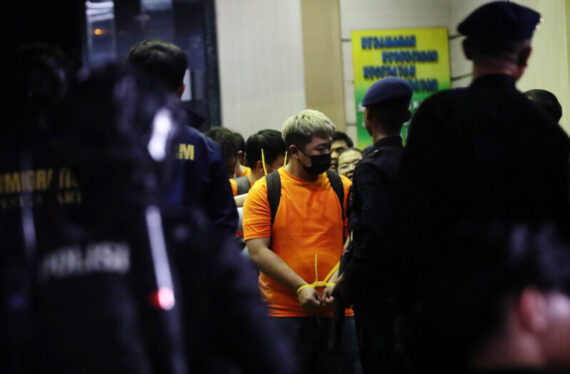
ore than 5,300 people remain trapped in online scam compounds in Myanmar near the Thai border despite a multinational crackdown launched last year, according to a Thai-based human rights organization that has urged authorities to intensify rescue efforts.
The Civil Society Network for Human Trafficking Victim Assistance (CSNHTV) said thousands of victims continue to be held in four scam compounds located in territory controlled by the Myanmar Democratic Karen Buddhist Army (DKBA), where criminal syndicates continue to operate extensive online fraud and human trafficking networks.
In a letter addressed to Thai police, the organization called for immediate action to dismantle the remaining compounds and free those still being held against their will.
According to the group, approximately 1,600 of those trapped are Chinese nationals, while around 200 are from Myanmar. Victims also include citizens of the Philippines, Taiwan, Malaysia, Brazil, Russia, Kenya, Uganda, Rwanda and Zimbabwe.
“Many of these compounds have yet to be dismantled or subjected to rescue operations to free all remaining victims,” the organization said.
It warned that the criminal syndicates continue to carry out online fraud targeting victims across the world, particularly in the United States and Europe.
Scam centers across Southeast Asia, especially in Myanmar and Cambodia, have evolved into a sophisticated transnational criminal industry worth billions of dollars.
Originally linked to casinos and online gambling operations during the COVID-19 pandemic, the compounds have expanded into hubs for online investment scams, romance fraud, cryptocurrency schemes and other cybercrimes targeting victims worldwide.
Many of those recruited to work in the centers were lured by false job offers before being trafficked across borders and forced to participate in online scams.
A report released by the United Nations in February found that many scam compounds are staffed by foreign nationals trafficked by organized criminal gangs and subjected to serious human rights abuses.
The report documented widespread cases of torture, sexual abuse, forced abortions, food deprivation, solitary confinement and other forms of cruel treatment used to coerce victims into carrying out online fraud.
“The litany of abuse is staggering and at the same time heart-breaking,” said Volker Türk.
Türk added that many survivors face additional hardships after escaping the compounds, often encountering disbelief, stigma or even punishment instead of receiving protection and rehabilitation.
Recommended
Rights groups say dismantling scam compounds requires closer cooperation between governments in the region, as many operations are protected by armed groups controlling parts of Myanmar’s border areas.
Although thousands of trafficking victims have been rescued during joint operations conducted by Thailand, Myanmar and neighboring countries over the past year, humanitarian organizations warn that thousands more remain trapped, highlighting the continued reach of criminal networks exploiting vulnerable migrants through forced labor and online fraud.
(Source: Aljazeera)

Politics Today is dedicated to publishing insightful analyses in order to understand the changing nature of contemporary politics. It aims to contribute to the sound and constructive discussion of international affairs.
You can see how this popup was set up in our step-by-step guide: https://wppopupmaker.com/guides/auto-opening-announcement-popups/

Stay informed by subscribing to
our weekly newsletter.
You can see how this popup was set up in our step-by-step guide: https://wppopupmaker.com/guides/auto-opening-announcement-popups/
You can see how this popup was set up in our step-by-step guide: https://wppopupmaker.com/guides/auto-opening-announcement-popups/
You can see how this popup was set up in our step-by-step guide: https://wppopupmaker.com/guides/auto-opening-announcement-popups/
You can see how this popup was set up in our step-by-step guide: https://wppopupmaker.com/guides/auto-opening-announcement-popups/