U
.S. President Donald Trump on Thursday declassified a series of documents that he said revealed Chinese interference in U.S. elections, renewing his long-standing focus on election security despite previous intelligence assessments concluding that Beijing did not alter the outcome of the 2020 presidential election.
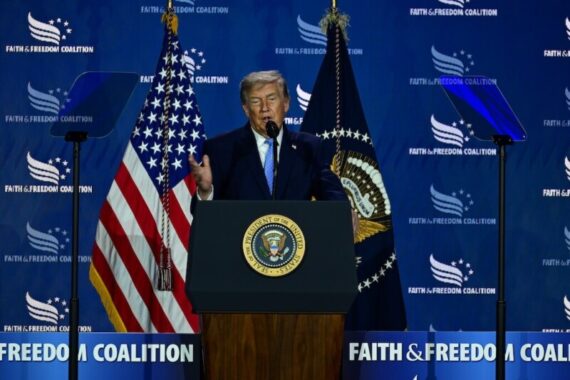
In a 25-minute televised address from the White House, Trump claimed the documents exposed “shocking vulnerabilities” in the U.S. electoral system and alleged that China had obtained personal information from approximately 220 million American voter records.
The president also accused members of the U.S. intelligence community of suppressing information about China’s activities and urged Congress to pass stricter election laws, including voter identification requirements, proof of citizenship for voter registration and limits on mail-in voting.
The address comes ahead of November’s midterm elections, as Republicans seek to defend narrow majorities in Congress amid political headwinds linked to the Iran conflict and rising energy prices.
However, Trump’s claims appeared to conflict with findings by the U.S. intelligence community. A declassified intelligence assessment issued in 2021 concluded that no foreign government attempted to alter any technical aspect of the 2020 presidential election, including voter registration systems, ballots, vote tabulation or certified results.

CIA thinks otherwise
The assessment, conducted under then-Director of National Intelligence John Ratcliffe—now serving as CIA director under Trump—found that while China had collected publicly available information on American voters and political trends for years, it did not attempt to interfere directly in the election outcome.
According to Reuters, two people familiar with the matter said the voter data cited by Trump consisted largely of publicly available voter files that political campaigns and consultants routinely purchase and could not be manipulated to alter election results.
Some White House officials reportedly expressed concern before the speech that releasing the documents could create a misleading impression about the nature of China’s activities.
Trump nevertheless argued that the newly declassified material demonstrated significant weaknesses in U.S. election security and reiterated claims that large numbers of non-citizens were registered to vote, although he did not provide evidence that those registrations resulted in illegal ballots being cast.
Recommended
Rare voter fraud
Election experts and previous studies have consistently found that voter fraud and non-citizen voting in U.S. elections are rare.
Democratic Senator Mark Warner, vice chair of the Senate Intelligence Committee, rejected Trump’s assertions, saying the U.S. intelligence community had unanimously concluded that China “did not even try to change a single vote” in the 2020 election.
The president also renewed his call for lawmakers to approve the SAVE America Act, legislation that would require photo identification to vote, proof of U.S. citizenship for voter registration and tighter restrictions on mail-in ballots. The measure has passed the Republican-controlled House of Representatives but remains stalled in the Senate amid Democratic opposition.
Despite Trump’s assertions about election vulnerabilities, the declassified documents released Thursday did not provide evidence that votes in the 2020 election were altered or manipulated, according to Reuters.
(Source: Reuters)